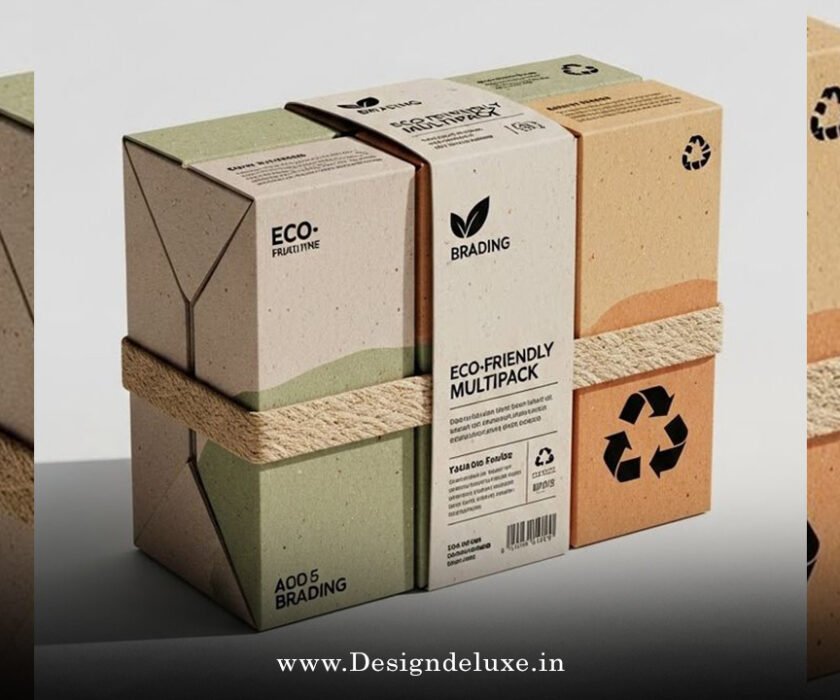
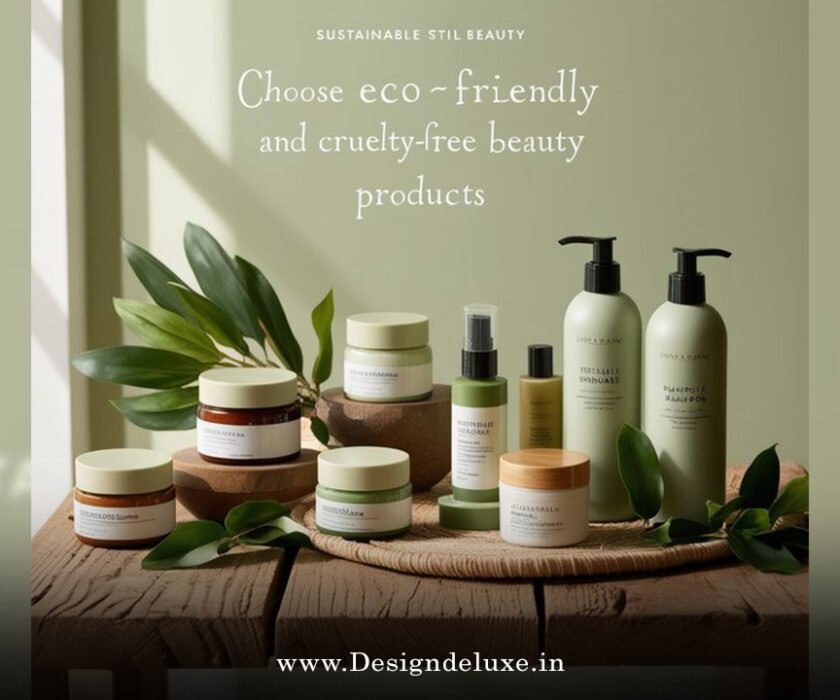
Eco-Friendly / SustainableBrand Packaging
Eco-friendly packaging trends 2026 show brands finally moving past greenwashing into real, functional sustainability that sells. Consumers vote with their wallets. Regulations hit harder. And material science delivers smarter options that protect products while shrinking environmental impact.
The reality check? Brown kraft and basic recycled boxes no longer impress. Shoppers expect performance, aesthetics, and genuine circularity. Brands that deliver win loyalty and dodge fines.
Many forward-thinking teams now integrate sustainable brand identity packaging design for social media ads and website 2026 to ensure their eco packaging looks as good in a Reels close-up as it does on the shelf.
Why These Trends Matter Right Now
The sustainable packaging market keeps climbing fast. Consumer pressure stays intense — 90% of shoppers say they’re more likely to buy from brands using eco-friendly packaging. A solid chunk willingly pay a premium.
Regulations like Extended Producer Responsibility (EPR) and packaging waste rules move from talk to enforcement in 2026. Get ahead or pay later.
Here’s the thing: Great eco packaging doesn’t sacrifice protection or shelf appeal. It enhances both.
Top Eco-Friendly Packaging Trends 2026
Mono-Material Revolution
Designers strip packaging to one material type. Easier recycling. Fewer headaches at the sorting plant. Think all-paper structures with smart coatings instead of mixed plastic layers.
Fiber-First and Paperization
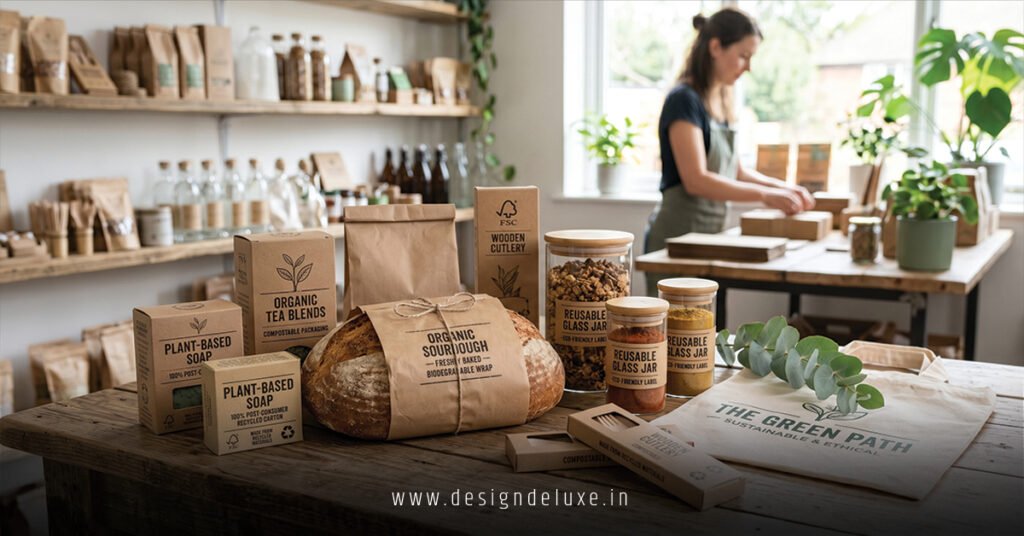
Paper and cardboard take over more categories. Advanced barriers make them suitable for food, beauty, and e-commerce. FSC-certified and recycled content rule.
Bio-Based and Novel Materials
Seaweed films, mycelium (mushroom) foam, algae-based wraps, and next-gen PLA. These deliver performance with lower carbon footprints and true end-of-life options — compostable or biodegradable.
Refill and Reusable Systems
Refills go mainstream beyond prestige beauty. Durable outer packaging pairs with affordable refills. Aluminum and glass make strong comebacks for premium reusable plays.
Smart and Traceable Packaging
QR codes, NFC tags, and sensors tell disposal instructions, track freshness, or prove authenticity. Packaging becomes an active participant in the circular economy.
Lightweighting and Anti-Waste Design
Less material overall. Better protection that reduces product damage and food waste. Right-sized packaging for e-commerce kills excess void fill.
These trends blend environmental wins with business sense. They cut costs long-term and strengthen brand perception.
How to Implement Eco-Friendly Packaging in 2026
Start with brutal honesty about your current footprint. Then:
- Audit every package for material mix and recyclability.
- Prioritize mono-material or fiber-based alternatives.
- Test novel bio-materials in real conditions.
- Design for the full journey — shelf, social, home, and recovery.
- Build refill or return loops where they make sense.
- Embed smart elements for education and traceability.
- Align visuals with your broader brand story.
What I’d do tomorrow? Prototype three versions: ultra-minimal fiber, premium reusable, and smart mono-material. Test with real customers and measure both perception and performance.
Eco-Friendly Packaging Options Compared
| Trend | Key Benefits | Challenges | Best For | 2026 Maturity |
|---|---|---|---|---|
| Mono-Material | High recyclability, simpler supply | Performance trade-offs in some uses | Food, e-commerce, CPG | High |
| Fiber-Based / Paper | Renewable, familiar to consumers | Moisture barrier limitations | Dry goods, beauty, secondary packs | Very High |
| Bio-Based (Seaweed, Mycelium) | Low carbon, compostable | Higher cost, scaling production | Premium, protective, niche | Growing |
| Refill Systems | Reduces single-use dramatically | Consumer habit change needed | Beauty, personal care, household | Mainstream |
| Smart/Traceable | Education, data, anti-counterfeit | Added cost for tech | High-value, regulated products | Accelerating |
Mono-material and fiber-first lead volume. Bio-based and smart options differentiate premium brands.
Common Mistakes Brands Still Make
Treating sustainability as a marketing layer instead of core design principle. Result? Packaging that looks green but fails in practice or recovery.
Using vague claims that regulators now punish. Always back them with real data and clear disposal instructions.
Ignoring the full visual system. Your sustainable pouch must look intentional in Instagram ads and on your website.
Forgetting performance. Eco materials that fail to protect the product create more waste overall.
Tying Packaging to Brand Identity
In 2026 the package is the brand in many moments. Clean, confident design that screams care without shouting “eco” works best. Minimal typography, honest textures, and smart negative space let the material itself tell the story.
This is why many brands invest in sustainable brand identity packaging design for social media ads and website 2026 — creating cohesive systems where the physical package, digital ads, and site visuals reinforce each other perfectly.
Key Takeaways
- Mono-material and fiber-based designs dominate for recyclability and simplicity.
- Bio-materials like mycelium and seaweed move from niche to viable.
- Refill systems become table stakes in multiple categories.
- Smart features turn packaging into a communication tool.
- Regulations make compliance a competitive advantage.
- Design must work across physical product, social media, and website.
- Consumer trust comes from authenticity, not just claims.
- Start testing new materials and systems now for 2027 readiness.
Eco-friendly packaging trends 2026 reward brands that think holistically. The winners protect the planet, delight customers, and build stronger businesses.
Pull your top three SKUs today. Sketch one mono-material redesign. Run it by a small customer group. The brands acting now will own the shelf — and the story — next year.
FAQs
What are the biggest eco-friendly packaging trends for 2026?
Mono-material construction, fiber-based alternatives, bio-materials like seaweed and mycelium, refill systems, and smart traceable packaging lead the way.
How much more are consumers willing to pay for sustainable packaging?
Many will pay a 10-20% premium when the value feels real. Perception of quality and clear end-of-life instructions boost willingness significantly.
Can small brands afford to switch to eco-friendly packaging in 2026?
Yes. Start with fiber-based and mono-material options that often reduce long-term costs through efficiency and brand loyalty. Scale novel materials as volumes grow.