Brand
Cosmetics brand identity is the sum of everything a shopper sees, touches, reads, and feels before she ever tries your product. Shelf space is crowded, and formulas often overlap. Identity is what makes someone pick up your jar instead of the one next to it.
Quick summary
- Cosmetics brand identity is your name, story, voice, visuals, and packaging working as one system.
- It drives recognition, price perception, and repeat purchase.
- The strongest identities start with a specific customer, not a mood board.
- Packaging and labels carry both design and legal weight in the US.
For the visual side in depth, see our guide to Beauty & Cosmetics Design: Trends & Packaging Ideas. This piece covers the strategy underneath.
What Is Cosmetics Brand Identity, Exactly?
Think of identity as the scent trail you leave in a room. People can tell you’ve been there before they see you. Your logo is only one note in that trail.
A complete identity has five working parts: positioning (who you serve and why you’re different), name and story, verbal voice, visual system, and physical packaging. Skip any one and the whole thing wobbles.
Here’s the thing. Brand identity isn’t branding. Branding is the perception that forms in customers’ heads. Identity is what you control: the signals you send on purpose.
The Core Parts of Cosmetics Brand Identity
| Element | What It Covers | Question to Answer | Common Slip |
|---|---|---|---|
| Positioning | Target customer, price tier, point of difference | Who is this for, and why you? | “For everyone” positioning |
| Name and Story | Brand name, origin, mission | Why does this brand exist? | A name you can’t trademark |
| Voice | Tone in copy, social posts, product descriptions | How would we talk to a friend? | Shifting tone by channel |
| Visual System | Logo, color palette, type, photography style | What should it feel like at a glance? | Trend-chasing over consistency |
| Packaging | Shape, material, finish, unboxing, label layout | What does it feel like in the hand? | Beautiful but impractical or non-compliant |
Why Cosmetics Brand Identity Matters More Than Your Formula
Controversial? A little. But in my experience, shoppers can’t judge a serum’s chemistry in a store aisle. They judge the cues around it: the weight of the bottle, the clarity of the claims, the feel of the typography.
Identity also protects your margins. A brand that feels coherent can hold its price when a competitor discounts. A brand that feels generic gets compared on price alone.
And it compounds. Every consistent touchpoint, from a shipping box to an Instagram caption, adds to recognition. Inconsistent ones erase it.
How Cosmetics Brand Identity Shapes Packaging Decisions
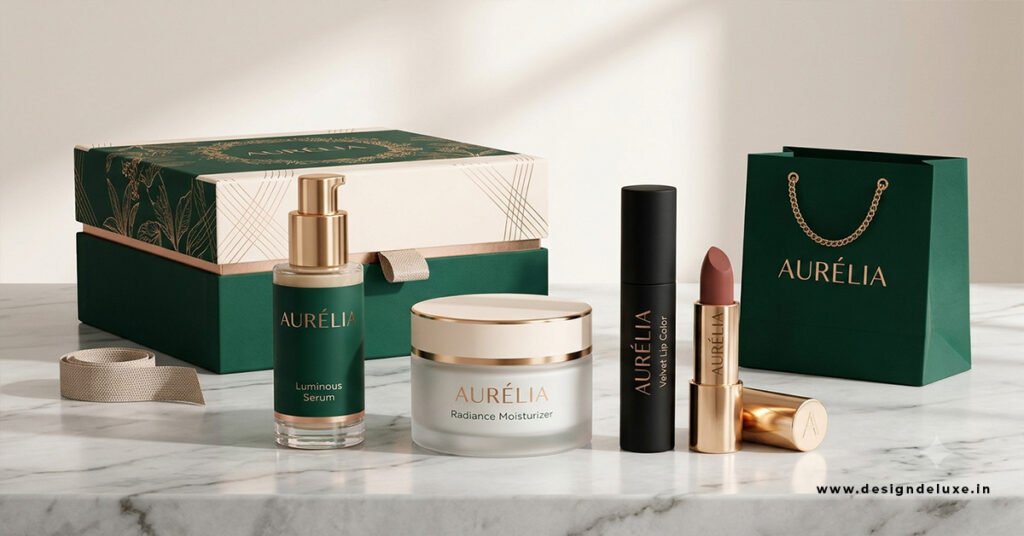
Packaging is where identity becomes physical. A clinical, ingredient-forward brand might use frosted glass and minimal type. A playful color-cosmetics line might use bold shades and rounded shapes. Neither is “better.” What matters is that the choice follows the positioning, not a Pinterest board.
Material choices send signals too. Heavy glass reads premium. Refillable systems read considered. Lightweight tubes read accessible and practical. Pick the signal that matches your customer’s expectations and your unit economics.
For layout, finish, and material inspiration, our Beauty & Cosmetics Design: Trends & Packaging Ideas breakdown goes further.
Step-by-Step Action Plan for Beginners
Here’s what I’d do if I were launching today:
- Define one customer. Not a demographic. A person. What does her bathroom shelf look like? What frustrates her?
- Write your positioning sentence. “We make for [customer] who want [outcome], unlike [alternative].” If it takes a paragraph, it’s not sharp enough.
- Choose a name and test it. Search the USPTO’s trademark resources for conflicts before you invest in design. Rebranding after launch is painful.
- Set your voice. Pick three adjectives (say, direct, warm, curious) and write three sample captions in that voice.
- Build the visual system. Choose two or three brand colors, one or two typefaces, and a photography rule. Then stop adding.
- Design packaging around the system. Mock up real labels with real ingredient lists, not placeholder text.
- Check label requirements. The FDA’s cosmetic labeling guidance covers items like the identity statement, net quantity, ingredient declaration, and responsible-party information.
- Review your regulatory status. The FDA’s MoCRA overview explains registration, listing, and safety obligations for the US market. Some small businesses may qualify for exemptions, so confirm what applies to you.
- Write a one-page brand guide. Colors, fonts, voice, do’s and don’ts. Anyone who touches your brand should be able to follow it.
- Test with real people. Show 10 target customers your packaging and ask what they’d guess about price and quality.
Common Cosmetics Brand Identity Mistakes and How to Fix Them
Chasing trends. A brand that copies this year’s aesthetic looks dated next year. Fix: anchor on a timeless idea (your customer’s need) and let trends influence only the details.
Being vague. “Clean, effective, for everyone” describes a thousand brands. Fix: narrow the audience and name the specific problem you solve.
Designing before positioning. A logo can’t fix an unclear strategy. Fix: finish the positioning sentence first.
Ignoring label rules. A gorgeous package with missing or misplaced required information creates real risk. Fix: build the label layout with legal requirements in mind from the first draft.
Making claims you can’t back. Words like “cruelty-free,” “natural,” or “dermatologist-tested” attract scrutiny and customer skepticism. Fix: use only claims you can document, and keep the substantiation on file.
Inconsistent execution. Different fonts on the site, the box, and social posts dilute recognition. Fix: enforce the one-page brand guide, even if you’re the only person on the team.
Skipping the unboxing. Shipping and first-open moments are free brand moments. Fix: add one deliberate touch, like a tissue color, a note, or a thoughtful insert.
Ask yourself: if I covered the logo, would a customer still know this is my product? If the answer is no, the identity lives only in the logo, and that’s too thin.
Key Takeaways
- Cosmetics brand identity is a system: positioning, name, voice, visuals, and packaging.
- Specific beats broad. Pick one customer and serve her well.
- Packaging is where identity becomes physical, so match materials to positioning.
- Check trademark availability before you commit to a name.
- Label content is a legal matter as well as a design one in the US.
- Only make claims you can substantiate.
- A one-page brand guide keeps every touchpoint consistent.
- Test your identity with real customers before you print inventory.
Start With One Sentence
A strong identity doesn’t start with a logo. It starts with one clear sentence about who you serve and why you’re different. Write it today, share it with five people in your target audience, and refine until they can repeat it back. Then take it into the design phase with the ideas in Beauty & Cosmetics Design: Trends & Packaging Ideas.
FAQs
How long does it take to build a cosmetics brand identity?
Plan on several weeks for strategy, naming, and trademark checks, plus additional time for design and packaging development. Rushing positioning is the most common reason founders redo everything later.
Do I need a professional designer for cosmetics brand identity?
Not for the strategy work, which you can do yourself. A designer helps most with the visual system and packaging. Bring them a finished positioning sentence and voice guide so they’re solving a defined problem.
Can I change my cosmetics brand identity after launch?
Yes, but evolve it rather than overhaul it. Small, consistent updates preserve recognition. A full rebrand resets your equity, so reserve it for cases where positioning genuinely changed.