Real estate website design services are the specialized design and development work that turns a real estate business into a lead-generating online presence. They matter because buyers and sellers judge fast, and your site has to look credible, load well, and guide people toward action.
A strong site should do more than look nice. It should make listings easy to browse, build trust fast, and support your brand across every page.
Why real estate website design matters
A real estate website is not a digital brochure. It is your front desk, sales assistant, and first impression all rolled into one. If it feels outdated or confusing, visitors bounce.
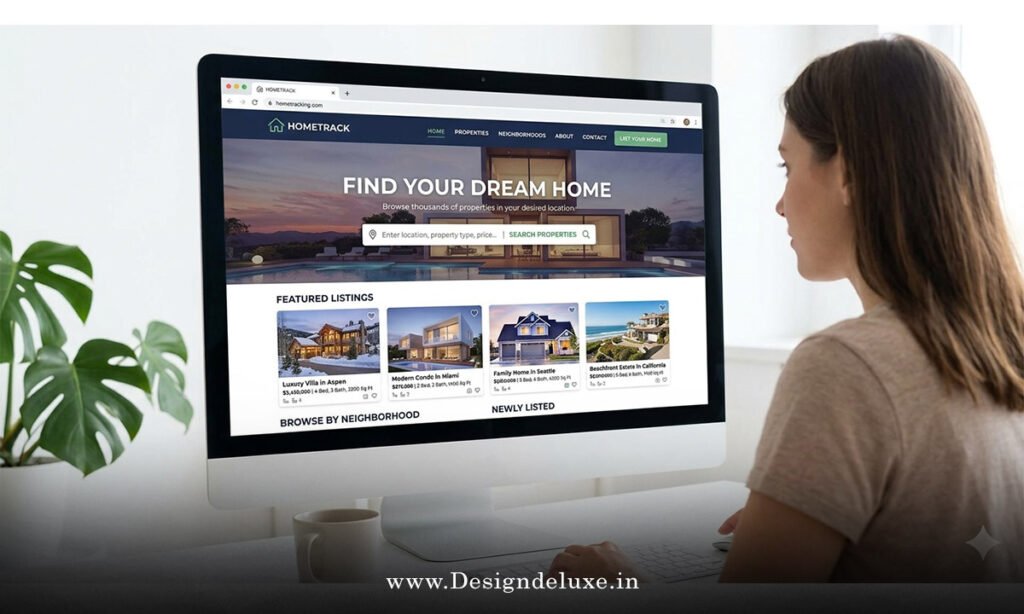
Real estate website design services help you create a site that works for actual property searches, local SEO, mobile users, and lead capture. That means clear navigation, fast load speed, strong calls to action, and easy access to listings.
The best websites also reinforce your brand. If your site and your visual identity are out of sync, the whole business feels less polished. That is why many firms connect website work with real estate agency logo design and branding packages from the start.
What real estate website design services should include
A proper real estate website build usually covers more than homepage design. At a minimum, expect these pieces:
- Custom homepage and interior page design.
- Mobile-responsive layout.
- Property listing and search functionality.
- Contact forms and lead capture tools.
- Neighborhood, agent, and service pages.
- SEO setup for local visibility.
- Speed optimization and basic security.
- Branding alignment with your logo, colors, and typography.
If a provider only talks about visuals and skips performance, that is a warning sign. In real estate, the site has to sell and function.
Features that drive leads
Not every feature is essential on day one, but some are worth prioritizing because they support conversion.
Search and listings
Visitors want to find homes fast. Property search filters, map views, and clean listing pages reduce friction and keep people engaged. If search is clunky, users leave.
Local SEO pages
Real estate is local by nature. Pages built around cities, neighborhoods, property types, and service areas help search engines understand where you work. That gives you more chances to show up for relevant searches.
Strong calls to action
Every important page should push one clear next step: call, book a consult, request a valuation, or sign up for alerts. Too many choices can weaken conversion.
Brand consistency
Your website should feel like the rest of your business. Fonts, colors, tone, and imagery should all match your broader identity, especially if you already invested in real estate agency logo design and branding packages.
How to choose the right service
A good provider should understand both design and real estate behavior. That combination matters more than flashy visuals.
Look for these signs:
- Real estate experience, not just generic web design.
- Clear examples of lead-focused sites.
- Mobile-first design thinking.
- SEO knowledge for local markets.
- Simple handoff process and post-launch support.
Ask one sharp question: can this site actually help me get more inquiries, or will it just look good in a portfolio? That usually reveals the difference between decoration and strategy.
Common mistakes to avoid
The most common mistake is building a site that looks premium but hides the listings. People do not visit real estate sites to admire gradients. They want speed, trust, and information.
Another mistake is ignoring mobile users. A huge share of visitors will browse on phones, so pages must be easy to scan and tap.
A third mistake is weak branding. If the website feels disconnected from your logo, social content, and print materials, the business loses polish. That is why pairing the site with real estate agency logo design and branding packages is often the smarter route.
What to ask before you hire
Before you sign anything, ask:
- Will the site be custom or based on a template?
- How will listings be managed?
- What SEO work is included?
- Will the site be mobile-optimized?
- What happens after launch?
- How does the design align with my brand?
These questions keep the project grounded in outcomes instead of buzzwords. They also help you compare providers on something more useful than style alone.
Key takeaways
- Real estate website design services should focus on design, usability, SEO, and lead generation.
- A real estate site needs fast navigation, clear calls to action, and strong mobile performance.
- Local SEO pages and listing search features are core parts of the experience.
- Brand consistency matters, especially when paired with real estate agency logo design and branding packages.
- The right provider should understand both real estate marketing and conversion-focused web design.
- A good site should help visitors find listings and contact you without friction.
A well-built real estate website makes your brand look credible and helps turn traffic into inquiries. The smartest move is to treat the website as a sales asset, not a one-time design project.
FAQs
What do real estate website design services usually cost?
Costs vary based on custom design, SEO, listing tools, and ongoing support. A simple site costs less than a custom lead-focused platform with advanced features.
Do I need branding before building a real estate website?
Yes, ideally. Your website should reflect your logo, colors, and tone, which is why many teams start with real estate agency logo design and branding packages first.
Can a real estate website help with local SEO?
Yes. Well-structured pages, location targeting, fast performance, and optimized content can help your site rank better for local property and agency searches.