Logo DesignAD Video / Motion GraphicsBrand Packaging
Dynamic adaptive logo design with motion graphics and 3D packaging for 2026 brands isn’t optional anymore. It’s table stakes for standing out in a sea of scroll-stopping feeds, AR try-ons, and shelf-grabbing retail moments. Brands that treat their identity as a living system win attention, loyalty, and shelf space. Static marks feel dated fast.
Here’s what it delivers right away:
- Flexible logos that morph across devices, platforms, and contexts without losing recognition.
- Motion graphics that bring energy to stings, social clips, and loading states.
- 3D packaging that turns boxes into immersive experiences, often with AR layers for digital-physical blend.
This approach matters because consumers in 2026 expect brands to feel alive and responsive. Your logo doesn’t just sit there. It adapts, animates, and interacts. Packaging doesn’t just protect. It tells stories in multiple dimensions.
Why now? Digital-first everything demands it. Small screens demand simplification. Big billboards and 3D renders crave depth. Motion keeps eyes glued. Smart brands build systems once and deploy everywhere.
What Dynamic Adaptive Logo Design Really Means in 2026
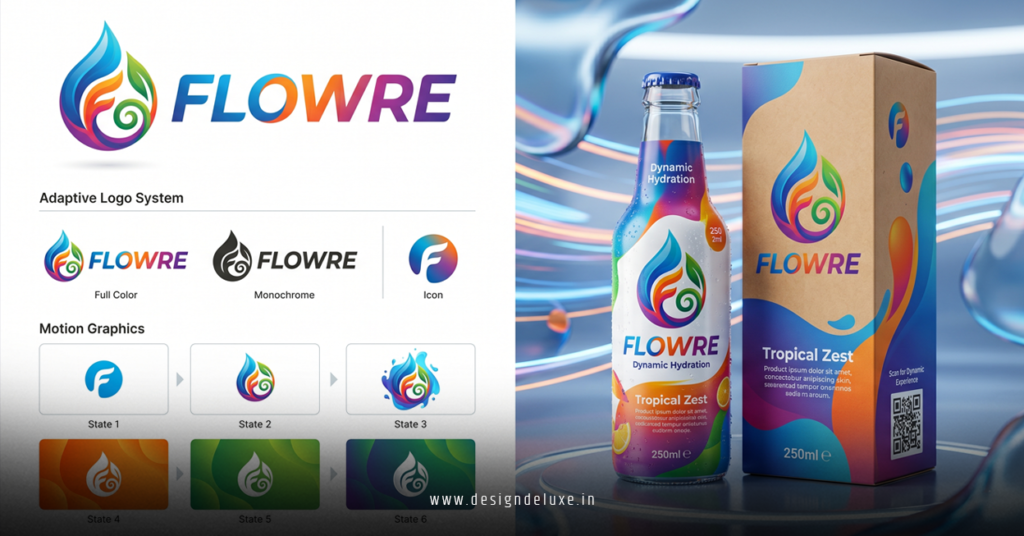
Dynamic adaptive logo design with motion graphics and 3D packaging for 2026 brands starts with a core mark that’s bulletproof. Then layers in variations: simplified icons for favicons, expanded versions for hero headers, color-shifting modes for dark/light themes, and kinetic sequences for video.
The kicker? It all ties back to one cohesive identity system. No more redesigning every quarter.
In practice, think modular building blocks. A base shape that scales, morphs subtly, or explodes into particles for a product launch animation. Motion graphics add micro-behaviors—like a gentle pulse on hover or a fluid transition between states. 3D packaging extends this into the physical world, with renders that match the logo’s energy and AR triggers that animate the pack when scanned.
What usually happens is brands start with a killer static logo, then scramble later for animations and packaging. Do it right from the jump and you save headaches (and cash).
Why This Combo Crushes for Modern Brands
Static is safe but forgettable. Dynamic systems let you own multiple touchpoints without fragmenting your look.
Motion graphics turn a simple reveal into a brand moment. A 3-second logo sting in a video ad? That’s memorable. Pair it with 3D packaging that mirrors the same lighting, angles, and color shifts, and suddenly your product feels premium on shelf and screen.
Here’s the thing: Shoppers don’t separate online from offline anymore. A seamless visual language builds trust fast.
One fresh analogy: Your brand identity is like a jazz ensemble. The core logo is the melody everyone knows. Motion and 3D variations are the improvisations that keep it fresh without losing the song.
Rhetorical question: Would you rather chase trends with yearly rebrands or build one system that evolves with you?
Core Elements of Dynamic Adaptive Logo Design with Motion Graphics
Start simple. Nail the static foundation first—strong shapes, smart negative space, versatile typography. Then build the system:
- Responsive versions: Full lockup, wordmark only, icon only.
- Contextual adaptations: Color inversions, simplified outlines for small sizes.
- Motion rules: Define easing, duration, and triggers so animations feel intentional, not gimmicky.
Tools like After Effects, Cinema 4D, or even Figma prototypes with plugins handle most of this today. For 2026, variable fonts and CSS animations make web deployment buttery smooth.
3D integration elevates everything. Render your logo in 3D for packaging mockups. Use consistent lighting models so the digital version matches physical prototypes. Motion graphics can preview how the pack “comes alive” in AR.
Bringing 3D Packaging Into the Mix
3D packaging for 2026 isn’t just pretty renders. It’s structural design that supports tactile experiences and digital extensions. Think embossed elements that echo logo shapes, iridescent finishes that shift under light like your animated logo, or QR codes that launch matching motion sequences.
Brands use this to create shelf theater. A matte black box with glowing 3D logo accents feels luxury. Scan it, and the packaging animation matches your site hero video. Seamless.
Practical tip from experience: Always design packaging with production constraints in mind. Fancy 3D elements must translate to die-cuts and printing without blowing the budget. Test early with mockups.
Step-by-Step Action Plan for Beginners and Intermediates
Here’s what I’d do if I were kicking off a project tomorrow:
- Brand Foundation: Nail positioning, audience, and personality keywords. Sketch core concepts on paper. No software yet.
- Core Logo Design: Create 3-5 strong static options. Focus on scalability. Use vector tools.
- Build the System: Define variations—horizontal/vertical, color modes, icon versions. Create a simple style guide.
- Add Motion: Animate key transitions in After Effects. Keep it under 5 seconds for stings. Test on mobile.
- 3D Packaging Concepts: Model in Blender or Cinema 4D. Match logo aesthetics. Generate high-res renders for presentations.
- Prototyping & Testing: Build Figma or web prototypes. Show on different devices and mock packaging. Gather feedback.
- Refine & Deliver: Export all assets (SVG, Lottie, 3D files, print specs). Document rules for future use.
What usually happens? People rush to pretty pictures and skip step 1. Don’t. Strong strategy makes everything else easier.
Comparison Table: Traditional vs. Dynamic Adaptive Systems
| Aspect | Traditional Static Logo | Dynamic Adaptive with Motion & 3D | Best For |
|---|---|---|---|
| Flexibility | Fixed across all uses | Adapts to screen size, context, platform | Multi-channel brands |
| Engagement | Passive viewing | Interactive animations, AR experiences | Digital-first & social-heavy |
| Production Cost | Lower initial, higher long-term updates | Higher upfront, lower ongoing | Growing/scaling companies |
| Shelf Impact | Flat 2D print | 3D renders, tactile + digital tie-ins | Consumer products |
| Timeline | 2-4 weeks | 6-12 weeks for full system | Brands planning 2+ years ahead |
| Future-Proofing | Frequent refreshes needed | Evolves with tech (new AR, AI tools) | Innovative leaders |
Costs vary wildly. Basic logo animation might run $500–$1,500. Full 3D packaging systems with motion can push several thousand depending on complexity.
Common Mistakes & How to Fix Them
- Overcomplicating the core mark: Too many details kill adaptability. Fix: Simplify ruthlessly. Test at 32×32 pixels early.
- Motion for motion’s sake: Flashy but purposeless animations annoy users. Fix: Tie every movement to brand personality or user action.
- Ignoring print/production: Gorgeous 3D renders that can’t be manufactured. Fix: Collaborate with printers from concept stage.
- No style guide: Team members create inconsistent versions. Fix: Document rules clearly, with examples and don’ts.
- Skipping user testing: Assumptions about what “feels right.” Fix: Prototype on real devices and with target audience.
In my experience, the fix is always more constraints, not more ideas. Limits breed creativity.
For deeper dives into motion trends, check resources from Envato Elements on motion design trends. For packaging innovation, The Dieline remains a gold standard. And for logo system examples, explore Awwwards case studies.
Key Takeaways
- Dynamic adaptive logo design with motion graphics and 3D packaging for 2026 brands creates cohesive, engaging experiences across every touchpoint.
- Start with a rock-solid static foundation before adding layers of motion and dimension.
- Modular systems save time and money long-term while looking premium everywhere.
- Motion should serve the story, not steal it—keep it purposeful and on-brand.
- 3D packaging bridges physical and digital, turning products into interactive moments.
- Test relentlessly on real devices and in real environments.
- Document everything so your team (or future you) can maintain the system easily.
- Budget for the full ecosystem upfront if you want it to scale smoothly.
Bottom line: Brands that invest in these dynamic systems don’t just look modern. They connect deeper, stand out longer, and adapt faster when the next platform or trend hits.
Your next step? Grab a notepad, define three core personality traits for your brand, and sketch one adaptable mark. Then prototype a simple animation. Momentum beats perfection every time. Start building your living identity today.
FAQs
What tools do beginners need for dynamic adaptive logo design with motion graphics and 3D packaging for 2026 brands?
Free or affordable options like Figma for systems, Blender for 3D, and Canva or After Effects trials for motion get you far. Scale to pro software as projects grow. Focus on learning fundamentals over chasing every new AI tool.
How long does it take to create a full dynamic adaptive logo system including motion and 3D packaging?
Expect 6-12 weeks for a solid intermediate-level project. Rushed work shows. Allocate time for strategy, iteration, and testing—especially cross-device and production proofs.
Is dynamic adaptive logo design with motion graphics and 3D packaging worth it for small businesses in the USA?
Yes, especially if you’re selling online or DTC. A flexible system levels the playing field against bigger players and future-proofs your visuals as you scale. Start modular and add complexity as revenue allows.