Artificial IntelligenceE-CommerceTypography / Photography
AI product photography for ecommerce has flipped the script on how stores showcase what they sell.
Gone are endless studio rentals, pricey photographers, and weeks of waiting. Now, a solid AI tool turns basic shots into scroll-stopping visuals in minutes.
The result? Sharper images, happier customers, and fatter profit margins.
Here’s the deal in 2026: brands using AI-generated and enhanced product photos routinely see conversion lifts of 20-40% on optimized pages. High-quality visuals remain one of the biggest levers for turning browsers into buyers.
Why it matters right now:
- Cut photography costs by 80-95%.
- Launch new products faster.
- Create unlimited lifestyle and on-model shots.
- Stay consistent across massive catalogs.
- Boost engagement on mobile where most shopping happens.
Why AI Product Photography Beats Traditional Shoots
Traditional product photography drains budgets fast. One solid session can run hundreds or thousands per product. Scale that to 500 SKUs and you’re bleeding cash.
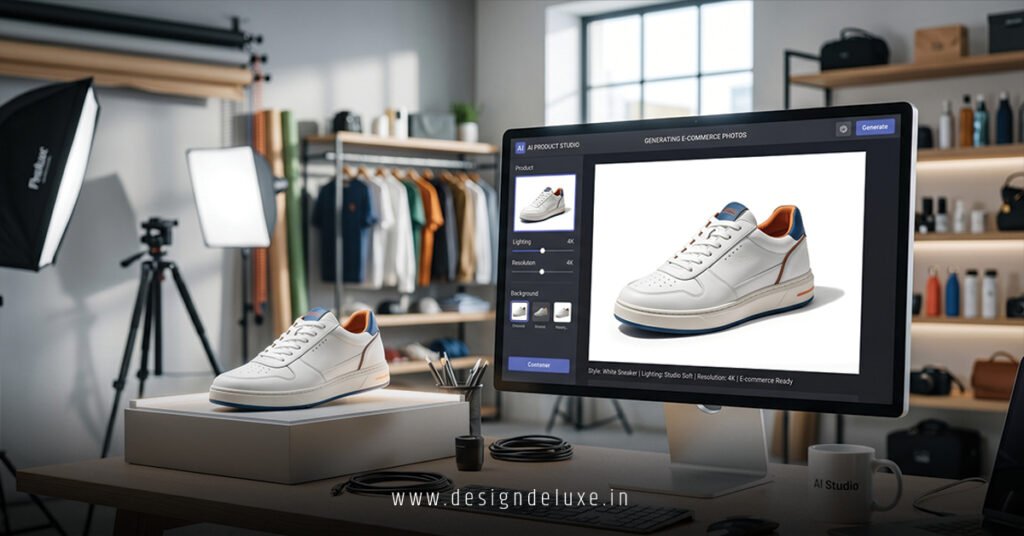
AI changes the math completely. Upload a few reference shots and generate clean backgrounds, lifestyle scenes, ghost mannequins, or full model presentations. Tools handle lighting, shadows, and reflections with scary accuracy.
The kicker? Shoppers can’t always tell the difference anymore. Many studies show strong AI images perform just as well as — sometimes better than — traditional pro shots for conversion.
This ties directly into broader strategies like conversion rate optimisation for e-commerce using generative AI tools. When your visuals pop, every other optimization works harder.
Key Benefits for Ecommerce Stores
Better photos don’t just look nice. They sell.
- Higher conversions: Professional-grade images can boost sales by 30% or more. Some reports show up to 94% better performance versus low-quality shots.
- Lower returns: Clear, accurate visuals set proper expectations and cut return rates significantly.
- Faster time-to-market: Generate variations for different platforms, regions, or campaigns instantly.
- Brand consistency: Lock in your style across thousands of products.
- Mobile optimization: AI outputs perfectly sized, fast-loading images that shine on phones.
One analogy that sticks: Traditional photography is like hand-weaving every rug. AI is a high-tech loom that follows your exact pattern at lightning speed.
Best AI Tools for Product Photography in 2026
The landscape moves fast. Here are standout options delivering real results:
| Tool | Best For | Starting Price | Standout Feature |
|---|---|---|---|
| Claid.ai | All-in-one catalog work | ~$19/mo | Bulk processing + generation |
| Photoroom | Quick edits & mobile | ~$15/mo | Instant background magic |
| Flair.ai | Lifestyle & creative scenes | ~$10/mo | 3D canvas control |
| Nightjar | Large catalog consistency | Varies | Brand preservation at scale |
| Pebblely | Simple, affordable backgrounds | ~$19/mo | Fast basic transformations |
Pick based on your volume and needs. Many offer free trials — test with your actual products.
Step-by-Step: Getting Started with AI Product Photography
Don’t overthink it. Here’s the practical playbook I’d follow:
- Audit your current images — Check lighting, angles, backgrounds, and mobile load times. Note drop-off pages in analytics.
- Choose your primary tool — Start with one strong all-rounder like Claid or Photoroom.
- Prepare reference shots — Use good smartphone photos or existing assets. Clean ones work best.
- Generate variations — Create packshots, lifestyle, on-model, and zoom-friendly versions.
- Optimize for platforms — Resize and format for Shopify, Amazon, social, and email.
- Test and measure — Run A/B tests on key product pages. Track conversion rate, time on page, and add-to-cart.
- Iterate — Feed performance data back into prompts for better results over time.
Start small. Optimize your top 20% of products that drive 80% of revenue first.
Common Mistakes to Avoid
Many brands rush in and slap generic AI images everywhere. Result? Off-brand visuals that hurt trust.
Others ignore human review. Always check for accuracy — especially on details like color, texture, and scale.
Forgetting optimization kills momentum too. Heavy files tank mobile speed and SEO.
Finally, some treat it as a complete replacement for creativity. Use AI as a powerful assistant, not the whole creative department.
Advanced Tactics for Better Results
Layer AI photos with smart personalization. Show different lifestyle scenes based on customer data.
Combine with video and 360 spins for even stronger engagement.
Use AI for seasonal campaigns — generate holiday-themed visuals in hours instead of weeks.
Ever wonder why some stores feel premium while others look amateur? Nine times out of ten, it’s the visuals.
Tie this into your wider conversion rate optimisation for e-commerce using generative AI tools by pairing great photos with dynamic copy and recommendations.
Key Takeaways
- AI product photography for ecommerce slashes costs while dramatically improving visual quality.
- Focus on accuracy and brand consistency over pure speed.
- High-quality images remain one of the strongest conversion levers available.
- Test everything — what looks good doesn’t always sell best.
- Combine AI photography with other generative tools for compounded results.
- Mobile-first optimization is non-negotiable.
- Start today with your hero products for quickest wins.
- Always maintain a human oversight layer.
Strong visuals build instant trust. In a sea of sameness, they make your products impossible to scroll past.
Your next move: Pick one tool, upload five products, and generate fresh assets this week. Then test them live. The uplift might surprise you.
FAQs
How much can AI product photography improve conversion rates?
Many stores see 20-40% lifts when replacing mediocre images with high-quality AI-enhanced or generated ones, especially when combined with strong page optimization.
Is AI product photography for ecommerce good enough for premium brands?
Yes — in 2026 the quality is there. Top tools maintain brand accuracy and details extremely well. Many luxury and DTC brands use them successfully with proper oversight.
How does AI product photography connect to conversion rate optimisation for e-commerce using generative AI tools?
Visuals form the foundation. When you pair stunning AI photos with AI-generated copy, personalized recommendations, and smart testing, your entire conversion funnel gets stronger.