UI & UX
UX research methods for beginners start with a simple mindset shift: stop guessing what users want and start watching what they actually do.
Quick overview:
- Qualitative methods (interviews, usability tests) uncover the “why” behind behavior.
- Quantitative methods (surveys, analytics) measure scale and frequency.
- Five to seven users often reveal most major usability issues.
- Beginners get the highest return from user interviews and moderated usability testing.
- Research only matters when it changes a real design decision.
In my experience, the teams that treat research as optional end up rebuilding features later at ten times the cost. The ones that run short, focused studies early ship cleaner products and waste less time arguing about opinions.
This work pairs directly with strong User Interface Design: Create Intuitive Digital Experiences. Research tells you what to build; good interface design makes that solution feel effortless.
Why UX Research Methods for Beginners Matter More Than Fancy Tools
You don’t need a research lab or expensive software. You need the right questions and the discipline to observe without interfering. Nielsen Norman Group’s framework still guides most practical work: methods sit on three axes—attitudinal vs behavioral, qualitative vs quantitative, and context of use.
Beginners often freeze because the menu of methods looks endless. Ignore the long list at first. Master two or three high-ROI techniques and expand later.
Core UX Research Methods Every Beginner Should Master
Focus on these first. They deliver clear, actionable insights without requiring advanced statistical knowledge.
User Interviews
One-on-one conversations that dig into needs, frustrations, and mental models. Best early, when you still need to understand the problem space. Keep sessions to 30–45 minutes. Ask open questions and follow interesting threads.
Usability Testing
Give real users specific tasks and watch them try. Moderated sessions (you sit with them) work best for beginners because you can probe in real time. Five participants per round usually surface the majority of serious problems.
Surveys
Useful when you need numbers—how often a pain point occurs, which option people prefer, satisfaction scores. Keep them short. Pair with qualitative work so you understand the stories behind the percentages.
Card Sorting and Tree Testing
Card sorting helps you figure out how users group information. Tree testing checks whether your proposed navigation structure actually works. Both are fast and cheap.
Analytics Review
Look at existing data (drop-off points, heatmaps, search terms) before you talk to anyone. It tells you where to focus research effort.
When to Use Which Method: Quick Comparison Table
| Research Goal | Best Methods | Sample Size Guidance | Time Needed | Output Type |
|---|---|---|---|---|
| Understand user problems & motivations | User interviews, contextual inquiry | 5–10 people | 1–2 weeks | Rich stories, themes |
| Check if a design is usable | Moderated usability testing | 5–7 per user segment | 3–5 days | Observed struggles |
| Measure frequency or preference | Surveys, analytics | 100+ for reliability | Days to weeks | Numbers, percentages |
| Validate navigation structure | Card sorting, tree testing | 15–30 for sorting | 1 week | Groupings, success rates |
| Compare two design options | A/B testing (later stage) | Statistically powered | Ongoing | Conversion impact |
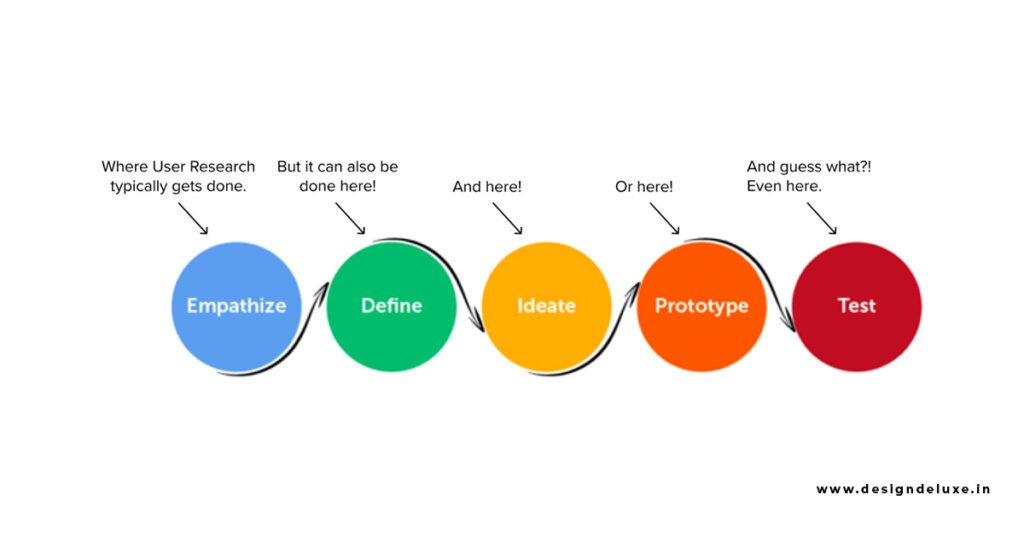
Step-by-Step Action Plan for Running Your First Study
- Define the decision you need to make.
“Research onboarding” is too vague. “Decide whether new users need a guided tour or can figure it out alone” is researchable. - Choose the matching method.
Why questions → interviews or usability tests. How many questions → surveys or analytics. - Recruit the right people.
Screen for your actual target users. Colleagues and friends almost always give you the wrong answers. - Write a short script or task list.
For interviews: 6–8 open questions max. For usability tests: 3–5 realistic tasks. - Run the sessions and take notes.
Record if possible (with permission). Note what people do, not just what they say. - Synthesize quickly.
Look for patterns across participants. Three people hitting the same wall is a real finding. - Share the insight in decision-ready form.
One-page summary with the recommendation and the evidence. Pretty decks that no one acts on are a waste.
What I’d do if I were coaching a complete beginner this week: start with five moderated usability tests on an existing screen or low-fi prototype. The insights arrive fast and feel concrete.
Common Mistakes & How to Fix Them
Mistake 1: Asking leading questions.
“Don’t you think this button is clearer?” forces agreement.
Fix: Use neutral phrasing. “What do you expect this button to do?”
Mistake 2: Recruiting the wrong participants.
Testing with coworkers or “anyone available” produces polite lies.
Fix: Write clear screener criteria tied to your actual users.
Mistake 3: Trying to answer too many questions at once.
Overloaded sessions produce shallow data.
Fix: Focus each study on one primary decision.
Mistake 4: Ignoring what people do in favor of what they say.
Users are bad at predicting their own behavior.
Fix: Prioritize observational methods (usability tests) over pure attitudinal ones.
Mistake 5: Stopping after one round.
One study rarely settles anything.
Fix: Plan iterative rounds. Test, fix, test again.
Mistake 6: Failing to connect findings to a design decision.
Research that sits in a slide deck dies.
Fix: End every report with “Here’s what we should change and why.”
These methods feed directly into better User Interface Design: Create Intuitive Digital Experiences. Research reveals the friction; interface design removes it.
Key Takeaways
- Start with the decision you need to make, not the method.
- User interviews and moderated usability testing give beginners the highest return.
- Five to seven users uncover most major usability problems.
- Qualitative work explains the “why”; quantitative work shows the scale.
- Recruit real target users—colleagues will mislead you.
- Keep scripts short and questions neutral.
- Share findings in a form that drives an immediate design change.
- Iterate: research, redesign, retest.
Mastering UX research methods for beginners turns opinions into evidence and guesswork into confident decisions. Pick one existing flow in your product this week, recruit five users, and run a focused usability test. The clarity you gain will make every later design choice easier—and will strengthen the foundation for creating truly intuitive digital experiences.
FAQs
What is the easiest UX research method for complete beginners?
Moderated usability testing with five participants. You give clear tasks, watch, and note where people struggle. No statistics required.
How many users do I need for reliable UX research methods for beginners?
For qualitative work like usability testing or interviews, five to seven people per distinct user group usually reveal the majority of serious issues. Larger samples are needed only for quantitative methods.
Can I do solid UX research methods for beginners with zero budget?
Yes. Use free video tools for remote sessions, recruit through social channels or existing customers, and synthesize findings in a shared document. The method matters more than the tooling.