Business & FinanceBrand
Unboxing Experience Ideas for Small Brands separate the sellers who get remembered from the ones who get returned. A small brand can’t out-spend Amazon on logistics, but it can absolutely out-charm a warehouse-grade shipping box. That’s the whole game here — turning a $6 mailer into a moment customers screenshot and share.
Quick summary before we dig in:
- What it is: intentional design choices — materials, inserts, layout — that make the moment a customer opens their package feel personal and premium.
- Why it matters for small brands: it’s the cheapest form of marketing you’ll ever run, and it directly feeds into reviews and repeat purchases.
- The core principle: delight scales emotion, not budget.
- The quickest win: a handwritten or printed thank-you note.
- The connection you can’t skip: strong unboxing depends on solid [E-Commerce Packaging: Design That Increases Reviews] fundamentals underneath it — protection first, delight second.
Why Small Brands Should Care About Unboxing More Than Big Retailers
Here’s the thing — big retailers optimize for speed and cost at scale. Small brands can’t compete there, and honestly, shouldn’t try.
What small brands can do is make every single package feel like it was packed by a human who actually cares. That’s a story a warehouse robot can’t tell.
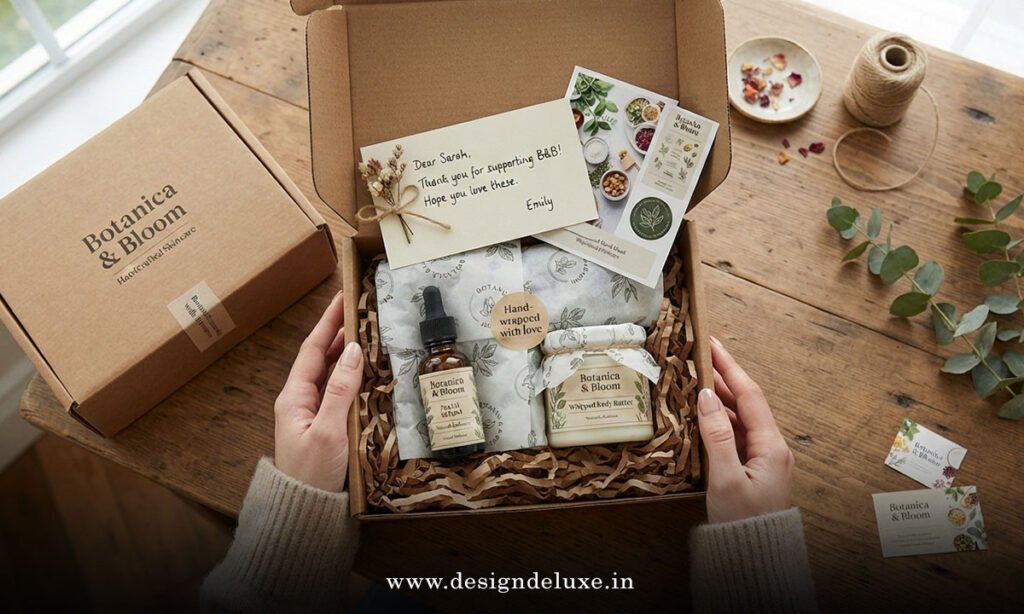
Would a customer post a video of a plain brown Amazon box? Rarely. Would they post one of a hand-stamped kraft box with tissue paper and a little card inside? Constantly.
The Foundation: Get Protection Right First
Before any creative idea works, the product has to arrive in one piece. This is where unboxing design overlaps directly with E-Commerce Packaging: Design That Increases Reviews — you can’t charm your way out of a shattered mug or a scuffed handbag.
In my experience, sellers jump straight to pretty inserts and skip structural testing. That’s backwards. Fix the cushioning, confirm the box size fits snugly, then layer on the fun stuff.
Unboxing Experience Ideas for Small Brands That Cost Almost Nothing
You don’t need a design agency for this. Some of the cheapest ideas work the best:
- Stamped kraft paper instead of printed boxes.
- A short, handwritten “thank you, [first name]” on the packing slip.
- Colored tissue paper that matches your brand palette.
- A small sticker sealing the tissue, branded but simple.
- A discount code for the next order tucked inside, printed small and clean.
None of these require new equipment. Most cost under 50 cents per order.
Mid-Budget Unboxing Upgrades Worth Testing
Once revenue supports it, a few upgrades punch above their cost.
Custom-printed mailer boxes. Even a one-color logo stamp on a plain box reads as intentional rather than generic.
Branded tape. Cheap to produce in bulk, and it’s the first thing a customer sees before the box even opens.
Insert cards with a clear call to action. Ask for a review, a social tag, or a referral — pick one ask, not three.
QR codes linking to a short thank-you video. Feels oddly personal for something so easy to set up.
Unboxing Materials Comparison for Small Brands
| Material/Element | Avg. Cost per Order (USD) | Perceived Value Boost | Best For |
|---|---|---|---|
| Plain poly bag | $0.10–$0.25 | Low | Low-cost, high-volume items |
| Kraft box + stamped logo | $0.60–$1.00 | Medium | Small brands building identity |
| Tissue paper + branded sticker | $0.20–$0.40 | Medium-High | Apparel, beauty, small goods |
| Full custom mailer + insert card | $1.50–$2.50 | High | Premium or gift-oriented brands |
Notice how the jump from “plain” to “branded” doesn’t require a huge leap in cost. That’s the sweet spot most small brands miss — they assume premium unboxing means premium pricing, and it just doesn’t.
Step-by-Step Plan to Build Your Unboxing Experience
- Order your own product blind. Experience it exactly as a stranger would, start to finish.
- Fix any structural weak points first — loose fit, weak tape, missing cushioning.
- Pick one signature touch. A scent, a color, a card style. Consistency builds recognition faster than variety.
- Add a single clear CTA inside the box — review request, social tag, or referral code.
- Test with 20–30 orders before scaling the change across your whole catalog.
- Track review rate and repeat purchase rate for 30 days post-change.
- Iterate slowly. Change one variable at a time so you actually know what worked.
Common Mistakes & How to Fix Them
Mistake 1: Trying to do everything at once.
Tissue, stickers, cards, scent — all in the same shipment reads as try-hard. Pick one or two signature elements and nail them.
Mistake 2: Ignoring sustainability concerns.
Excess plastic void-fill draws complaints in reviews more often than sellers expect. The EPA’s packaging waste data shows how much of this material ends up in landfills, and recyclable alternatives are cheap enough now to make the swap easy.
Mistake 3: Skipping labeling compliance.
Even a small, cute insert card can’t replace required disclosures. The FTC’s Fair Packaging and Labeling Act guidance covers what US sellers legally need on packaging, regardless of brand size.
Mistake 4: Forgetting shipping durability.
A gorgeous unboxing means nothing if the item arrives damaged. The USPS shipping and packaging guidelines are worth a five-minute read before finalizing box dimensions.
Key Takeaways
- Unboxing experience is the cheapest brand marketing a small business has access to.
- Protection always comes before decoration — this ties directly back to solid E-Commerce Packaging: Design That Increases Reviews fundamentals.
- Small, consistent touches beat expensive one-off gimmicks.
- One clear CTA inside the box outperforms multiple competing asks.
- Sustainable materials increasingly influence customer sentiment and reviews.
- Test one variable at a time to know what’s actually driving results.
- A signature scent, color, or card style builds recognition over repeat orders.
Small brands win the unboxing game not by spending more, but by caring more visibly. Pick one upgrade from this list, run it for a month, and watch what happens to your reviews and repeat orders.
FAQs
How does unboxing experience connect to E-Commerce Packaging: Design That Increases Reviews?
Unboxing is the emotional layer built on top of solid packaging fundamentals — protection, sizing, and materials all still matter before any creative touch gets added.
What’s the cheapest unboxing upgrade a new brand can start with?
A handwritten thank-you note or a branded sticker on tissue paper. Both cost pennies and instantly make packaging feel less generic.
Do customers really notice unboxing details, or is it overrated?
They notice more than most sellers assume — especially in beauty, apparel, and gift categories where unboxing videos and photos are common on social platforms.