Production
If you’re building a product without a clear product discovery process, you’re taking a bigger risk than you probably need to. It’s easy to get excited about features, launch something fast, and then find out the market wanted something else entirely. That’s why strong founders treat discovery as the job before the build.
In this article, we’re going to be taking a look at the product discovery process, and how you can use it to reduce wasted effort, make better product decisions, and build something people actually want. If you would like to find out more, feel free to read on.
Pic – CC0 License
What The Product Discovery Process Really Is
The product discovery process is the stage where you figure out what problem is worth solving before you spend time and money building the solution. It helps you learn who your customer is, what they struggle with, and whether your idea is worth pursuing.
This is not about sitting in meetings and guessing. It’s about real customer conversations, market research, quick testing, and honest feedback. When done well, the product discovery process saves time, lowers risk, and helps you create a product that fits the market better.
For founders who care about Next-Gen Product Design, discovery is where the real advantage starts.
Why The Product Discovery Process Matters
A lot of products fail for a simple reason: they solve the wrong problem. The product discovery process helps you avoid that mistake by checking demand early.
Here’s what it gives you:
- A clearer understanding of customer pain points
- Better feature priorities
- Less wasted development time
- Stronger messaging for sales and marketing
- A better chance of finding product-market fit
If you skip discovery, you may still build something useful, but you’re building on assumptions. That usually costs more in the long run.
The Main Steps In The Product Discovery Process
A good product discovery process does not need to be complicated. It just needs to be consistent.
1. Define The Problem
Start by naming the problem as clearly as possible. Who has it? How often does it happen? Why does it matter?
The sharper your problem statement, the easier it becomes to test whether the idea is real.
2. Talk To Real Customers
Customer interviews are one of the most useful parts of the product discovery process. Ask open questions about what they do now, what frustrates them, and what they’ve already tried.
Do not lead them toward your idea too early. You want to hear what they need, not hear them agree with you to be polite.
3. Study The Market
Look at competitors, substitutes, and current workarounds. Sometimes your biggest competition is not another company but a spreadsheet, manual process, or internal team doing it themselves.
This step helps you understand where your product can stand out.
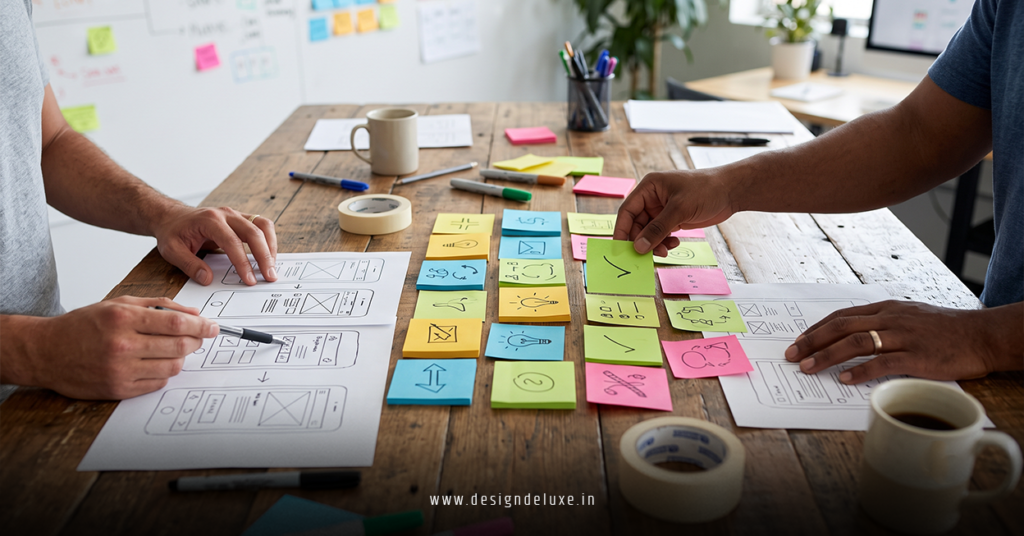
4. Test Early Concepts
Before building a full product, test simple concepts. That could be mockups, landing pages, clickable prototypes, or even a basic demo.
The goal is not perfection. The goal is learning.
5. Prioritise What Matters Most
Once you have feedback, sort ideas by impact and effort. Focus on the features that solve the biggest pain with the least complexity.
This is where good product teams stay disciplined instead of trying to build everything at once.
Common Mistakes In Product Discovery
Many teams make the product discovery process harder than it needs to be. A few common mistakes include:
- Asking friends instead of real buyers
- Talking more than listening
- Confusing interest with commitment
- Building too many features too early
- Ignoring negative feedback
The best discovery work is often simple, direct, and slightly uncomfortable. That’s usually a good sign.
How Product Discovery Supports Next-Gen Product Design
If you want a product that feels modern, useful, and hard to copy, you need a strong discovery process behind it. That is why the Next-Gen Product Design approach starts with customer insight, not just design trends.
Discovery helps you notice changes in behaviour, new technology shifts, and new customer expectations before your competitors do. In other words, it gives your product a head start.
A Simple Product Discovery Process You Can Use This Week
If you want a practical starting point, use this:
- Pick one problem your business might solve
- Interview five to ten people who deal with it
- Write down the repeated pain points
- Build a rough concept or mockup
- Test it with a small group
- Decide whether to improve, pivot, or stop
That’s enough to get useful answers without overthinking it.
When To Move From Discovery To Build
You’re ready to move forward when you see three things:
- The problem is real and repeated
- People care enough to engage with your idea
- Your solution feels meaningfully better than the alternatives
If those pieces are missing, keep learning. A little patience here can save a lot of money later.
Final Thoughts
The product discovery process is not a nice extra. It is one of the smartest ways to protect your time, money, and energy while increasing your odds of building something people truly want.
We hope that you have found this article enlightening in some way and that you now have a clearer view of how discovery supports better decisions. If you want to build smarter, start with discovery, then shape your product with the same thinking behind Next-Gen Product Design.