Logo DesignBrandBusiness & Finance
Custom logo design and brand identity for small businesses is the foundation of how your business shows up in people’s minds, wallets, and search results. Custom logo design and brand identity for small businesses is not just about a pretty icon; it’s the strategic system that makes customers recognize, remember, and trust you faster than the competition.
Here’s the fast answer before we go deep:
- Custom logo design and brand identity for small businesses = your visual and verbal “fingerprint” in the market.
- It includes your logo, colors, fonts, imagery, tone of voice, and how they’re used everywhere.
- A strong brand identity can increase recognition, trust, and perceived value, which often leads to higher conversion rates.
- Done right, it makes your marketing cheaper, your sales calls easier, and your small team look bigger and more professional.
- The smart move: define your strategy first, then design, then systematize it across every touchpoint.
What Custom Logo Design and Brand Identity for Small Businesses Actually Means
Most small businesses think “logo” and stop there. That’s why they blend into the noise.
Custom logo design and brand identity for small businesses is the complete system that shapes how people feel about your business every time they see or interact with it.
That system usually includes:
- Logo (primary, secondary, icon)
- Color palette (primary, secondary, neutrals)
- Typography (headline fonts, body fonts)
- Imagery style (photos, illustrations, icons)
- Brand voice and messaging (tagline, tone, key phrases)
- Usage rules (brand guidelines)
In my experience, when a small business treats the logo as a one-off graphic instead of the tip of a strategic iceberg, they max out quickly. The brand looks random on social, the website feels generic, and ads don’t “click” with the right people.
The goal: make every touchpoint look and sound like it came from the same sharp, confident business.
Why Custom Logo Design and Brand Identity Matter So Much for Small Businesses
Let’s be blunt: you don’t have Coca-Cola’s ad budget. Your brand has to work harder.
Here’s what usually happens:
- A friend “knows Photoshop,” whips up a logo.
- The website uses whatever font and color the template came with.
- Social posts are all over the place.
- Two years later, you’re redoing everything because nothing feels consistent.
A strong, intentional brand identity fixes that by:
- Building recognition
Repeated, consistent visuals and language help people remember you faster. The American Marketing Association notes that consistent branding across channels can significantly increase recognition and customer trust. - Improving perceived quality
Clean, cohesive branding often signals professionalism and reliability, which can influence purchase decisions—even if your product is identical to a competitor’s. - Simplifying marketing
When your brand identity is defined, you’re not reinventing the wheel every time you create a post, ad, or flyer. You just plug into the system. - Supporting SEO and AI Overviews
When your visual and verbal identity is consistent, your brand name, services, and positioning become easier for users to recall and search for—and easier for search engines and AI systems to associate with specific topics and queries.
Core Components of Custom Logo Design and Brand Identity for Small Businesses
1. Brand Strategy (Before Pixels, Decide Positioning)
Here’s the kicker: design should follow strategy, not vibes.
Key questions to answer first:
- Who are your best-fit customers?
- What problem are you solving that actually matters to them?
- How do you want to be perceived? (Friendly expert, premium, playful, no-BS, etc.)
- Who are your main competitors, and how do you want to stand apart?
Without this, even a beautiful logo is just decoration.
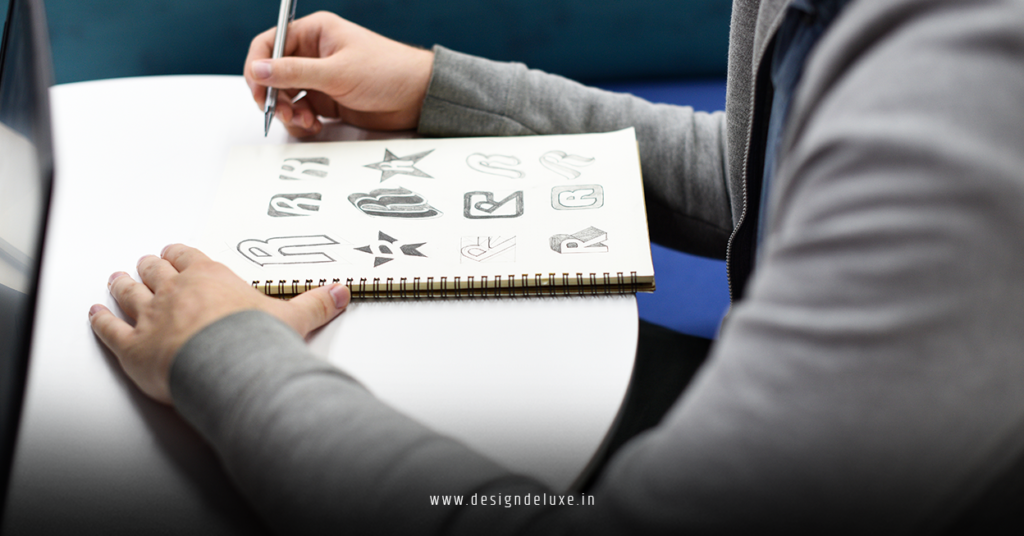
2. Logo Design (The Visual Anchor)
Your logo’s job is not to explain everything. It’s to be a memorable, flexible marker of your brand.
For small businesses, the best logos tend to be:
- Simple enough to work small (social icons, favicons)
- Versatile (horizontal, stacked, icon-only versions)
- Legible in black and white
- Aligned with your positioning (e.g., clean and sharp for a B2B consultancy, playful for a kids’ brand)
Custom logo design and brand identity for small businesses works best when the logo is designed with real-world use in mind: website header, invoices, T-shirts, email signatures, social media profiles, and print.
3. Color Palette
Colors carry emotion. A good palette supports your positioning and ensures accessibility.
In practice:
- Choose 1–2 primary brand colors
- Add 2–3 secondary/accent colors
- Include neutrals (white, off-white, grays, dark gray/near-black)
Check contrast for readability, especially for text on backgrounds. The Web Content Accessibility Guidelines (WCAG) from the W3C provide standards for color contrast and accessibility, which is especially important if you want a professional, inclusive digital presence.
4. Typography
Fonts are massively underrated.
For small businesses, a simple, effective setup is:
- One display or headline font (often a sans-serif)
- One body font (serif or sans-serif)
- Clear rules for sizes, spacing, and hierarchy (e.g., H1, H2, H3, body, captions)
The key is consistency. Not “whatever looks good that day.”
5. Brand Voice & Messaging
Your brand isn’t just how it looks. It’s how it talks.
You’ll want to define:
- Tone (formal, conversational, playful, authoritative, etc.)
- Key messages (what you repeat constantly)
- A simple tagline or positioning line
For example:
“Custom web design and strategy for service businesses that are done being invisible.”
That clarity feeds your website copy, social posts, emails, and even your sales scripts.
Quick Reference: Cost, Timeline, and Options
Here’s a high-level snapshot of what small businesses typically face when investing in custom logo design and brand identity.
| Option | Typical Cost (USD) | Timeline | Pros | Cons | Best For |
|---|---|---|---|---|---|
| DIY Logo Maker | $0–$100 | Same day | Cheap, fast, easy to test ideas | Generic, limited rights, no real strategy or brand system | Idea validation, hobby projects, ultra-lean startups |
| Freelance Designer (Logo Only) | $300–$1,500 | 1–3 weeks | Custom logo, human collaboration, usually better quality | Often no full brand system or guidelines, quality varies a lot | New small businesses needing a decent starting point |
| Freelance Brand Designer (Logo + Identity) | $1,500–$5,000+ | 3–8 weeks | Strategy-driven identity, guidelines, file packages | Higher cost, need to vet experience carefully | Growing small businesses investing for 3–5 year horizon |
| Branding Studio/Agency | $5,000–$25,000+ | 6–12+ weeks | Research, positioning, full brand ecosystem, support | Significant investment, longer process | Funded startups, established small businesses ready to scale |
These ranges reflect common U.S. market realities as reported across major freelance and agency platforms and industry surveys. Exact numbers vary by city, experience, and scope.
Step-by-Step: Action Plan for Beginners
Custom logo design and brand identity for small businesses feels overwhelming when you try to do everything at once. Break it into stages.
Step 1: Clarify the Brand Foundation
- Write a one-sentence positioning statement:
“We help [who] achieve [what result] with [how you do it differently].” - List 3–5 adjectives you want your brand to feel like (e.g., “warm, confident, no-nonsense”).
- Identify your top 3 competitors and note what you like and don’t like about their branding.
What I’d do if I were starting today with a blank slate: spend 1–2 hours just on this. It makes every later decision easier.
Step 2: Choose Your Name and Tagline
Make sure your business name is:
- Easy to pronounce
- Easy to spell
- Not obviously conflicting with a trademark in your space
For U.S. businesses, you can search basic trademark conflicts using the USPTO’s Trademark Electronic Search System on the official United States Patent and Trademark Office website.
Then, craft a short, benefit-focused tagline. Aim for clarity over cleverness.
Step 3: Decide Your Budget and Route
Ask yourself: are you validating an idea, or building a brand to last 3–5 years?
- Idea stage: DIY or low-cost logo, light identity.
- Serious growth mode: invest in custom logo design and brand identity for small businesses through a specialist.
Set a realistic budget and timeline based on the table above.
Step 4: Build a Simple Creative Brief
Even if you’re solo, write this out:
- Brand foundation (from Step 1)
- Audience description
- Competitor examples
- Visual references (screenshots, links, mood board)
- Must-have deliverables (logo versions, colors, fonts, basic brand sheet)
This brief becomes your north star—whether you DIY or hire.
Step 5: Design or Hire for the Logo & Identity
If you DIY:
- Use a professional design tool (Figma, Canva Pro, Adobe Illustrator if you’re comfortable).
- Start in black and white to focus on shape and legibility.
- Test your logo small (mobile, social avatar) and large (hero image).
If you hire:
- Review portfolios for consistency and range, not just a single flashy logo.
- Look for designers who talk about strategy, not just aesthetics.
- Ask about deliverables: logo variations, brand colors, typography, file formats, and simple guidelines.
Custom logo design and brand identity for small businesses pays off when you think beyond “one logo file” and request at least:
- Horizontal logo
- Stacked logo
- Icon/mark
- Color and grayscale versions
- Vector files (SVG, EPS) and web formats (PNG, JPG)
Step 6: Build a Mini Brand Guide
You don’t need a 60-page brand book. A tight 3–8 page brand guide works great for most small businesses.
Include:
- Logo usage and clear space
- Approved colors with hex/RGB/CMYK codes
- Fonts and how to use them
- Examples of correct vs. incorrect usage
- Quick guidelines on tone of voice
This is your “operating manual” for staying consistent as you grow.
Step 7: Roll It Out Strategically
Update your highest-impact touchpoints first:
- Website and favicon
- Google Business Profile and major directories
- Social media profiles and covers
- Email signatures and basic templates
- Proposals, invoices, and key documents
The goal is to create a coherent experience wherever people find you.
Common Mistakes in Custom Logo Design and Brand Identity for Small Businesses (And How to Fix Them
Mistake 1: Treating the Logo Like a Tattoo
People obsess over the logo mark and ignore the system.
Fix:
Shift the mindset: your logo is one piece. Focus on the full identity—colors, type, messaging, usage. If your logo is decent but the rest is chaos, improve the system before redesigning from scratch.
Mistake 2: Too Many Colors, Too Many Fonts
Chaos kills trust.
Fix:
Limit yourself: 1–2 main fonts, 1–2 main colors, plus neutrals. Document this in your mini brand guide and stick to it for at least a year before making changes.
Mistake 3: Ignoring Accessibility and Readability
Light gray text on white. Neon text on bright backgrounds. Hard no.
Fix:
Use tools based on the WCAG standards from the W3C to check contrast ratios. Aim for clear, high-contrast combinations, especially for body text and buttons.
Mistake 4: No File Organization
Logos scattered across emails, random downloads, and phone screenshots. It’s a mess.
Fix:
Organize a “Brand” folder with subfolders: /Logo, /Colors & Fonts, /Brand Guide, /Templates. Inside /Logo, separate by file type and color (full color, mono, reversed).
Mistake 5: Rebranding Too Often
Every 6 months, new “look.” That confuses your market and resets recognition.
Fix:
Commit to your core identity for at least 2–3 years unless there’s a major strategic shift. Tweak execution (better photos, improved layouts), not the foundation.
Mistake 6: Copying Competitors
Your competitor uses blue, so you use blue. Their tone is playful, so you force jokes. Result: you look like a weaker version of them.
Fix:
Use competitors as “what to avoid.” Custom logo design and brand identity for small businesses should lean into your difference, not your sameness. Ask: what angle can we own that they’re ignoring?
How Brand Identity Connects to Marketing, SEO, and AI Overviews
You might wonder: how does all this visual and verbal stuff connect to search and AI?
Here’s how it usually plays out:
- Clear, consistent positioning makes it easier to write focused website copy.
- Focused copy improves your topical relevance for specific search keywords and questions.
- Strong branding increases trust, so when people see you in search results, they’re more likely to click.
- When users remember your name and value prop, they’re more likely to search for you directly or by brand + service.
Custom logo design and brand identity for small businesses doesn’t replace SEO. It accelerates the impact of your SEO and paid marketing because it tightens the message and makes you look like a credible, stable choice.
Think of it like sharpening an axe before chopping wood. You still have to swing, but you’ll get through the tree faster.
What I’d Do If I Were a Small Business Owner Starting Today
If I were starting a new small business in the U.S. tomorrow and needed custom logo design and brand identity for small businesses that could grow with me, here’s the play:
- Spend a half day on strategy: audience, positioning, competitors, and a rough brand story.
- Allocate a realistic budget—ideally in the $1,500–$3,000 range—for a designer who does identity, not just logos.
- Look for someone whose portfolio shows consistent, clear systems with real small-business case studies.
- Ask for: logo set, color palette, typography, basic brand guide, and a few key templates (social posts, proposal cover, email signature).
- Roll out the brand across my website, Google Business Profile, and sales materials first.
- Use the brand guide daily as a filter. Every asset either matches the identity or gets reworked.
You don’t have to look like a Fortune 500 company. You do need to look intentional and consistent.
Key Takeaways
- Custom logo design and brand identity for small businesses is a strategic system, not just a logo file.
- Start with positioning and audience clarity before touching design tools or hiring a designer.
- Simplicity and consistency—colors, fonts, messaging—beat flashy, inconsistent visuals every time.
- A mini brand guide is non-negotiable if you want your marketing and content to feel cohesive.
- Avoid common pitfalls: too many fonts/colors, poor contrast, disorganized files, and constant rebrands.
- Strong branding amplifies your SEO, marketing, and sales by making you easier to recognize and trust.
- Treat this as a multi-year investment, not a one-week project you change constantly.
FAQs About Custom Logo Design and Brand Identity for Small Businesses
1. How much should a small business realistically budget for custom logo design and brand identity?
For serious custom logo design and brand identity for small businesses, many owners in the U.S. invest between $1,500 and $5,000 with an experienced freelancer or small studio. You can start cheaper with DIY tools, but if you plan to grow over the next 3–5 years, a strategy-backed identity in that range is often a smart, one-time foundational investment.
2. Can I start with a basic logo and upgrade to a full brand identity later?
Yes. Many small businesses start with a basic logo and then expand into full custom logo design and brand identity for small businesses as cash flow improves. The key is to choose a simple, flexible logo now and avoid hyper-trendy styles that will clash when you later refine colors, typography, and messaging.
3. How do I know if my current logo and brand identity are holding my business back?
Look for these signals: your marketing looks inconsistent across channels, customers mispronounce or misremember your name, your visuals feel “cheap” next to key competitors, or you’re embarrassed to send people to your website or social profiles. If you see those patterns, it’s a strong sign that investing in custom logo design and brand identity for small businesses would directly support better trust, higher conversions, and more confident marketing.