BrandBusiness & Finance
Brand storytelling for small business is one of the most powerful tools you have that doesn’t require a huge budget. The challenge most owners face is simple: you know what you do, but your customers only see a logo, a product, and a price. Without a clear story, you end up competing on discounts, shouting louder, or posting content that feels random.
When your story is vague, customers move on. When your story is clear and consistent, customers start to remember you, recommend you, and pay attention when you show up. In this article, we’re going to be taking a look at brand storytelling for small business, and how you can use it alongside Visual Storytelling 2026 to build trust and win more of the right customers. If you would like to find out more, feel free to read on.
Pic – CC0 License
Why your small business needs a simple story
We’re going to be honest with you: people are not thinking about your brand as much as you are. They are busy, distracted, and flooded with choices. A simple, strong story gives them a reason to care.
Your brand story should explain three things clearly:
- Who you are
- What you stand for
- Why your product or service exists
You don’t need dramatic origin stories. You need a human reason. Maybe you started your bakery because you missed real sourdough in your area. Maybe you launched a consulting firm because you saw small businesses being ignored by bigger agencies. That kind of honesty is what people remember.
Once you have that core story, you can express it visually through photos, short video, and simple graphics. That’s where Visual 2026 comes in, helping you turn your words into something people actually see and feel.
The basics of brand storytelling for small business
We’re going to break this down into parts you can actually use. Think of your brand story as a clear thread that runs through everything you publish: website copy, social posts, ads, emails, even the way you answer customer questions.
A strong small business brand story usually includes:
- A clear problem your customer faces
- The way you solve it
- What makes your approach different or more human
- The outcome your customer gets
For example, instead of saying, “We sell accounting services,” you might say, “We help small business owners stop fearing tax season so they can focus on growth.” That’s a story. It tells us what you care about and who you help.
If you want more ideas on turning business messages into stories, the Content Marketing Institute shares practical advice that works well for small teams.
Visual Storytelling 2026: making your brand story visible
Here’s where we connect the dots. Your story is not just words on a page; it’s what people experience when they see your brand. Visual Storytelling 2026 is all about showing your story in ways that feel real and easy to understand.
For small businesses, that could mean:
- Behind-the-scenes photos of your team
- Short videos showing your process
- Before-and-after images that show transformation
- Customer testimonials with real faces
- Simple diagrams that explain your service
When you combine brand storytelling for small business with Visual Storytelling 2026, you stop posting random content and start building a consistent visual identity. Your audience begins to recognize your style, your tone, and your point of view.
If you’re unsure what visual formats work best on different platforms, HubSpot’s marketing resources offer up-to-date guidance on content trends and examples.
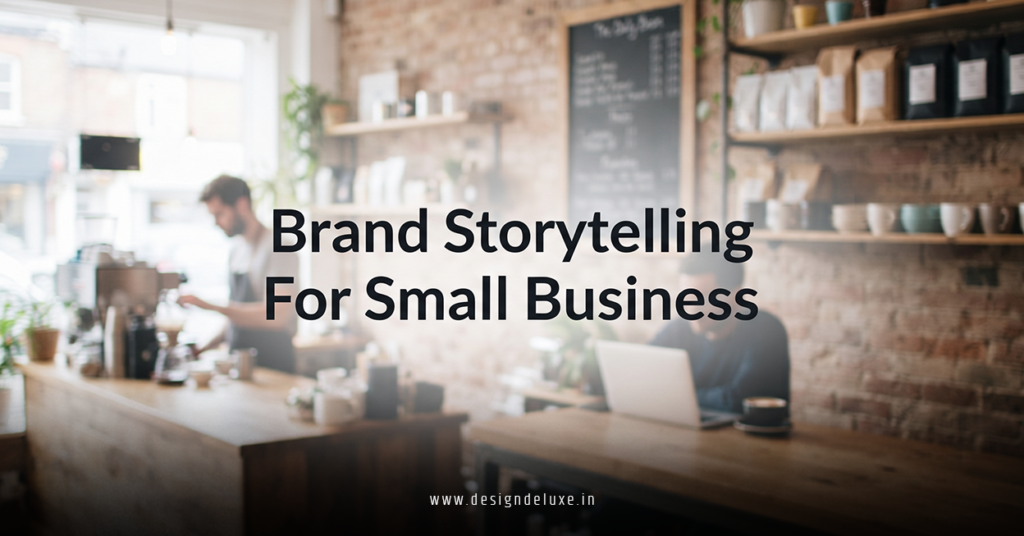
How to build trust with your brand story
We’re going to keep this straightforward: trust is earned by being consistent and honest over time. Your brand story should match what people see and experience when they interact with your business.
Here are a few ways to build trust through storytelling:
- Share real customer results, not just bold claims
- Show your process, including the effort behind the scenes
- Be open about your values and why they matter
- Admit what you don’t do, so expectations stay realistic
Small businesses in the USA, UK, Australia, Singapore, and Dubai all face the same issue: customers have options. Your story helps them feel like they know you, not just your product.
Visual proof matters here too. A simple founder video, a tour of your workspace, or a clear case study turns your story from “nice words” into something believable.
If you want to understand how search engines see and reward helpful content, Google Search Central gives useful guidance on building content that both humans and algorithms can trust.
Where to use your brand story first
You don’t need to rewrite your entire business overnight. Start by updating the key touchpoints where new people meet your brand. We’re going to suggest a simple order:
- Website homepage
Make sure your main headline and intro reflect your brand story. In a few lines, explain who you help and how. - About page
Tell your origin story in a clean, honest way. Share why you started, what you care about, and what makes your approach different. - Social media profiles and bios
Use your story to guide your bio and pinned posts. This is often where people first discover you. - Sales pages or service pages
Add short customer stories, visuals, and proof that brings your brand story to life.
Once those core areas feel aligned, start updating your ongoing content. Use your brand story as a filter: if a post doesn’t support that story in some way, you probably don’t need it.
Keeping your brand story alive over time
Brand storytelling for small business is not a one-time exercise. It’s a habit. Your story should grow as your business grows, but the core should stay steady.
Here are a few ways to keep it alive:
- Regularly share new customer stories and wins
- Show how you’re improving your product or service
- Introduce new team members and partners
- Talk about lessons learned along the way
We’re going to encourage you to think of your brand story as a relationship with your audience. You show up, you share, you listen, and you adjust. Over time, that relationship becomes your biggest advantage.
We hope that you have found this article enlightening in some way, because brand storytelling for small business is one of the most practical ways to stand out without shouting. When you combine a clear story with the power of Visual Storytelling 2026, you make your message easier to see, easier to feel, and easier to remember. If you keep things honest, simple, and consistent, your brand story will become an asset that works for you every day.