Business & Finance
Coffee roasting basics is where green beans turn into the flavor, aroma, and character people actually buy. Get the roast right, and you unlock sweetness, clarity, body, and consistency; get it wrong, and even good beans can taste flat or harsh.
Coffee roasting basics at a glance
- Roasting transforms green coffee through heat, time, and airflow.
- The main goal is to develop flavor without burning the bean.
- Roast level affects acidity, sweetness, body, and bitterness.
- Consistency matters as much as taste.
- Smart branding and custom coffee packaging design for small roaster brands help the coffee look as good as it tastes.
What coffee roasting actually does
Green coffee does not taste like the cup you know. Roasting triggers chemical changes that create aroma compounds, browning, and the flavor notes people associate with coffee.
The process is part science, part feel. Heat moves into the bean, moisture escapes, sugars change, and the bean structure expands. The roaster’s job is to guide that transformation without pushing it too far.
The main roast stages
Roasting usually moves through a few recognizable stages.
- Drying stage: The bean loses internal moisture.
- Browning stage: Color shifts, aromas build, and sugars begin to develop.
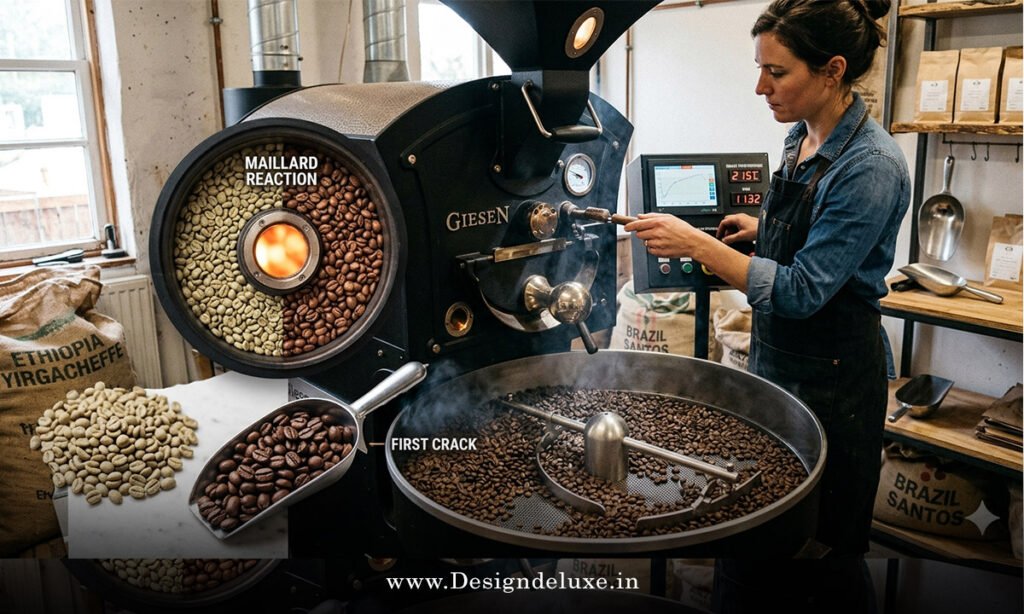
- First crack: The bean expands and makes a popping sound.
- Development stage: Flavor deepens after first crack.
- Drop: The roast is stopped at the chosen profile.
Each stage affects the final cup. A rushed roast can taste grassy or uneven. A roast pushed too hard can turn bitter or smoky.
Roast levels and flavor
Roast level is one of the biggest drivers of taste. Here’s the simple version:
| Roast level | Flavor style | Common traits |
|---|---|---|
| Light roast | Brighter, more acidic, origin-focused | Fruity, floral, tea-like |
| Medium roast | Balanced and round | Sweetness, medium body, softer acidity |
| Dark roast | Bold and intense | Bitterness, roast notes, heavier body |
Light roasts usually preserve more origin character. Dark roasts emphasize roast flavor more strongly. Medium roasts sit in the middle and are often the easiest starting point for new roasters.
Equipment you need
You do not need a huge setup to begin learning coffee roasting basics, but you do need control.
- Roaster: drum, fluid bed, or sample roaster.
- Scale: for tracking batch size and loss.
- Timer: for profiling roast time.
- Thermometer or probe system: for heat monitoring.
- Cooling tray or cooling system: to stop roasting quickly.
- Storage containers: to protect roasted beans.
Small-batch roasting is the best place to learn. It gives you room to test, compare, and correct without wasting large volumes of coffee.
Core roasting variables
Three variables matter most: heat, airflow, and time.
Heat drives the roast forward. Airflow affects smoke removal and bean movement. Time controls how long the beans spend in each stage.
If heat is too high, the roast can race ahead and create uneven flavor. If heat is too low, the coffee may bake and taste dull. The sweet spot is control, not speed.
How to roast coffee step by step
If you are starting out, keep the process simple.
- Measure your green coffee.
- Preheat the roaster.
- Load the beans.
- Track temperature, time, and color.
- Watch for browning and first crack.
- Decide your development time.
- Drop the roast at the target point.
- Cool the beans fast.
- Rest the coffee before cupping.
That last step matters. Freshly roasted coffee often needs a short resting period before it tastes balanced.
Common mistakes
New roasters tend to make the same errors.
- Roasting too fast and losing sweetness.
- Ignoring batch-to-batch consistency.
- Not cooling beans quickly enough.
- Chasing a roast color instead of a flavor target.
- Failing to record roast data.
The fix is simple: log every roast, cup every batch, and change one variable at a time.
Why packaging matters after roasting
Roasting is only half the job. Once the coffee is ready, presentation and protection take over.
That is where custom coffee packaging design for small roaster brands becomes a real business asset. Strong packaging keeps coffee fresher, improves shelf appeal, and helps small roasters look polished from day one.
Final thoughts
Coffee roasting basics are about control, patience, and repetition. Learn the stages, respect the variables, and focus on cup quality instead of chasing shortcuts.
Once the roast is dialed in, the next edge comes from how the coffee is presented, protected, and sold. That is where branding and packaging start to matter just as much as the roast itself.
FAQs
What is the easiest roast level for beginners?
Medium roast is often the easiest place to start because it offers a balance between brightness, sweetness, and body.
How long should coffee rest after roasting?
Most coffees benefit from resting for at least a short period before cupping, so flavors can settle and become more balanced.
Why is packaging important in coffee roasting basics?
Packaging protects freshness, supports brand identity, and helps the coffee stand out, especially for small roasters.