Logo Design
Adaptive logo design trends 2026 flip the script on traditional branding. Brands ditch one rigid mark for flexible systems that shift, morph, and respond across every touchpoint.
- Core idea: Logos built as living systems with multiple variations instead of a single static file.
- Why now: Screens range from smartwatches to billboards, plus AR and motion demand adaptability.
- Biggest shift: From fixed identity to contextual intelligence that keeps recognition rock-solid.
- Who wins: Ecommerce, tech, and DTC brands operating in fragmented digital spaces.
- The edge: Higher engagement, better usability, and future-proof visuals that feel human.
Adaptive logo design trends 2026 aren’t about chasing novelty. They’re about survival in a world where your brand shows up everywhere, all at once.
What Makes Adaptive Logos Different in 2026
Static logos look dated fast. Modern ones breathe. They simplify for tiny favicons, expand with detail on big screens, and animate naturally for video or social.
The real power hits when these systems connect to physical worlds. Many brands now link adaptive identities directly into adaptive logo design with AR packaging for ecommerce brands 2026 for seamless experiences from scroll to unboxing.
Picture this: your logo stays instantly recognizable whether it’s a glowing AR overlay on packaging or a crisp icon on mobile. No more awkward scaling or lost personality.
Top Adaptive Logo Design Trends 2026
Several clear directions dominate this year.
Dynamic Morphing Systems
Logos that intelligently change shape or complexity based on context. A detailed crest on desktop might collapse into a simple geometric “blip” on wearables. Not random — governed by strict rules.
Context-Aware Variations
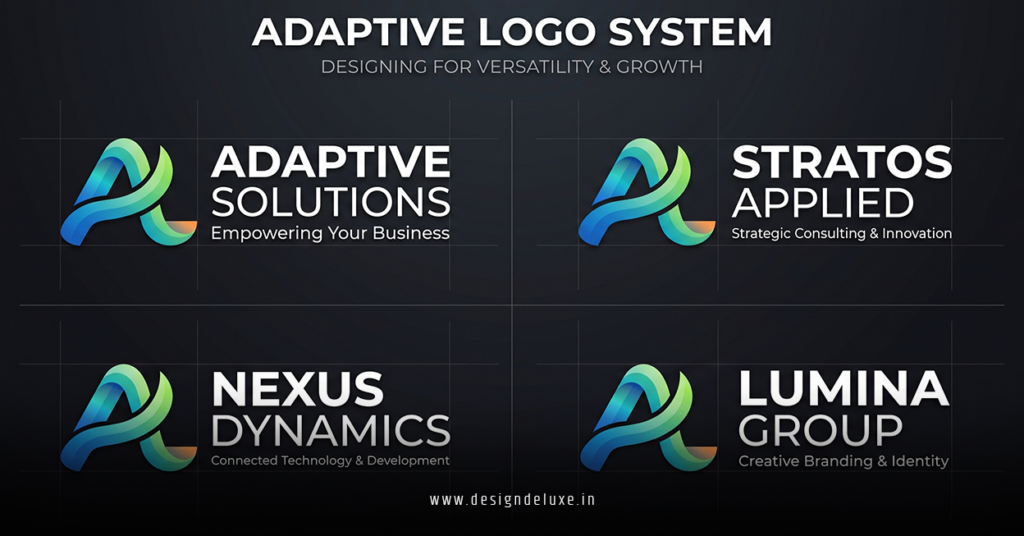
Brands create rule-based families: full lockups, monograms, animated versions, light/dark modes. The logo adapts to screen size, platform, or even user behavior.
AI-Assisted Generative Elements
Designers use AI to generate variations quickly, then refine them by hand. This speeds up exploration while keeping the final output distinctly human.
Motion-First & Kinetic Logos
Logos designed for movement from day one. Subtle animations that trigger on hover, scroll, or scan add life without overwhelming.
Neo-Minimalism with Personality
Clean foundations paired with expressive details — warm textures, micro-illustrations, or unexpected twists that adapt across formats.
Eco-Conscious & Fluid Forms
Organic, biomorphic shapes that feel alive and adapt well to sustainable packaging or digital environments.
Step-by-Step: Building Your Adaptive Logo System
Beginners, don’t panic. You don’t need a massive budget.
- Define Your Core DNA
Nail down the essential elements that never change — shape, color logic, spacing. Everything else can flex. - Create Variation Rules
Document exactly how the logo behaves in different contexts. Small screen? Drop details. Motion? Add tasteful animation. - Design Multiple Assets
Build full, simplified, icon, and horizontal versions. Test them mercilessly on real devices. - Incorporate Tech
Prepare files for web, print, and AR/VR. Tools like Figma make this manageable. - Test Across Contexts
Check performance on mobile, desktop, packaging, and social. Gather real user feedback. - Document Everything
Create a flexible brand guide that evolves. Update it as new platforms emerge.
What I’d do? Start with one hero product line. Roll out variations there first. Measure recognition and engagement before full deployment. The brands crushing it treat this as a system, not a one-off design project.
Common Pitfalls & Quick Fixes
Over-flexibility kills recognition.
Fix: Always anchor variations to a strong, simple core mark.
Ignoring small screens.
Fix: Design mobile-first, then scale up.
Too much AI, not enough soul.
Fix: Use AI for speed, but hand-craft the final emotional details.
Inconsistent application.
Fix: Build strict guidelines with clear do’s and don’ts.
Forgetting physical worlds.
Fix: Design with packaging and AR in mind from the start. This ties beautifully into full adaptive logo design with AR packaging for ecommerce brands 2026 strategies.
Pros and Cons of Adaptive Logo Systems
| Factor | Traditional Static Logo | Adaptive System 2026 | Real-World Outcome |
|---|---|---|---|
| Versatility | Limited | Works everywhere | Better cross-platform performance |
| Recognition | Strong in ideal conditions | Consistent across contexts | Higher recall rates |
| Production Time | Faster initially | More upfront work | Long-term efficiency |
| Cost | Lower upfront | Higher initial investment | Better ROI over time |
| Future-Proofing | Poor | Excellent | Scales with new tech |
Making Adaptive Logos Work for Your Brand
Smaller brands can start lean. Use Figma for variants and free testing tools. Focus energy on core rules rather than endless options.
The smartest move? Connect your digital identity to physical products. Leading ecommerce players already do this through integrated AR experiences that extend the logo’s adaptive nature into customers’ hands.
For inspiration on cutting-edge implementations, explore case studies at Awwwards and practical breakdowns on Wix Blog.
Key Takeaways
- Adaptive logo design trends 2026 prioritize flexible systems over rigid marks.
- Strong core rules keep variations recognizable across every platform.
- Motion and context-awareness define winning identities this year.
- AI helps generate options — human judgment creates soul.
- Testing across devices and real environments is non-negotiable.
- Physical integration, especially packaging and AR, multiplies impact.
- Start simple, document everything, iterate based on data.
- Brands that adapt win attention in fragmented spaces.
Adaptive logo design trends 2026 reward brands that think in systems, not single assets. The result feels more alive, more personal, and far more effective.
Ready to evolve? Pull out your current logo and sketch three contextual variations today. That’s where the real advantage begins.
FAQs
What are the main adaptive logo design trends 2026 brands should watch?
Dynamic morphing, context-aware variations, motion integration, and AI-assisted generation top the list. The focus stays on maintaining instant recognition while flexing to fit different environments.
How do adaptive logos connect to physical products like packaging?
They create seamless experiences. Many brands extend their adaptive systems into adaptive logo design with AR packaging for ecommerce brands 2026, where the logo triggers interactive digital layers when scanned.
Can small businesses implement adaptive logo design trends 2026 effectively?
Yes. Start with core rules and 3-4 key variations. Free or affordable tools handle most of the work. Focus on high-impact touchpoints first for maximum return.