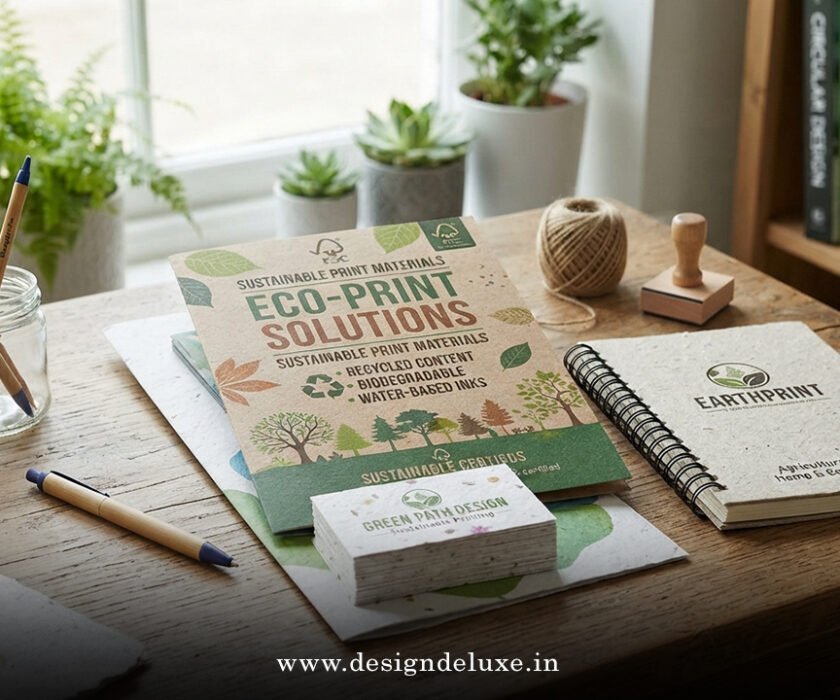
Eco-Friendly / SustainableBrand Packaging
Sustainable Packaging Materials Guide :
Sustainable packaging materials are the physical foundation of every green product promise your brand makes. Get the material right, and everything downstream—your brand perception, your compliance posture, your customer retention—gets easier. Get it wrong, and you’ve just paid a premium to confuse your customer and frustrate a recycling facility worker in Ohio.
Here’s what this guide covers at a glance:
- What sustainable packaging materials actually are — and how to cut through the marketing noise
- The five main material categories with real-world trade-offs, costs, and use cases
- Recyclability data by material so you can match materials to actual U.S. infrastructure
- A step-by-step selection process built for beginners and intermediate brand operators
- The certification landscape — FSC, How2Recycle, GRS, and what each one actually means for your label
Once you’ve nailed your material selection, the next layer is how you wrap a brand identity around it — which is where eco friendly packaging design and branding for sustainable products becomes the strategic complement to everything covered here.
What “Sustainable Packaging Material” Actually Means (No Spin)
Here’s the thing — “sustainable” is not a material. It’s a performance standard. The Sustainable Packaging Coalition defines it as packaging that is safe for humans and the environment throughout its lifecycle, made with renewable or recycled inputs, manufactured cleanly, and designed to be recovered at end-of-life.
That’s a high bar. Almost nothing hits all four perfectly.
What you’re actually doing when you choose a sustainable material is making a series of trade-offs: environmental impact vs. cost vs. consumer accessibility vs. product protection. The best brands make those trade-offs consciously and communicate them honestly.
The global sustainable packaging market was valued at $325.94 billion in 2026 and is projected to reach $463.41 billion by 2031, per Mordor Intelligence — growing at a 7.29% CAGR. Paper and paperboard lead by material share at 39.96% of 2025 revenue. Recyclable solutions held a 44.88% process share in 2025. Those numbers tell you where the infrastructure and consumer confidence already exists.
So what are your actual options?
The 5 Core Sustainable Packaging Material Categories
1. Paper, Cardboard & Fiber-Based Materials
This is your highest-confidence starting point. Corrugated cardboard has a 93.6% recycling rate in the U.S. — the highest of any packaging material. Paperboard sits above 80%. These numbers reflect real curbside acceptance, not theoretical recyclability.
FSC-certified kraft corrugated runs 0–5% more than conventional corrugated. Molded pulp — the premium cousin used in cosmetics trays and electronics inserts — runs 10–20% more, but delivers an unboxing experience that communicates quality without saying a word.
“Paperization” is a real trend. It has taken over brand packaging portfolios across health, beauty, and food, per the Sustainable Packaging Coalition’s 2025 Trends Report. If you’re starting from zero, start here.
Best for: Mailers, shipping boxes, retail cartons, hang tags, void fill, inserts, trays
2. Post-Consumer Recycled (PCR) Plastics
Not all plastic is the enemy. PCR plastic — material that’s been collected, sorted, and reprocessed from consumer waste streams — reduces demand for virgin fossil-fuel-derived resin. That’s real impact.
PCR plastic runs 10–25% more than virgin plastic per unit at typical small-brand order volumes. The trade-off is supply chain complexity: PCR quality can vary batch-to-batch, and food-grade PCR is harder to source than PCR for non-food applications.
Major brands are already moving hard here. Unilever’s target is 100% of plastic packaging to be reusable, recyclable, or compostable by 2030 for rigid formats. The U.S. Plastics Pact has standardized PCR measurement toolkits to help brands verify content and streamline reporting.
Best for: Bottles, containers, pouches, flexible packaging in personal care, household products
3. Glass
U.S. consumers rank glass as the most sustainable packaging type, with 60% calling it “extremely or very sustainable” — compared to just 22–33% who say the same for plastic formats (McKinsey, 2025 U.S. Consumer Survey).
Glass is infinitely recyclable without quality degradation. It has a 33% recycling rate in the U.S. currently — not because it’s hard to recycle, but because curbside collection infrastructure is inconsistent across regions. The consumer perception, though, is unmatched for premium positioning.
The kicker: glass adds significant weight to your shipments. For DTC brands paying dimensional and weight-based shipping rates, that cost adds up fast. Run your landed cost math before committing.
Best for: Beverages, premium cosmetics, food jars, spirits, supplements
4. Compostable & Biodegradable Materials (PLA, Bagasse, Mycelium, Seaweed)
This is where things get complicated — and where greenwashing risk is highest. These materials are genuinely exciting from an environmental engineering standpoint. They’re also the most misunderstood category in retail packaging.
| Material | Compostable? | Infrastructure Required | Decomposition Timeline | Cost vs. Conventional |
|---|---|---|---|---|
| PLA (corn starch) | ✅ Industrial only | Commercial composting facility | 2–6 months (industrial) | +20–40% |
| Bagasse (sugarcane fiber) | ✅ Commercial/Home | Low | 1–3 months | +15–25% |
| Mushroom / Mycelium | ✅ Home compostable | Minimal | 30–90 days | +50–100% |
| Seaweed-based | ✅ Home/ocean safe | Minimal | 4–6 weeks | +100–300% |
| PBAT / PLA blend | ✅ ASTM D6400 certified | Industrial | 3–6 months | +25–45% |
The problem? Fewer than 10% of U.S. consumers have access to industrial composting infrastructure. If your PLA container goes into a regular trash bin — which it almost certainly will in most U.S. zip codes — it lands in a landfill and behaves like conventional plastic.
The compostable/biodegradable segment is growing at a 12.32% CAGR through 2031 (Mordor Intelligence), driven largely by food service and personal care brands. It’s a legitimate path for brands with strong DTC relationships or regional presence in composting-accessible markets. For mass national retail, it’s a harder sell.
Best for: Local food service, premium DTC brands, void fill, inner product protection where the brand can control end-of-life messaging
5. Aluminum & Metal
Aluminum has a 64% recycling rate in the U.S. — the second highest of any consumer packaging format. And unlike many materials, aluminum can be recycled indefinitely without performance loss. Recycled aluminum requires 95% less energy to produce than virgin aluminum, making it one of the most circular materials available.
It’s not cheap. And it’s not right for every product category. But for beverages, canned goods, and certain personal care applications, it punches well above its weight on sustainability credentials.
Best for: Beverages, canned goods, travel-size personal care, refillable containers
Sustainable Packaging Materials: Full Comparison at a Glance
| Material | U.S. Recycling Rate | Curbside Accepted? | Consumer Trust (U.S.) | Cost Premium | Best Application |
|---|---|---|---|---|---|
| Corrugated Cardboard | 93.6% | ✅ Yes | Very High | 0–5% | Shipping, e-commerce boxes |
| Paperboard / Kraft | 80%+ | ✅ Yes | Very High | 5–12% | Retail cartons, folding boxes |
| Molded Pulp / Fiber | High | ✅ Yes | High | 10–20% | Trays, inserts, cosmetics |
| Glass | 33% | ✅ Variable | Highest | 0% (base material) | Beverages, food, cosmetics |
| Aluminum | 64% | ✅ Yes | High | Moderate | Cans, tubes, refillables |
| PCR Plastic | 36–42% (by resin) | ✅ Variable | Moderate | 10–25% | Bottles, flexible pouches |
| PLA (compostable) | N/A | ❌ Not curbside | Confusing to consumers | 20–40% | Food service, DTC inner packaging |
| Bagasse | N/A | ❌ Needs composting | Moderate | 15–25% | Food trays, plates, clamshells |
| Mycelium / Mushroom | N/A | ✅ Home compostable | Niche / premium | 50–100% | Luxury void fill, electronics |
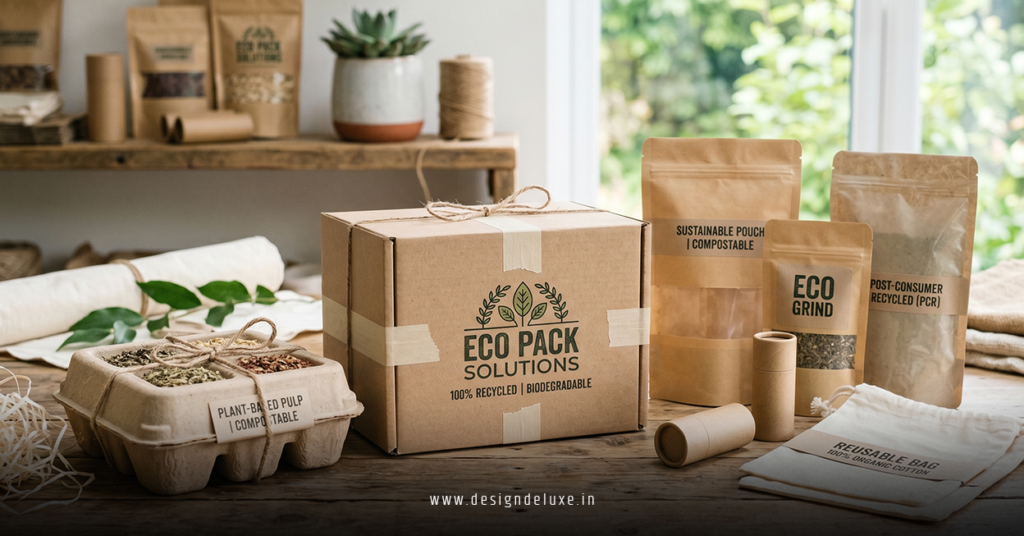
Step-by-Step: How to Choose the Right Sustainable Packaging Material
This is the process. Don’t skip steps—each one narrows your options intelligently.
Step 1: Define your product’s core requirements
Before sustainability enters the equation, your packaging has to work. What does your product need? Moisture barrier? Oxygen barrier? UV protection? Drop resistance? Shelf life target? Write these down as non-negotiables. A sustainable material that can’t protect your product isn’t sustainable at all — it creates product waste.
Step 2: Map your end-of-life reality
Where does your product actually sell? Who buys it? What disposal infrastructure exists in those zip codes? A compostable pouch sold at a San Francisco farmers market has a very different end-of-life pathway than the same pouch sold on Amazon and shipped to rural Tennessee. Use the How2Recycle Label Program as a starting research point — it maps which materials are accepted where.
Step 3: Match material to consumer perception
McKinsey’s 2025 U.S. consumer data is clear: glass and paper/cardboard rank as the most perceived-sustainable materials among U.S. shoppers. If your margin and weight economics allow for glass or kraft-based packaging, you’re leading with the consumer’s mental model, not fighting it. That’s a meaningful conversion advantage at shelf.
Step 4: Run your landed cost math
A sustainable mailer box typically adds about $0.54 per unit over a conventional equivalent at 1,000-unit volumes — less than 2% of a $30 average order value, per Cubit Packaging’s 2026 analysis. That math often surprises brands who assumed the premium was much higher. Run it for your specific SKUs before letting cost be a barrier.
Step 5: Get certified — or don’t claim it
If you’re using FSC-certified fiber, display the FSC mark. If your packaging meets How2Recycle standards, use the label. If your product is GRS-certified for recycled content, say so. If it isn’t certified, don’t claim it is. California’s SB 343, effective in 2026, prohibits the use of the recycling symbol on packaging unless that specific material is actually collected and processed by a majority of California’s municipal programs. The era of decorative chasing arrows is legally over.
Step 6: Start with one change, prove it, then scale
Don’t redesign your entire packaging line at once. Pick your highest-volume SKU, implement one material upgrade, run it through your actual supply chain, and measure the results — customer feedback, return rates, material performance, and cost impact. Then scale what works.
Sustainable Packaging Materials and the Regulatory Layer You Can’t Ignore
As of 2026, seven U.S. states have enacted EPR (Extended Producer Responsibility) laws: California, Colorado, Maine, Maryland, Minnesota, Oregon, and Washington. Eleven more have active legislation in progress.
What this means in practice: if your brand sells in any of these states, you may owe fees, reporting obligations, or face restrictions on certain materials — depending on your annual packaging volume. The FTC’s Green Guides also govern what you can and cannot claim on-pack. Claiming “recyclable” when your specific material and format isn’t collected by at least 60% of U.S. programs where the product is sold? That’s a violation.
This isn’t bureaucratic noise. It’s the new cost of doing business at any meaningful scale.
Common Mistakes When Selecting Sustainable Packaging Materials
Choosing compostable without checking local infrastructure. Most U.S. consumers cannot access industrial composting. Your compostable packaging ends up in landfill — and the word “compostable” on the label becomes misinformation, not a feature.
Conflating “bio-based” with “compostable.” A material derived from plants is not automatically compostable. PLA is bio-based AND compostable (industrially). Bio-PE is bio-based but not compostable — it’s structurally identical to petroleum-based polyethylene once produced. Know the difference. The FTC does.
Overlooking barrier requirements. Sustainable doesn’t mean structurally compromised. Mono-material PE/PE flexible structures — the 2026 breakout format per Flexible Packaging Association data — now deliver 6–12 month shelf life with curbside recyclability via store drop-off. You don’t have to sacrifice shelf life for sustainability credentials anymore.
Prioritizing aesthetics over function — and then function fails. Kraft paper is beautiful. It’s also moisture-sensitive. If your product ships in humid conditions or sits in outdoor delivery boxes, paper-only packaging may fail in ways that create more waste, not less. Test in real conditions.
Greenwashing via certification theater. Displaying an FSC logo when your board is actually uncertified, or using “eco-friendly” language without a substantiable claim. Consumers are increasingly skeptical — 38% of consumers globally say they don’t trust brands’ sustainability claims, per the 2025 Innova Lifestyle & Attitudes Survey. Earned trust is slow. Lost trust is fast.
Key Takeaways
- Paper and cardboard are your safest starting point. Corrugated cardboard’s 93.6% U.S. recycling rate is unmatched — high consumer trust, wide curbside acceptance, and a marginal cost premium of 0–5%.
- Glass wins on perception, loses on weight. U.S. consumers rank glass as the most sustainable material, but the logistics cost penalty is real. Run your freight math first.
- Compostable ≠ universally sustainable. Without industrial composting infrastructure — unavailable to 90%+ of U.S. consumers — compostable packaging becomes landfill packaging.
- PCR plastic bridges the gap. For brands that need flexible or rigid plastic, PCR is the pragmatic, scalable choice with real environmental benefit and growing supply chain support.
- The regulatory floor is rising fast. Seven U.S. states have EPR laws. California’s SB 343 changes what “recyclable” can legally mean on your label as of 2026.
- Certifications are your proof layer. FSC, How2Recycle, GRS, BPI — these aren’t optional brand decorations. They’re what separates a claim from a credential.
- Cost premiums are smaller than you think. Sustainable packaging at 1,000-unit volumes typically adds $0.54/order — under 2% of a $30 AOV. The ROI case is stronger than most brands assume.
- Material selection is only step one. Once your substrate is right, layering in strong design, clear disposal instructions, and honest brand communication is what converts material choices into brand equity — a discipline fully covered in the eco friendly packaging design and branding for sustainable products playbook.
The brands making the most headway right now aren’t necessarily using the most exotic materials. They’re using the right material for their product, their customer, and their region — and communicating that choice with absolute clarity. That’s the standard. Build to it.
Frequently Asked Questions
Q1: What is the most sustainable packaging material available in the U.S. right now?
For most brands, FSC-certified corrugated cardboard or recycled paperboard is the most practically sustainable option — it has a 93.6% recycling rate, wide curbside acceptance, strong consumer trust, and a minimal cost premium. Glass scores highest in consumer perception surveys but comes with a logistics weight penalty. The “most sustainable” material is always the one that performs its protective function with the smallest environmental footprint and can actually be recovered at end-of-life in the regions where you sell.
Q2: Is compostable packaging actually better than recyclable packaging?
Not automatically — and in many U.S. markets, recyclable packaging is the better environmental choice. Compostable packaging requires access to industrial composting facilities, which serve fewer than 10% of U.S. consumers. Recyclable materials like corrugated cardboard, aluminum, and PCR plastic have far more accessible recovery infrastructure. Compostable options shine for brands with DTC channels who can actively guide customers through proper disposal, or for food-service operators in cities with commercial composting programs.
Q3: How does sustainable packaging material selection connect to eco friendly packaging design and branding for sustainable products?
Material selection is the foundation — it determines what you can honestly claim, which certifications you can display, and what your product’s actual environmental footprint is. Eco friendly packaging design and branding for sustainable products is the expression layer — the visual identity, on-pack copy, color language, and brand storytelling that transforms a material choice into a consumer-facing trust signal. You need both working together: the best sustainable material in the world, wrapped in vague or misleading design, will underperform. A beautifully designed eco package built on greenwashed claims will eventually collapse under scrutiny. Material integrity plus design honesty is the full formula.