Magazine Design
Design Magazine isn’t just something you flip through for inspiration—it’s a strategic tool that can shape how customers see your brand, how partners take you seriously, and how your team rallies around a clear vision. If you’re running a business, you’ve probably wrestled with how to stand out visually, tell your story, and look “legit” without overspending or getting lost in creative fluff.
Design Magazine gives you a way to bring all of that together in one place: your products, your story, your visuals, your values. In this article, we’re going to be taking a look at Design Magazine, and how you can use it to build a brand that looks sharp and sells better. If you would like to find out more, feel free to read on.
Pic – CC0 License
Why Design Magazine Matters for Your Business
Let’s start with why this even deserves your time. When people discover your business—whether in the USA, UK, Australia, Singapore, or Dubai—they judge you fast. Your visuals, layout, and messaging either build trust or break it.
A Design Magazine helps you:
- Show your products or services in a polished, consistent way
- Tell your brand story with structure and emotion
- Share case studies, testimonials, and proof that you deliver
- Create a shareable piece you can hand to investors, partners, and customers
We’re not talking about a glossy coffee-table vanity project. We’re talking about a practical, working asset that supports sales, marketing, and brand building.
Design Magazine as Your Brand Story in One Place
Most founders have a scattered brand story. There’s a bit on the website, something different on social media, and whatever the sales team says on calls. A Design Magazine lets you pull that chaos into one clear narrative.
Here’s what we recommend including:
- Your origin story
- Your mission and values in plain language
- Your key offerings explained simply
- Proof of results: case studies, testimonials, data points
If you want inspiration, spend time with something like the brand storytelling guides from the American Marketing Association (https://www.ama.org/). You’ll see how structure and clarity beat fancy words. Your magazine should feel like a confident conversation, not a brochure trying too hard.
Design Magazine and Visual Identity That Actually Works
Good design isn’t about being “creative for creative’s sake.” It’s about making it easy for people to trust you and understand what you do. Your Design Magazine is a perfect sandbox for sharpening your visual identity.
Focus on:
- A simple color palette that matches your existing brand
- One or two fonts used consistently
- Clean layouts with plenty of white space
- High-quality photography or illustrations
If you’re not sure what “good” looks like, have a look at the visual identity resources from Adobe Creative Cloud (https://www.adobe.com/creativecloud.html). They showcase how consistent design builds recognition, whether you’re a startup in Singapore or a growing firm in Dubai.
Your goal is not to win design awards. Your goal is for a customer to flip through your magazine and think, “These people are serious. This feels professional. I understand what they offer.”
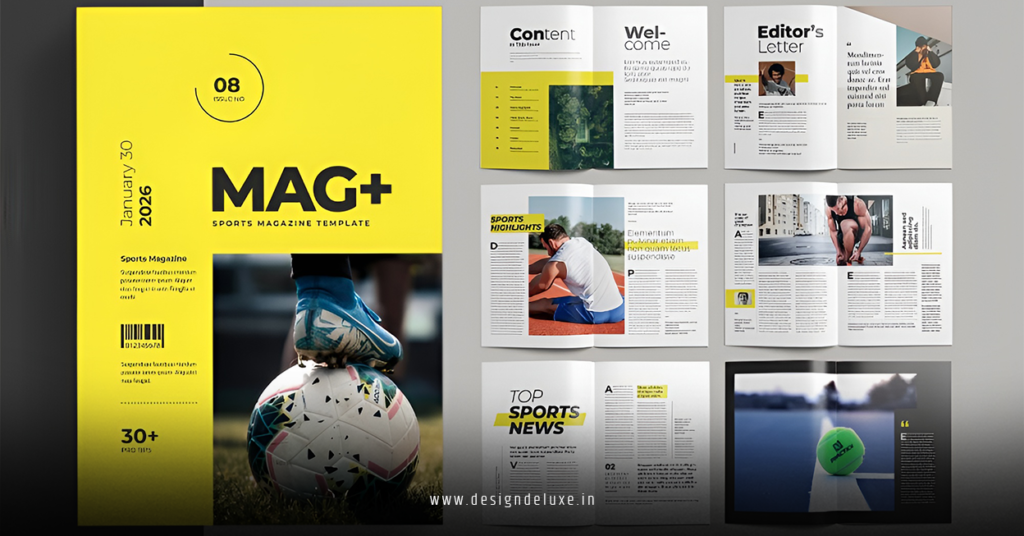
Turning Your Design Magazine into a Sales Tool
We want your Design Magazine to do more than sit on a shelf. It should actively support revenue. That means thinking like a salesperson while you build it.
Ask yourself:
- What questions does a new customer always ask?
- What objections do they raise again and again?
- What proof do they need before saying yes?
Build sections that answer those directly: an FAQ spread, a “How we work” page, before-and-after examples, or a simple process overview. When your sales team in the USA or your distributor in the UK hands the magazine to someone, it should shorten the decision time, not just “look nice.”
You can even design different versions: one tailored to investors, one focused on retail buyers, one aimed at end consumers. Think of it as a flexible tool, not a static piece of marketing.
Practical Steps to Create Your First Design Magazine
Let’s keep this simple and actionable. Here’s how we suggest you get started:
- Define the goal
Is this magazine for investors, customers, partners, or internal alignment? Pick one primary audience so your content stays focused. - Outline the sections
Draft a table of contents: story, offer, proof, process, team, contact details. You can adjust later, but start with a clear structure. - Gather assets
Collect photos, logos, product shots, testimonials, charts, and any existing copy from your website or pitch decks. Don’t start from scratch if you don’t have to. - Choose a design route
You can use tools like Canva or Figma yourself, work with a freelance designer, or hire a small agency. The small business resources from the U.S. Small Business Administration (https://www.sba.gov/) can help you think about budget and vendor selection in a practical way. - Test with a small audience
Before printing or widely sharing, show a draft to trusted customers, your team, or mentors in Australia, Singapore, or Dubai. Ask one question: “Does this help you understand and trust our business more?”
We’re aiming for improvement, not perfection. Your first version is a starting point you’ll refine over time.
Using Design Magazine Across Your Marketing Channels
Once your Design Magazine exists, squeeze as much value out of it as possible. You don’t want it to be a one-off project.
You can:
- Turn sections into blog posts or LinkedIn articles
- Use visuals and quotes on your social feeds
- Pull case study pages into investor decks
- Share a digital version with prospects before calls
For businesses in cities like London, Sydney, New York, Singapore, and Dubai, this kind of consistent content helps you show up professionally across borders and cultures. The magazine becomes your “master document” of how you present yourself.
Think of it as the central hub of your brand communication. When you update your offer or launch something new, you update the magazine and let everything else follow.
Design Magazine as a Long-Term Brand Asset
We hope that you have found this article enlightening in some way, and that you can see Design Magazine as more than just a pretty piece of print. It’s a living asset that should grow alongside your business. As you gain more clients, build stronger case studies, and refine your message, your magazine should evolve.
Set a simple schedule: review and update it every 6–12 months. Add fresh testimonials, new product lines, or updated visuals that reflect where your business is heading. Over time, you’ll build a track record that’s visible on the page, not just hidden in spreadsheets and emails.
If you treat your Design Magazine as a strategic tool—not a vanity project—you’ll give customers, partners, and investors a clear, confident window into who you are and why working with you is a smart decision.