Dental website design trends 2026 are reshaping how practices attract, reassure, and convert patients online. Clean interfaces, lightning-fast load times, seamless booking tools, and AI-powered personalization now separate winners from also-rans in local search.
These aren’t just cosmetic upgrades. They directly impact new patient flow in an era where 83% prefer online booking and patients judge competence before they ever pick up the phone.
- Mobile-first layouts dominate because most searches start on phones.
- Sub-3-second load speeds have become non-negotiable for keeping visitors.
- Integrated real-time scheduling and patient portals reduce friction.
- Trust signals like embedded reviews and team videos build confidence instantly.
- Subtle AI chat and personalized content experiences feel helpful, not pushy.
The truth? Your website often makes the first—and sometimes only—impression. In 2026, it must work harder than ever.
Why dental website design trends 2026 matter more than ever
Patients research relentlessly before choosing a dentist. A dated site screams outdated care. Modern ones signal precision, comfort, and professionalism.
Competition is brutal. Google and AI overviews favor sites that load fast, answer questions clearly, and deliver smooth experiences. Practices ignoring these trends lose ground daily.
Here’s the thing: great design paired with strong branding creates a powerful one-two punch. Many successful clinics start with cohesive dental clinic logo design and branding packages before tackling their full website overhaul.
Top dental website design trends 2026
Mobile-first and responsive everything
Designers now build for phones first, then scale up. Thumb-friendly navigation, large tap targets, and vertical layouts rule. Sites that force pinching and zooming die in the rankings.
Fast loading remains king. Compress images, use modern hosting, and cut unnecessary scripts. Sub-3-second loads keep bounce rates low and Google happy.
Clean, calming aesthetics with personality
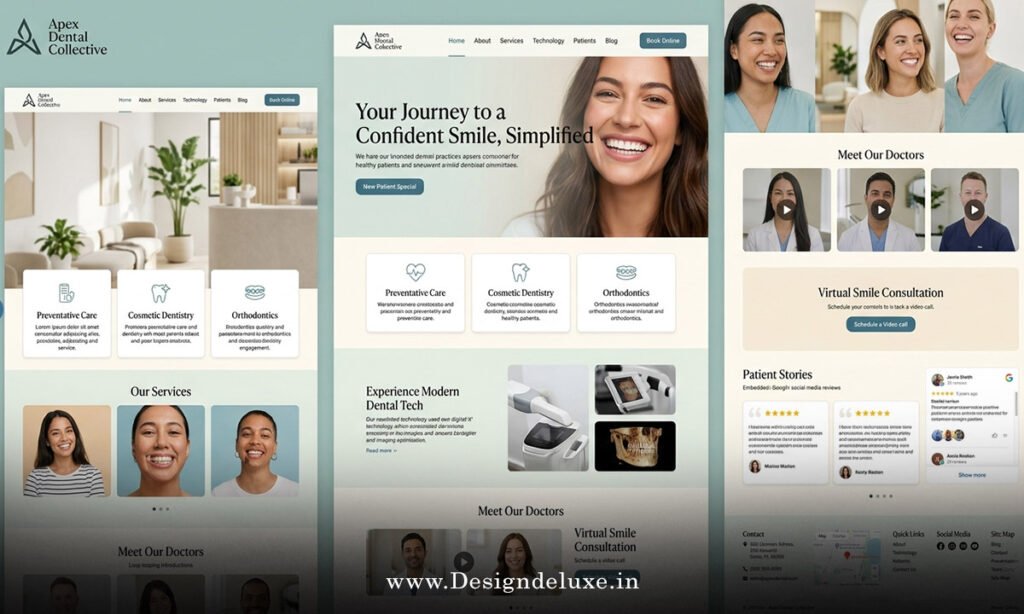
Minimalist layouts with plenty of white space calm anxious visitors. Soft blues, greens, and warm neutrals still work best, but practices now inject unique personality through custom illustrations or lifestyle photography instead of generic stock smiles.
Organic shapes and subtle animations add life without overwhelming. Think gentle hover effects on service cards rather than flashy sliders.
Seamless online booking and patient portals
Real-time integration with practice management systems lets patients book, reschedule, or complete forms instantly. This convenience wins patients who hate phone tag.
Secure portals for viewing records, paying bills, and receiving reminders turn one-time visitors into loyal ones. HIPAA compliance isn’t optional—it’s expected.
Video and authentic content
Short team introduction videos and procedure explainers build instant trust. Patients want to see real faces and hear real voices before they commit.
Hero section videos or embedded testimonials outperform static images. Authenticity beats perfection every time.
AI chat and smart personalization
Helpful chatbots answer common questions 24/7—insurance details, hours, emergency protocols. Advanced versions even suggest services based on visitor behavior.
Personalized recommendations (“Based on your interest in Invisalign…”) feel tailored, not creepy, when done right.
Strong local SEO architecture
Individual service pages optimized for voice and AI search. Clear schema markup, location pages, and fast access to Google Business Profile info.
Sites optimized for generative engine optimization (GEO) appear more often in AI answers about “best dentist near me.”
Accessibility and inclusive design
High contrast ratios, alt text for images, keyboard navigation, and readable fonts aren’t just nice—they’re required for broader reach and better rankings.
Older patients and those with disabilities represent a growing segment. Ignore them at your peril.
Comparison of dental website design approaches in 2026
| Feature | Basic Sites | Modern 2026 Sites | Impact on Patients |
|---|---|---|---|
| Load Speed | 5+ seconds | Under 3 seconds | Lower bounce, higher trust |
| Booking | Contact form only | Real-time PMS integration | More completed appointments |
| Mobile Experience | Clunky | Fully responsive, thumb-friendly | Better engagement |
| Trust Elements | Basic testimonials | Videos, reviews, before/after | Faster decision making |
| Personalization | None | AI chat + dynamic content | Higher conversion |
| Cost Range | $1,500 – $4,000 | $6,000 – $18,000+ | Better long-term ROI |
Step-by-step action plan to update your dental website
- Audit your current site. Time the load speed. Check mobile view. Note where visitors drop off.
- Define your goals. New patients? More cosmetic consultations? Better recall rates? Align design with business objectives.
- Refresh your brand foundation. Ensure your logo, colors, and messaging feel cohesive. Strong dental clinic logo design and branding packages make website design smoother and more effective.
- Choose the right partner. Look for agencies specializing in dental with proven conversion results, not just pretty pictures.
- Prioritize must-have features. Fast hosting, booking integration, mobile optimization, clear CTAs, trust signals.
- Test with real users. Get feedback from current patients before full launch.
- Launch and monitor. Track analytics, form submissions, and booking rates. Tweak based on data.
What I’d do? Invest in quality over cheap templates. The difference shows in patient perception and search performance.
Common mistakes to avoid in 2026
Using outdated flash elements or auto-playing music. These annoy visitors and tank SEO.
Cluttered homepages with too many competing messages. Keep it focused on the primary goal: booking appointments.
Ignoring speed optimization. Heavy images and bloated code kill conversions.
Weak calls-to-action buried in footers. “Book Now” buttons should appear early and often.
Forgetting to update content regularly. Fresh blog posts and offers signal active, caring practices to search engines.
Ever wonder why some practices book solid while others struggle despite great clinical skills? Their online presence does the heavy lifting.
How these trends connect to broader branding
Your website isn’t isolated. It must reflect your physical office vibe and overall identity. Consistent colors, tone, and imagery across your logo, signage, social, and site create recognition that builds equity.
Practices that nail this combination see marketing efforts multiply. A polished site reinforces premium positioning established by professional branding.
For deeper insights on creating that foundation, explore proven dental clinic logo design and branding packages that align visuals across all touchpoints.
Check resources like the American Dental Association’s digital marketing guidance for best practices and Titan Web Agency’s dental trends overview for more context.
Key Takeaways
- Speed and mobile optimization are table stakes in dental website design trends 2026.
- Real-time booking and patient portals remove major barriers to new patients.
- Authentic video and trust signals convert browsers into bookers.
- AI tools enhance experiences when used thoughtfully.
- Cohesive branding across logo and website creates stronger impact.
- Regular content updates support both SEO and patient education.
- Accessibility improves reach and search rankings simultaneously.
- Invest based on your growth goals—quality pays off long-term.
Your website should work as hard as your team. In 2026, the practices winning new patients treat their digital presence as a core asset, not an afterthought.
Ready to modernize? Start with a site audit this week. Compare your current performance against these trends, then connect with specialists who understand dental patient psychology. The right updates can transform your online results fast.
FAQs
How much should a dental website redesign cost in 2026?
Expect $6,000 to $18,000+ for a fully custom, conversion-focused site with modern integrations. Basic refreshes run lower, but skimping often means rebuilding again soon.
Do dental websites still need blogs in 2026?
Yes. Regular educational content helps with AI search visibility, builds trust, and positions you as an expert. Focus on patient questions rather than sales pitches.
How do dental website design trends 2026 connect to branding?
Strong sites extend the visual identity created in professional dental clinic logo design and branding packages. Consistency across logo, colors, and messaging reinforces trust and professionalism everywhere patients encounter you.