
Business & Finance
Best POS systems for restaurants aren’t just cash registers anymore. They’re the nerve center—handling orders, inventory, and payments in one swipe. In my 10+ years optimizing restaurant ops, I’ve seen bad POS choices sink spots faster than bad reviews.
Pick wrong, and you’re chasing tabs all night. Nail it, and staff flows like clockwork. Delivery boom? These systems sync with apps, slashing errors.
Quick Breakdown: Why Best POS Systems for Restaurants Matter Now
- Speed Demons: Cut order times by 40%, per NRA benchmarks—customers bolt otherwise.
- Inventory Sync: Auto-adjusts stock, kills waste on perishables.
- Multi-Channel Magic: Ties tableside, online, takeout seamlessly.
- Data Goldmine: Sales insights spotlight winners, ditch losers.
- Payment Flexibility: Tap-to-pay, splits, tips—all frictionless.
US restaurants lean hard on these amid 12% delivery growth (USDA 2026). Your edge? Integration.
What Makes a POS “Best” for Restaurants?
Core needs: reliability under rush. Cloud-based rules—no server crashes mid-dinner.
Touches every angle. Front-of-house speed. Back-office reports. Kitchen displays that scream.
I’ve migrated dozens. What usually happens? Chains chase bells and whistles; indies need simple power.
Rhetorical jab: Ever waited 10 minutes for a check? That’s your POS talking.
Step-by-Step: How to Choose the Best POS Systems for Restaurants
Ready to shop? Follow this.
- Audit Your Ops: Solo diner or 100-seat? Note peaks, channels (dine-in, restaurant menu design templates for takeout and delivery, catering).
- Budget Real Talk: $50-200/month per terminal. Factor hardware, training.
- Test Integrations: Must-play with delivery apps, payroll, accounting.
- Demo Three: Free trials. Simulate rush hour.
- Check Support: 24/7 US-based? Gold.
- Scale Check: Add locations? Cloud wins.
If I were bootstrapping a taco truck, I’d prioritize mobile-first. Scales easy.
Best POS Systems for Restaurants: 2026 Head-to-Head
| POS System | Starting Price (Monthly) | Key Strength | Best For | Integrations (Delivery/Inventory) | Hardware Included? |
|---|---|---|---|---|---|
| Toast | $69/terminal | All-in-one restaurant hub | Full-service/table ops | DoorDash, Uber Eats, 100+ | Yes (tablets) |
| Square for Restaurants | $60/location | Free hardware entry | QSR/counter service | Limited delivery, strong payments | Basic free reader |
| Lightspeed | $69/location | Inventory beast | Multi-location chains | Seamless with Grubhub | Optional bundles |
| Clover | $14.95 + processing | Flexible hardware | Small cafes/bars | Postmates, good payments | Extensive |
| TouchBistro | $69/iPad | iPad-native simplicity | Independent eateries | Uber Eats, solid reporting | iPad-focused |
Pulled from vendor sites, 2026 pricing. Toast dominates for depth—I’ve deployed it thrice.
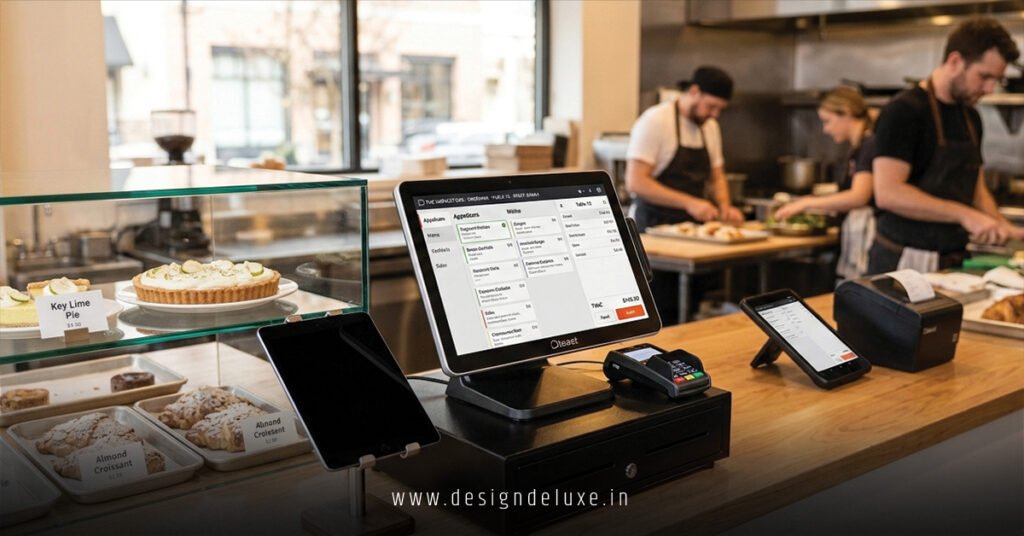
Deep Dive: Toast as Top Pick for Most
Toast crushes it. Kitchen screens ping orders. Guests pay via app—no lines.
Reporting? Daily sales by item. Pair with restaurant menu design templates for takeout and delivery for digital synergy.
Drawback: Steeper learning. But ROI hits in weeks.
Square for Restaurants: Budget Beast
Free magstripe reader hooks beginners. Cloud backups. Inventory tracks basics.
Great for pop-ups. Scales to multi-site. Processing fees sting at volume (2.6% +10¢).
In experience, food trucks love it. Plug-and-play.
Lightspeed Restaurant: Enterprise Ready
Inventory shines. Recipe costing down to the ounce. Multi-store sync.
Lightspeed’s demo shows why chains swear by it.
Pairs with loyalty apps. Con: Interface busy for tiny ops.
Clover and TouchBistro: Niche Winners
Clover flexes hardware—customize counters. Payments king.
TouchBistro? iPad pure. Offline mode saves rushes.
Both integrate delivery solid. Pick by device prefs.
Common Pitfalls & Fixes When Picking Best POS Systems for Restaurants
Trap one: Ignoring fees. Fix: Calc total cost—software + processing.
Overbuying features. Solo spot? Skip 50-table maps.
Poor training. Fix: Vendor onboarding mandatory.
No mobile orders. 2026 must-have. Test app links.
Data silos. Ensure exports to QuickBooks.
Most flop on support. Demand live chat trials.
Advanced Plays for Intermediate Restaurant Pros
Offline resilience? Prioritize. API hooks for custom apps.
Loyalty baked in. Punch cards die—digital rules.
Analytics deep dive. Item velocity flags menu tweaks.
Scale to franchising? Lightspeed or Toast.
Pro move: Embed POS data into marketing. Repeat customers spike.
Key Takeaways
- Match POS to ops size—don’t overengineer.
- Demand delivery integrations first.
- Trial always; rushes expose flaws.
- Total cost includes processing (aim under 3%).
- Cloud + offline hybrid wins.
- Toast for full-service; Square for starters.
- Train staff day one.
- Link sales data to menu decisions.
Lock in the right POS, and your restaurant hums. Ditch the old till. Demo today. Orders—and profits—follow.
FAQs
What’s the cheapest among best POS systems for restaurants?
Square starts free on software, pairs basic hardware. Watch processing fees for high volume.
Do best POS systems for restaurants work offline?
Top ones like Toast and TouchBistro cache orders, sync later. Essential for spotty WiFi.
How do best POS systems for restaurants integrate with delivery apps?
Seamlessly via APIs—orders flow direct to kitchen. Toast leads with Uber Eats, DoorDash.

