Artificial IntelligenceBrandE-CommerceLogo DesignMARKETING
Generative AI logo and marketing materials for ecommerce branding has exploded as the fastest way for online stores to launch professional visuals without draining budgets or waiting weeks for designers.
It combines tools that spit out custom logos, product mockups, social graphics, email banners, and full brand kits in minutes. For beginners and intermediate sellers in the USA, this approach cuts costs dramatically while keeping your store looking sharp and consistent.
- What it is: Generative AI systems trained on vast design datasets that create original logos, banners, ads, and packaging visuals based on simple text prompts describing your ecommerce niche, colors, and vibe.
- Why it matters: In 2026, over 80% of retail and CPG companies use or pilot generative AI, with marketing content creation leading adoption at 67%. It levels the playing field for small stores competing against big brands.
- Biggest wins: Faster launches, consistent branding across Shopify or Amazon, and slashed creative expenses—AI image generation can cut product photography costs by up to 80%.
- Real talk: It handles the heavy lifting but still needs your direction to avoid generic results.
Here’s the thing. You no longer need a design degree or thousands in agency fees to build a brand that converts. Tools now output scalable vectors, full brand palettes, and ready-to-use marketing assets tailored for ecommerce funnels.
Why Generative AI Logo and Marketing Materials for Ecommerce Branding Beats Traditional Design
Speed rules ecommerce. You spot a trend, launch a product line, and need visuals yesterday. Traditional designers take days or weeks. Generative AI delivers options in seconds.
The kicker? Quality has caught up. In 2026, advanced models handle typography cleanly and produce distinctive results that don’t scream “AI-made.” Recraft V4 and similar tools now export real SVGs perfect for websites and print.
Cost savings hit hard too. A full brand kit that once ran $2,000–$5,000 now costs under $100 in many cases. You iterate endlessly without extra fees. For USA-based sellers juggling inventory and ads, this frees up cash for Facebook or Google campaigns.
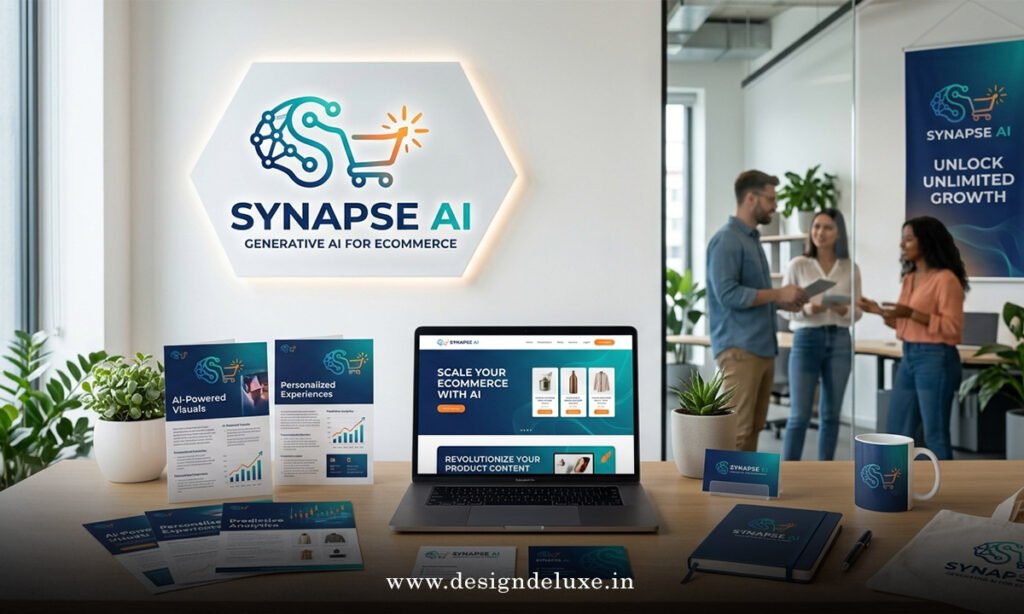
Consistency across touchpoints stands out as another massive advantage. Generate your logo once, then create matching product images, Instagram carousels, email headers, and Pinterest pins that all feel like they belong together. Your store builds instant recognition.
Yet here’s a sharp question: Does it replace human designers entirely? Not for ultra-premium or highly nuanced work. But for most ecommerce stores selling fashion, home goods, or gadgets, it handles 80-90% of needs perfectly.
Top Tools Powering Generative AI Logo and Marketing Materials for Ecommerce Branding in 2026
Several platforms dominate right now. Looka excels at complete brand kits including logos, business cards, and social templates. Canva’s Magic Studio shines for quick marketing materials and social content. Logomakerr.ai and Design.com deliver fast ecommerce-specific results.
Recraft and Ideogram push boundaries for custom, artistic visuals when you need something truly unique. Shopify’s Hatchful remains a free favorite for pure Shopify stores.
| Tool | Best For | Pricing (2026) | Key Ecommerce Strength | Output Types |
|---|---|---|---|---|
| Looka | Full brand kits | $20+ one-time | Polished professional assets | Logos, kits, mockups |
| Canva AI | Marketing materials | Free / $13+ mo | Social & ad templates | Banners, carousels, videos |
| Logomakerr.ai | Fast startup logos | Affordable tiers | Quick iterations | Vectors, product visuals |
| Design.com | Complete branding | $6+ mo | Ecommerce templates | Logos + full collateral |
| Recraft V4 | Custom creative | Subscription | SVG exports & brand kits | Advanced vectors & imagery |
This table shows clear winners depending on your needs. Test a couple. What usually happens is one clicks immediately with your style.
Step-by-Step Action Plan for Beginners
Ready to build your generative AI logo and marketing materials for ecommerce branding? Follow this exact flow.
Step 1: Define your brand foundations.
Write down your target customer, key values, product types, and three words describing your vibe (playful, premium, minimalist). Skip this and everything looks generic.
Step 2: Generate your core logo.
Feed a detailed prompt: “Modern minimalist logo for sustainable coffee ecommerce brand, earthy tones, coffee bean icon integrated with text, vector style.” Generate 10+ variations. Pick favorites.
Step 3: Build the full brand kit.
Use the winning logo to create color palettes, fonts, and guidelines. Tools like Looka automate this.
Step 4: Create marketing materials.
Prompt for “Instagram product carousel for summer collection, matching brand colors, lifestyle photography style” or “email newsletter banner promoting 20% off, urgent but clean design.”
Step 5: Test and refine.
Upload assets to your store. Run A/B tests on product pages. Tweak prompts based on performance.
Step 6: Scale with templates.
Build reusable templates for weekly promotions, seasonal campaigns, and user-generated content features.
In my experience, spending one focused afternoon here saves weeks later. Start small—one logo and three marketing pieces—then expand.
Common Mistakes & How to Fix Them
Even seasoned sellers trip up with generative AI logo and marketing materials for ecommerce branding. Avoid these pitfalls.
Mistake 1: Vague prompts.
“Make a logo” produces bland results. Fix: Include industry, mood, specific elements, and style references. Be descriptive but not overwhelming.
Mistake 2: Ignoring brand consistency.
Randomly generating assets creates a fractured look. Fix: Always reference your primary logo and color codes in every prompt.
Mistake 3: Using low-res or non-scalable outputs.
Some free tools spit out pixelated junk. Fix: Prioritize tools offering vector/SVG downloads. Check commercial usage rights.
Mistake 4: Skipping legal checks.
Similar logos across brands create trademark headaches. Fix: Search USPTO database before finalizing. Consider unique twists.
Mistake 5: Over-relying on AI without human touch.
Pure AI sometimes lacks soul. Fix: Edit outputs in Canva or add custom illustrations.
One fresh analogy: Think of generative AI like a super-fast junior designer. Talented, but it needs clear direction and final approval from you—the seasoned pro calling the shots.
Advanced Tips for Ecommerce Success
Layer AI-generated product mockups on lifestyle backgrounds for higher conversions. Create personalized email visuals based on customer segments. Use AI for variation testing—generate 20 banner options and let data pick winners.
External resources worth checking:
- Looka’s AI branding guide for complete kit strategies.
- Adobe’s generative AI insights on retail performance data.
- Shopify’s design resources for platform-specific optimization.
Key Takeaways
- Generative AI logo and marketing materials for ecommerce branding slashes creation time from weeks to hours while maintaining professional quality.
- Always start with strong brand foundations before prompting any tool.
- Vector outputs and brand kits deliver the most long-term value.
- Test assets in real customer journeys—clicks never lie.
- Combine multiple tools: one for logos, another for marketing execution.
- Check trademarks and usage rights every single time.
- Iterate based on performance data rather than personal taste alone.
- Human oversight turns good AI outputs into great brand assets.
Generative AI logo and marketing materials for ecommerce branding puts powerful creative control directly in your hands. You move faster, spend smarter, and build a visual identity that actually drives sales instead of just looking pretty.
Start today with one solid prompt and your brand name. Refine it over the next week. Your store—and your bottom line—will thank you.
FAQs
How much does generative AI logo and marketing materials for ecommerce branding typically cost in 2026?
Most sellers spend $50–$300 total for a complete starter package including logo, kit, and initial marketing assets. Premium tools with unlimited generations run $10–$50 monthly. One-time purchases often cover lifetime commercial use for basic needs.
Can beginners create professional results with generative AI logo and marketing materials for ecommerce branding?
Absolutely. The best tools include guided prompts and templates that walk you through the process. Focus on clear descriptions of your products and audience rather than design jargon. Results often outperform amateur designer work when you iterate thoughtfully.
Will using generative AI logo and marketing materials for ecommerce branding hurt my SEO or brand trust?
No, as long as outputs look original and high-quality. Search engines reward great user experiences, and consistent professional visuals improve dwell time and conversions. Always disclose AI assistance if required by platforms and prioritize unique refinements.