Brand PackagingDESIGN
Tea box packaging design for premium herbal and wellness brands stands out as a make-or-break factor in today’s crowded market. It protects delicate blends while screaming quality the second a customer spots it on the shelf or in their unboxing video.
Tea box packaging design for premium herbal and wellness brands matters because it builds instant trust, communicates purity, and drives repeat purchases in a category where consumers pay more for perceived authenticity.
- It blends functionality with storytelling through sustainable materials and botanical visuals.
- It differentiates your line in both retail and e-commerce channels.
- It preserves freshness and aroma while aligning with 2026 eco-expectations.
Done right, the box becomes your silent salesperson.
Why Packaging Wins Loyalty in Herbal and Wellness Tea
Consumers in the USA increasingly reach for herbal and wellness teas seeking calm, immunity support, or daily rituals. Packaging that feels premium reinforces those promises.
In my experience, what usually happens is this: a beautifully designed box makes the product feel like a self-care investment rather than just another grocery item. Shoppers linger longer. They share photos. Sales climb.
Tea box packaging design for premium herbal and wellness brands succeeds when it marries protection with personality. Think rigid structures that prevent crushing during shipping, barriers that lock in volatile oils, and designs that evoke serenity or vitality.
Key Trends Shaping Tea Box Packaging in 2026
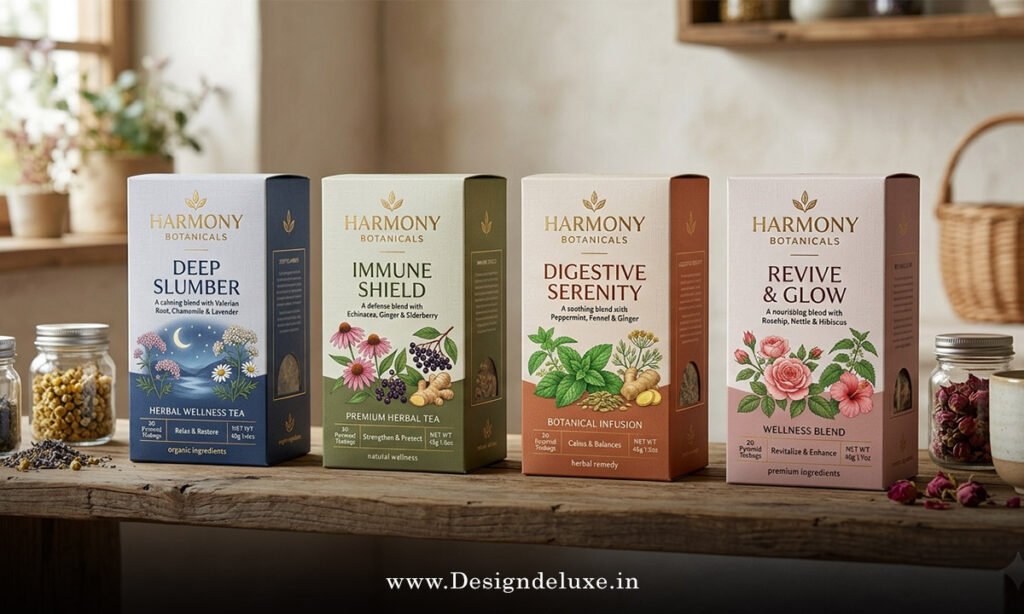
Minimalist elegance dominates. Clean lines, ample white space, and subtle botanical illustrations replace busy patterns. Earthy tones — sage greens, warm beiges, soft terracotta — signal natural ingredients without shouting.
Sustainability isn’t optional anymore. Brands use FSC-certified paper, compostable films, and sugarcane-based materials. Rigid boxes with magnetic closures deliver that luxury feel while staying lighter for shipping costs.
Apothecary aesthetics gain traction. Ornate but restrained labels, serif typography, and detailed herb illustrations nod to traditional wellness wisdom. QR codes link to brewing guides or origin stories, adding interactivity without clutter.
Transparency wins too. Windows or clear panels let buyers see the actual tea leaves or sachets inside.
Materials That Protect and Impress
Choose wisely. Your box must guard against moisture, light, and oxygen while projecting premium quality.
| Material Option | Best For | Pros | Cons | Approx. Cost Impact (per 1k units, 2026 est.) |
|---|---|---|---|---|
| FSC-Certified Rigid Cardboard | Premium gift sets | Sturdy, printable, recyclable | Heavier for shipping | Medium-High |
| Compostable Plant-Based Pouches + Outer Box | Loose leaf lines | Eco-friendly, lightweight | Less rigid protection | Low-Medium |
| Glass Inner Jar in Paper Box | High-end single origins | Visible product, premium feel | Breakage risk, heavier | High |
| Kraft Paper with Foil Lining | Everyday wellness blends | Cost-effective, natural look | Limited print vibrancy | Low |
Data reflects industry averages from major US packaging suppliers. Always verify current quotes.
Step-by-Step Action Plan for Beginners
Start simple. Nail the basics before chasing fancy finishes.
- Define Your Brand Story
What emotion does your tea evoke? Calm? Energy? Focus? Let this guide every design choice. - Research Competitors
Visit stores or scroll Amazon. Note what feels tired versus fresh. - Sketch Core Elements
Logo placement, color palette, key visuals. Hire a designer experienced in food packaging. - Select Materials and Structure
Prioritize recyclability. Test samples for aroma retention. - Prototype and Test
Ship samples across the US. Check for damage. Gather feedback from your target audience. - Refine and Scale
Lock in suppliers. Order minimum viable quantities first.
What I’d do if starting fresh? I’d focus on one hero SKU with magnetic rigid box packaging, then expand the family using consistent design DNA.
Common Mistakes & How to Fix Them
New brands trip up easily. Here are the big ones I see repeatedly.
- Overcrowded Design: Too many claims, icons, and text. Fix: Ruthlessly edit. One strong visual plus clear benefit statements works better.
- Ignoring Shelf Impact: Boxes that blend into the background. Fix: Use strategic color blocking or embossing for standout presence.
- Poor Freshness Protection: Flimsy materials that let aroma escape. Fix: Invest in proper barriers even if it raises unit cost slightly.
- Inconsistent Branding Across SKUs: Different fonts or vibes per flavor. Fix: Create a strict style guide early.
- Sustainability Claims Without Proof: Greenwashing backlash kills trust. Fix: Use verifiable certifications and transparent sourcing.
The kicker is this: fixing these early saves expensive redesigns later.
Tea box packaging design for premium herbal and wellness brands demands attention to these details. Cut corners here and your product feels cheap no matter how great the blend tastes.
Design Elements That Convert
Focus on these for maximum impact:
- Typography: Mix elegant serifs for headlines with clean sans-serifs for body text. Legibility at small sizes matters for ingredient lists.
- Visual Hierarchy: Lead with the blend name, then benefits, then origin.
- Tactile Finishes: Soft-touch coatings, embossing, or spot UV make the box irresistible to touch.
- Color Psychology: Greens and blues for calm. Warm oranges for energizing blends.
One analogy I like: think of your tea box as a tiny apothecary cabinet. Every detail should whisper competence and care.
How does your packaging currently make customers feel when they hold it?
Regulatory and Practical Considerations in the USA
FDA rules govern labeling accuracy, especially health-related claims. Keep wellness language benefit-focused rather than disease-curing. Include required nutrition facts and allergen info clearly.
E-commerce packaging needs extra durability for Amazon fulfillment. Consider Amazon’s Frustration-Free standards.
For more on FDA food labeling requirements, check FDA.gov guidelines on dietary supplements and tea products.
Sustainability reporting grows important. Track your carbon footprint. Consumers reward transparency — see examples at Sustainable Packaging Coalition.
Key Takeaways
- Tea box packaging design for premium herbal and wellness brands combines protection, storytelling, and sustainability to drive premium pricing.
- Prioritize minimalist botanical aesthetics and verifiable eco-materials in 2026.
- Test rigorously for freshness and shipping durability.
- Maintain strict brand consistency across your entire line.
- Invest in tactile, high-quality finishes that justify higher price points.
- Avoid greenwashing by backing claims with real certifications.
- Use QR codes to deepen customer engagement without cluttering the box.
- Plan for scalability from day one.
Nail your tea box packaging design for premium herbal and wellness brands and you don’t just sell tea — you sell moments of ritual and self-care.
Start by auditing your current packaging against these principles. Grab samples from top suppliers and begin prototyping your hero box this month. The brands winning shelf space right now treat packaging as a core product feature, not an afterthought.
FAQs
What makes tea box packaging design for premium herbal and wellness brands different from standard tea packaging?
It emphasizes luxury materials, storytelling visuals, and stronger aroma barriers while aligning tightly with wellness values like sustainability and transparency. Standard packaging often prioritizes cost over experience.
How much should I budget for professional tea box packaging design for premium herbal and wellness brands?
Expect $3,000–$12,000 for initial design and prototyping, plus per-unit costs from $0.80–$4.50 depending on materials and order volume. Factor in testing and revisions.
Can small brands compete with big players using tea box packaging design for premium herbal and wellness brands?
Absolutely. Focus on hyper-targeted storytelling, unique regional herbs, and superior unboxing experiences. Many independents win by being more authentic and nimble than mass-market options.