DESIGN
Design Agency Process and Collaboration :
A clear design agency process and strong collaboration are what separate agencies that ship results from those that create expensive frustration. Brands do not hire designers for aesthetics alone. They hire for predictable progress, fewer surprises, and work that actually moves business metrics. When process and collaboration click, projects stay on track, stakeholders stay aligned, and the final output performs. When they do not, timelines slip, revisions multiply, and trust erodes.
In my experience working with U.S. brands across SaaS, consumer, and professional services, the agencies that win repeat work treat process and collaboration as non-negotiable infrastructure rather than optional extras. The difference shows up fast—in fewer late-night Slack threads, cleaner feedback loops, and clients who later become advocates.
Why Process and Collaboration Matter More Than Ever in 2026
Buying design services still carries risk. A rebrand or new product interface can affect revenue, customer perception, and internal momentum. Decision-makers want evidence that the team they hire has a repeatable way of working and knows how to involve the right people at the right time.
Process reduces ambiguity. Collaboration reduces isolation. Together they create the conditions for good work to survive contact with real stakeholders, real constraints, and real deadlines. Without both, even talented designers produce work that gets watered down or abandoned.
The Core Stages of a Modern Design Agency Process
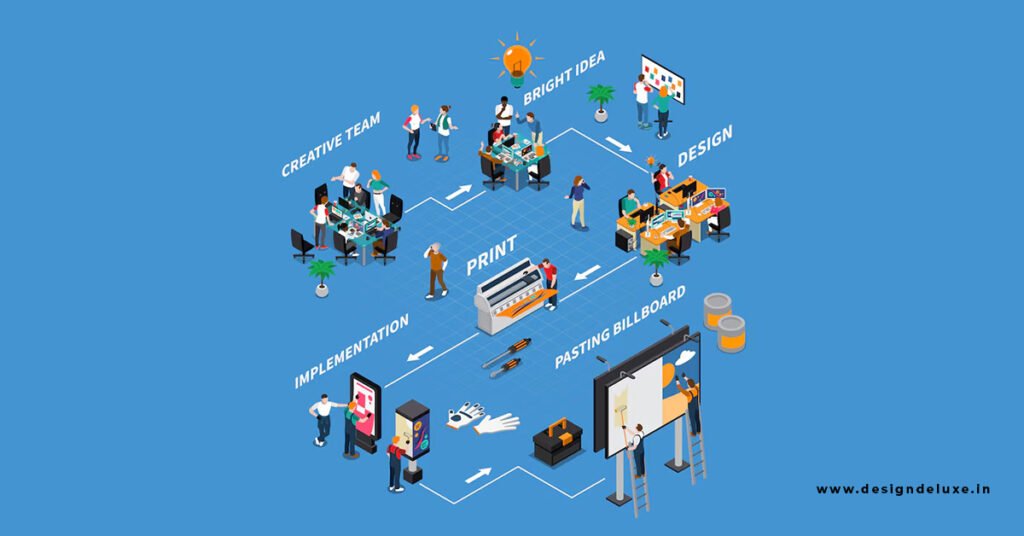
Most effective design engagements follow a sequence that balances structure with flexibility. Exact naming varies by agency, but the underlying logic stays consistent.
1. Discovery and Alignment
This is where assumptions get pressure-tested. The agency interviews stakeholders, reviews existing materials, maps user needs, and clarifies business goals. Strong discovery surfaces constraints early—budget, timeline, technical limitations, brand history, and internal politics. Weak discovery leads to expensive surprises later.
2. Strategy and Direction
Research turns into decisions. Positioning, visual direction, information architecture, and success metrics get defined. Clients should leave this phase with a clear north star rather than a pile of mood boards. Collaboration here is critical: the agency brings expertise, the client brings domain knowledge. Neither side should dominate.
3. Concept and Exploration
Multiple directions are developed and tested against the strategy. The best agencies show options with rationale, not just pretty alternatives. Feedback at this stage should focus on whether the work solves the right problem, not on personal taste alone.
4. Design Development and Iteration
Chosen direction gets refined into high-fidelity designs, prototypes, or systems. This is usually the longest phase and the one most vulnerable to scope creep. Clear revision rounds and decision ownership keep momentum.
5. Delivery, Handoff, and Support
Final assets, documentation, and knowledge transfer happen. Good agencies do not disappear after files are delivered. They support implementation, answer questions, and sometimes stay involved for ongoing optimization.
Throughout these stages, documentation matters. Shared briefs, decision logs, and version control prevent the “I thought we agreed on X” conversations that kill projects.
What Effective Collaboration Actually Looks Like
Collaboration is not endless meetings or constant availability. It is structured involvement of the right people with clear roles.
- Clients own business goals, brand voice, and final approval authority.
- Agencies own design craft, process facilitation, and recommendations based on expertise.
- Both sides own communication quality and meeting discipline.
The strongest partnerships establish feedback norms early. Specific, actionable feedback beats vague reactions. Time-boxed review periods beat open-ended comment threads. Decision-makers attend key meetings rather than sending proxies who cannot decide.
Tools help but do not replace discipline. Figma, Notion, Loom, and structured Slack channels work when everyone agrees on how they will be used. They fail when notifications become noise or files live in five different places.
One practical pattern I have seen work repeatedly: weekly working sessions focused on decisions rather than status updates, combined with asynchronous updates the rest of the week. This respects both agency deep-work needs and client calendar realities.
Common Breakdowns in Design Agency Process and Collaboration
Even experienced teams hit friction. The most frequent issues include:
- Vague or shifting goals that surface mid-project.
- Too many stakeholders with equal veto power and no clear decision owner.
- Feedback that arrives late or mixes strategic and tactical notes in the same round.
- Agencies that over-promise speed and then under-communicate when reality hits.
- Clients who treat the agency as order-takers instead of partners.
Most of these problems are preventable with clearer kickoff agreements and earlier alignment on roles. When they appear mid-stream, the fix is almost always the same: pause, re-clarify goals and decision rights, then restart with tighter parameters.
How Process and Collaboration Show Up in Real Results
The agencies that maintain strong process and collaboration do not just deliver nicer files. They deliver work that clients can actually implement and defend internally. That reliability is exactly what shows up later in client feedback.
Many of the outcomes highlighted in Client Testimonials: Why Brands Choose Our Design Services trace directly back to disciplined process and transparent collaboration. When clients talk about “smooth communication,” “on-time delivery despite tight deadlines,” or “designs that survived internal review,” they are usually describing the results of structure and partnership rather than pure creative talent.
Practical Advice for Brands Evaluating Agency Process
If you are comparing design partners, dig into how they actually work:
- Ask for a sample project timeline and decision log from a recent engagement.
- Request to speak with a past client about communication cadence and how problems were handled.
- Clarify revision policy, meeting rhythm, and who owns final calls before any contract is signed.
- Watch how the agency runs the sales process itself—it often previews how they will run the project.
Agencies that can clearly explain their process and collaboration model without hiding behind jargon are usually the ones who have refined it through real experience.
Key Takeaways
- A documented process reduces risk and makes outcomes more predictable.
- Collaboration works best with clear roles, decision rights, and feedback norms.
- Discovery and strategy phases prevent expensive rework later.
- Tools support collaboration; they do not create it.
- The best client relationships treat the agency as a partner, not a vendor.
- Strong process and collaboration are what turn good design into business results that clients later recommend.
Design agency process and collaboration are not glamorous topics. They rarely appear in portfolio hero images. Yet they determine whether a project succeeds or becomes another expensive lesson. Brands that prioritize both tend to get better work, fewer headaches, and partners worth hiring again. The next time you evaluate an agency, look past the case studies and ask how the work actually gets done—and how the people involved stay aligned while doing it.
FAQs
What does a typical design agency process and collaboration model include?
Most effective engagements move through discovery, strategy, concept exploration, detailed design, and delivery, with clear roles, scheduled feedback loops, and shared documentation to keep everyone aligned.
How can brands improve design agency process and collaboration from the start?
Set decision rights early, define revision rounds and meeting cadence in the kickoff, and treat the agency as a partner rather than an order-taker so feedback stays focused and timelines stay realistic.
Why does strong design agency process and collaboration matter for project success?
It reduces scope creep, prevents misaligned expectations, and increases the chance that the final work ships on time and performs—exactly the outcomes clients later highlight when they recommend an agency.