Logo DesignBrandBusiness Startups
Modern minimalist logo design and branding for startups is the fastest path from “we exist” to “we look legit.” It strips away noise, sharpens recognition, and helps a new company feel focused before it has a long track record.
- It uses simple shapes, restrained type, and a small color palette to create a logo that reads fast and scales well.
- It matters because startups need instant clarity, not visual clutter.
- It supports branding across a website, pitch deck, app icon, social avatars, and packaging without falling apart.
- Done well, it signals confidence. Done badly, it looks cheap, bland, or forgettable.
- The goal is not “plain.” The goal is memorable with almost nothing.
Here’s the thing: startups do not usually lose attention because they are too simple. They lose it because their visual identity has no point of view.
What modern minimalist logo design and branding for startups actually means
At its best, modern minimalist logo design and branding for startups combines three things: a stripped-down mark, a tight visual system, and consistency across every touchpoint. You are not just designing a logo. You are building a repeatable first impression.
Minimalist branding usually leans on:
- clean sans-serif or carefully chosen serif typography
- geometric or monoline marks
- negative space
- limited color palettes
- strong spacing and alignment
- flexible versions for small screens and dark mode
The kicker is that minimal does not equal generic. A logo can be simple and still carry a distinct shape, rhythm, or letterform that people remember. Think of it like a sharp suit. No extra fabric. No unnecessary flash. But if the cut is right, it turns heads.
If you want a practical benchmark, the design needs to work at favicon size, app-icon size, and on a slide viewed from the back of a conference room. If it fails there, it is not finished.
For brand standards and digital accessibility basics, the W3C Web Content Accessibility Guidelines are a useful reference point. For trademark risk and clearance basics in the U.S., the USPTO trademark search system matters before you commit. For broader startup identity and naming discipline, the U.S. Small Business Administration’s branding guidance can help keep the work grounded in business reality.
Why startups benefit from minimalist branding
Startups live and die on clarity. People need to understand what you do, trust that you are real, and remember you after one glance. Minimalist branding helps because it removes distractions and puts the emphasis where it belongs: on the product and the promise.
That does not mean flashy brands cannot win. They can. But for early-stage companies, too much visual complexity usually backfires. It creates more design debt, slows down asset production, and makes the brand harder to deploy across channels.
What usually happens is this: the founder wants “something cool,” the designer adds layers, and the result looks like three different ideas fighting in one logo. Simple systems avoid that mess.
A good minimalist identity also ages better. Trends move. A brand built on a strong wordmark, a clear symbol, and disciplined spacing tends to survive the hype cycle longer than one built on gimmicks.
modern minimalist logo design and branding for startups: the core ingredients
1. A logo that is recognizable in one second
The best minimalist logos are easy to scan. Not easy to ignore. That difference matters.
A startup logo should usually do at least one of these:
- spell the name clearly
- create a distinct monogram
- use negative space in a way people can actually notice
- support a symbol that can stand alone later
If the mark needs a paragraph of explanation, it is doing too much.
2. Typography with a point of view
Typography carries a lot of weight in modern minimalist logo design and branding for startups. A strong wordmark can outperform a fancy icon when the type choice is disciplined and memorable.
Look for:
- balanced letter spacing
- confident weight choices
- shape consistency
- legibility at small sizes
- a tone that matches the product
A fintech startup usually wants different type energy than a wellness app. Same minimal discipline. Different personality.
3. A limited color system
Minimalist does not mean black and white only. It means restraint. A startup can use one primary color, one support color, and neutrals without looking flat.
A small palette helps with:
- consistency
- faster content creation
- easier UI alignment
- cleaner pitch materials
- better ad and social execution
Too many colors make a young brand feel busy and uncertain. One strong color used with intent feels much more expensive.
4. Spacing and proportions
Spacing is where amateur logos get exposed. A decent mark with poor spacing looks off. A simple mark with excellent spacing looks premium.
Pay attention to:
- clear space around the logo
- icon-to-wordmark balance
- optical alignment
- line thickness consistency
- vertical and horizontal lockups
Minimalism lives or dies in the margins.
Answer-ready table: what minimalist branding gets right and where it can go wrong
| Branding choice | Why it works for startups | Common risk | Best use case |
|---|---|---|---|
| Wordmark only | Fast to read, easy to trust, simple to deploy | Can feel forgettable without a strong typographic twist | B2B, SaaS, consulting, professional services |
| Monogram | Compact and flexible for app icons and social avatars | Too abstract if the brand is still unknown | Tech, fashion, premium services |
| Simple symbol plus wordmark | Balances recognition with flexibility | Symbol can look generic if rushed | Startups planning to scale into multiple products |
| Neutral palette with one accent color | Feels modern and clean across digital channels | Can drift into bland territory | Most startup websites, pitch decks, and product UIs |
| Highly stylized experimental logo | Can stand out fast in crowded creative markets | Often breaks on small screens or feels dated quickly | Brand-led consumer startups with bold positioning |
Step-by-step action plan for beginners
modern minimalist logo design and branding for startups: start with the brand, not the logo
Before touching design software, write down five things:
- what the startup does
- who it serves
- what makes it different
- what emotion the brand should trigger
- where the logo must appear
This keeps the design rooted in business goals instead of taste wars.
Define the visual lane
Pick one lane and stay in it. For example:
- calm and trustworthy
- sharp and technical
- premium and understated
- friendly and modern
That lane should guide type, shapes, color, and image style.
Sketch ugly, fast options
Do not jump straight into polished mockups. Start with rough sketches of:
- wordmarks
- initials
- simple geometric symbols
- combinations of type and mark
This is where the best ideas usually show up. The ugly page does not lie.
Test for small-size performance
Shrink every candidate until it is tiny. If the logo becomes mush, it fails. If it still feels distinct, keep going.
Check it on:
- phone screens
- browser tabs
- social avatars
- favicon scale
- dark backgrounds
Build the smallest usable brand kit
For a startup, a brand kit should be lean and practical:
- logo primary version
- icon or secondary mark
- color palette
- typography rules
- spacing rules
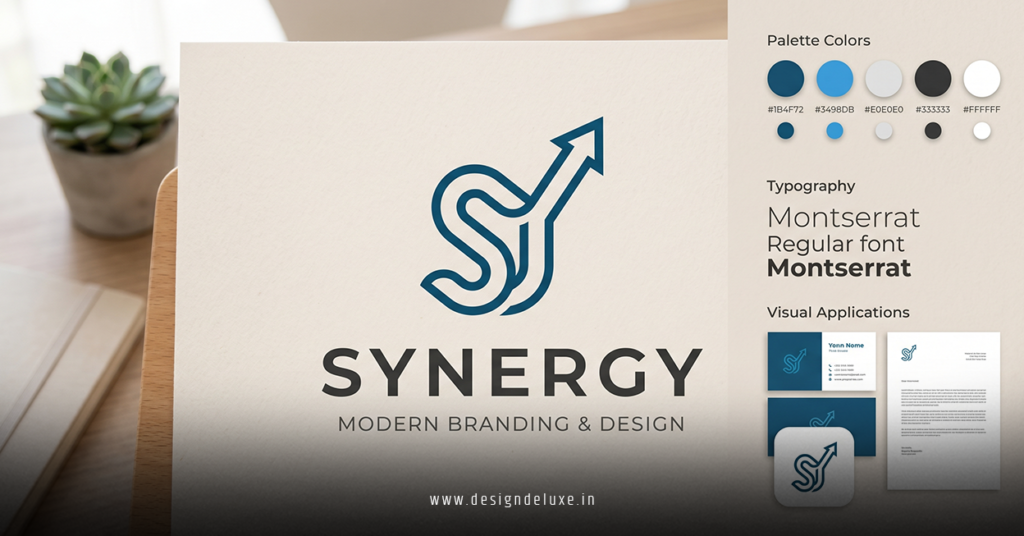
- sample social and web applications
If the system cannot be used quickly by a small team, it is too complicated.
Lock it into real-world touchpoints
A logo lives or dies in context. Put it on:
- homepage header
- signup screen
- pitch deck title slide
- email footer
- product splash screen
- social profile
That is where flaws show up. Fast.
modern minimalist logo design and branding for startups in the real world
A clean identity works best when it matches the startup’s stage and market. A pre-seed company trying to look like a public company can come off fake. A company that sells a practical product does not need theatrical branding.
In my experience, the strongest startup identities tend to do three things at once:
- look credible to investors
- feel usable to product and marketing teams
- stay simple enough to evolve
That last part matters. Startups change. Products pivot. Naming shifts. If the brand system is rigid, it becomes a liability.
So what would I do if I were building a startup identity from scratch?
I’d choose one signature move. Just one. Maybe it is a custom letter cut. Maybe it is a bold lowercase wordmark. Maybe it is a symbol built from the first letter and a hidden angle. Then I’d keep everything else quiet so that one move has room to breathe.
Common mistakes and how to fix them
Over-designing the logo
Too many lines. Too many colors. Too many ideas.
Fix it by removing elements until the mark still feels like the brand. If the logo only works when everything is included, it is not a logo. It is a collage.
Chasing trends too hard
A startup logo that copies whatever is hot this month usually dates fast.
Fix it by anchoring the design in the company’s positioning, not design Twitter. Trends can inform the work, but they should not lead it.
Using generic stock-like symbols
Stars, circles, arrows, mountains, abstract leaves. You know the drill.
Fix it by asking a harder question: what visual idea belongs only to this startup? If the answer is “nothing,” keep digging.
Weak typography
A bad wordmark can sink the whole system.
Fix it by tightening letter spacing, checking kerning, and testing alternate typefaces. Sometimes the simplest fix is choosing a better font family.
No scalability plan
A logo that looks good on a mood board but fails in a browser tab is not ready.
Fix it by designing multiple versions from the start: primary, stacked, icon, and one-color versions.
Ignoring brand application
A logo without usage rules creates chaos later.
Fix it by pairing the identity with a short brand guide. Even a lean one.
How to know your minimalist startup brand is working
A solid minimalist identity should pass a few blunt tests:
- Can someone recognize it in under two seconds?
- Does it look clean at small sizes?
- Does it feel right in black and white?
- Does it still work when the layout changes?
- Does the brand feel distinct without shouting?
If the answer is yes, you are close.
And here’s the real test. Would a customer trust this logo on a billing page, a mobile app, and a board deck? If not, the design is probably trying too hard.
Key Takeaways
- modern minimalist logo design and branding for startups works because it creates clarity fast.
- Simple does not mean bland. Distinctive typography and spacing do the heavy lifting.
- A startup identity should scale across web, product, social, and investor materials.
- One strong visual idea beats five weak ones every time.
- Minimalist branding needs a clear point of view or it turns generic.
- Start with strategy, not software.
- Test every logo at small sizes before you commit.
- Build a lean brand kit so the team can use it consistently.
The best startup brands look effortless because the decisions behind them were not. Keep the system tight, keep the message sharp, and give the logo room to breathe. If you are starting from zero, begin with the brand lane, not the decorative stuff.
FAQs
What makes modern minimalist logo design and branding for startups different from simple design?
Minimalist branding is intentional simplicity. It uses restraint to sharpen recognition, not to avoid making decisions.
How much should a startup invest in modern minimalist logo design and branding for startups?
It depends on stage and scope, but the smarter move is to budget for the full identity system, not just a logo file. A cheap logo with no usable brand system usually costs more later.
Can modern minimalist logo design and branding for startups still feel creative?
Yes. The creativity shows up in typography, proportion, spacing, and one memorable brand move. Minimal does not mean boring.