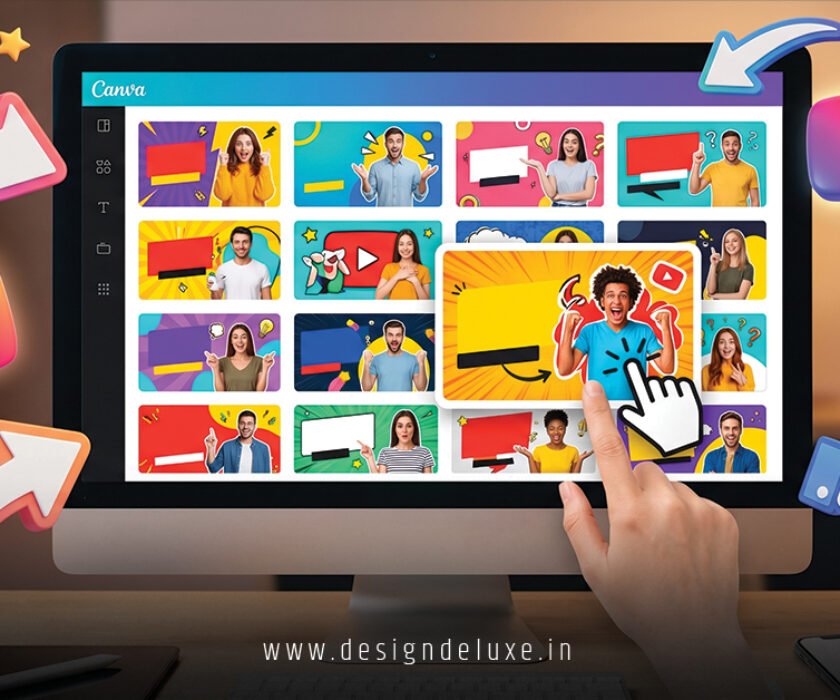
Social Media AdvertisingAd's
Social media ads can be a money printer or a money pit. The difference isn’t “luck” or some secret hack. It’s consistent execution on a handful of fundamentals that almost nobody really sticks to.
This guide walks through social media ads best practices that actually matter in 2026—creative, targeting, budgets, optimization, and how to plug in offers like a Neo minimalist branding package with AI social media ads banner design and motion graphics without wasting a cent.
Why social media ads still work (when done right)
Here’s the thing: organic reach is fickle. Paid reach is controlled.
Platforms like Meta (Facebook + Instagram), TikTok, LinkedIn, Pinterest, YouTube, and X are still where most U.S. users spend a big chunk of time. Those attention streams fuel ad auctions. If you show up with the right message, in the right format, with the right creative, the system will reward you.
What usually goes wrong?
- Vague targeting.
- Weak creative that looks like wallpaper.
- No clear offer.
- Zero testing discipline.
The good news: all of that is fixable.
1. Get your foundations right: offer, audience, objectives
Before you touch an Ads Manager, lock in three things.
A. Clarify your offer
“Brand awareness” is not an offer.
Ask yourself: If someone clicks my ad, what exactly happens next?
You need one clear hook:
- Free consultation or audit
- Lead magnet (guide, checklist, training)
- Limited-time discount
- Product launch or collection
- Service package (e.g., a Neo minimalist branding package with AI social media ads banner design and motion graphics for growing brands)
If you can’t summarize your offer in one sentence a stranger would understand, you’re not ready to run ads.
B. Define your audience
Skip “everyone.” Go specific.
Think in terms of:
- Demographics: age range, income level, job title if relevant
- Psychographics: what they care about, what they’re frustrated by
- Behavior: what they search for, follow, or buy
Example:
“Small business owners and creators in the USA, 25–45, who care about their brand’s look but don’t have in-house design help.”
That’s a far better starting point than “people interested in marketing.”
C. Choose the right campaign objective
Every platform gives you goal options:
- Traffic
- Conversions
- Leads
- Engagement
- Video views
- App installs
- Sales
Best practice: Pick the objective that matches what you actually want. If you want purchases, choose conversion/sales and set up proper tracking (pixels, events, etc.).
Using a “reach” or “engagement” objective and expecting sales is how budgets disappear.
2. Creative is king: design ads that get noticed and clicked
The best targeting in the world can’t fix boring creative.
Follow the “3-second” rule
You have about three seconds (sometimes less) before someone scrolls past your ad. So:
- Show the most important visual or message immediately
- Use strong contrast so it stands out in the feed
- Make the offer or benefit instantly obvious
Use platform-native formats
Each network has its own sweet spot:
- Instagram/TikTok: Vertical video, Reels, Stories
- Facebook: Vertical or square images and video
- LinkedIn: Clean static images, short videos, lead forms
- YouTube: Short, tight pre-roll; hooks in the first 5 seconds
Don’t run the same horizontal ad everywhere and hope.
Lean into clean, minimal, mobile-first design
Busy, cluttered ads die fast on mobile.
A neo minimalist approach works extremely well:
- One clear focal element (product, person, or message)
- Plenty of whitespace/negative space
- Short, bold headline
- Clear button-style CTA
If you want your ads to look sharp and consistent across platforms, a Neo minimalist branding package with AI social media ads banner design and motion graphics can give you a reusable system of templates and motion that slot straight into your social campaigns.
3. Copy that sells: say less, say it sharper
People don’t read paragraphs in ads. They scan.
Best practices for social ad copy
- Lead with the value, not the brand.
- Instead of “We’re excited to announce…”
- Say “Stop wasting money on ads that don’t convert.”
- Hook + benefit + proof + CTA.
- Hook: the problem or desire
- Benefit: what they get
- Proof: stat, testimonial, or clarity
- CTA: what to do next
- Match the tone to the platform.
- TikTok/Instagram: more casual, conversational
- LinkedIn: slightly more professional, but still human
- YouTube: benefit-focused, direct, script-driven
- Keep it skimmable.
- Short sentences, line breaks, and bullets when allowed
- Avoid jargon and fluff
4. Targeting and audiences: stay focused, not hyper-restrictive
Ad platforms are very good at finding your people—if you give them enough room to work.
Best practices for audience setup
- Start with broad but relevant targeting (e.g., interests + geography).
- Use lookalike or similar audiences if you have existing customer data.
- Avoid stacking too many filters until your data supports it.
- Always exclude past converters from prospecting campaigns (unless you’re selling something they can buy again).
For beginners, it often works better to run:
- 1–2 broad prospecting ad sets
- 1 retargeting ad set (website or profile visitors, video viewers, engaged users)
As performance data rolls in, refine from there.
5. Budgeting and bidding: start smart, scale what works
You don’t need a massive budget to learn, but you do need enough to exit the “random noise” phase.
Starting budgets
- For small businesses:
- Start with a daily budget that can generate a meaningful number of impressions per ad set (often $10–$50 per day per ad set on major platforms, depending on your niche and CPMs).
- Focus on one core offer at a time so your data isn’t scattered.
Scaling best practices
Once you find a winning combo (audience + creative + offer):
- Increase budget cautiously (e.g., 20–30% at a time) to avoid shocking the algorithm.
- Duplicate winning ad sets with higher budgets for testing, if needed.
- Monitor rising costs (CPM, CPC) and creative fatigue—don’t just throw more money at a dying ad.
6. Testing: treat your ads like experiments
If you’re not testing, you’re guessing.
What to test first
- Creative (images, videos, and motion)
- Headlines and hooks
- Calls to action
- Offers or angles
Early on, test big swings:
- Static vs motion
- Different visual styles
- Different value propositions
Then refine with smaller iterations:
- Copy tweaks
- Color variations
- Slightly different thumb-stopping visuals
AI can help here. For example, if your brand uses a Neo minimalist branding package with AI social media ads banner design and motion graphics, you can generate multiple ad variations quickly while keeping everything on-brand and consistent.
How many variations?
- For small budgets: 3–5 creatives per ad set is a solid starting point.
- Turn off clear losers quickly; feed more budget into winners.

7. Motion and video: subtle movement, big impact
Video isn’t optional anymore; it’s expected.
Best practices for motion-based ads
- Hook in the first 2–3 seconds. Show the problem or solution immediately.
- Use captions or on-screen text—many users watch without sound.
- Keep most ads between 6–30 seconds, depending on the platform.
- Use motion to highlight key elements, not to overwhelm.
Subtle, well-designed motion graphics help:
- Stop the scroll
- Increase recall
- Make your brand feel more premium and intentional
This is where that Neo minimalist branding package with AI social media ads banner design and motion graphics is especially useful—consistent motion styles across Reels, Stories, TikTok, and pre-rolls make your brand recognizable even before someone reads a word.
8. Landing page alignment: don’t break the promise
If your ads are sharp but your landing page is chaos, conversions tank.
Best practices for post-click experience
- Match the headline and visuals from the ad on the landing page.
- Keep the page fast, mobile-optimized, and distraction-free.
- Put the primary CTA above the fold (and repeat it as you scroll).
- Use social proof: testimonials, logos, case studies, or clear proof points.
The goal is simple: when a user clicks, the page should feel like a continuation of the ad, not a new universe.
9. Tracking, analytics, and optimization
If you can’t measure it, you can’t manage it.
Non-negotiables
- Install platform pixels/SDKs properly (Meta Pixel, TikTok Pixel, etc.).
- Track at least:
- Impressions
- Clicks
- CTR
- CPC
- Conversions
- CPA/ROAS, depending on your goal
Optimization loops
Every week (or more often for high spend):
- Identify winners and losers.
- Pause underperformers.
- Create new variations based on what’s working.
- Adjust budgets accordingly.
Over time, your account becomes a library of learnings instead of a graveyard of random campaigns.
10. Common social media ads mistakes (and how to avoid them)
Let’s hit a few landmines you’ll want to sidestep.
Mistake 1: Too many goals in one campaign
“Get sales, build awareness, and grow my email list” all at once.
Fix:
One primary goal per campaign. One main offer per ad. Keep it tight.
Mistake 2: Inconsistent branding
Every ad looks like it belongs to a different company.
Fix:
Use a consistent brand system—colors, type, layout, motion. If you don’t have one, consider tightening things up with a Neo minimalist branding package with AI social media ads banner design and motion graphics so content production stays fast and cohesive.
Mistake 3: Creative fatigue
Running the same ad for months while performance slides.
Fix:
Rotate new creatives regularly. Use templates plus AI to generate fresh variations and swap them in before metrics drop too far.
Mistake 4: Ignoring comments and messages
Your ads are conversation starters, not billboards.
Fix:
Reply to comments, DMs, and questions promptly. Social proof and engagement can help both performance and trust.
Social media ads best practices: quick checklist
Use this as a sanity check before you hit “publish.”
- One clear offer, one clear objective
- Defined, realistic audience
- Clean, mobile-first creative (static and/or motion)
- Strong, benefit-driven copy and CTA
- Proper tracking and pixels installed
- Multiple creative variations for testing
- Aligned, high-converting landing page
- Weekly (or better) performance review and optimization
- Consistent branding across all ads and platforms
Nail these, and the algorithm becomes an ally instead of a black box.
Final thoughts
Social media ads aren’t magic. They’re a system.
When your offer, audience, and creative line up—and you respect these social media ads best practices—you stop burning cash and start buying data, attention, and growth.
The kicker is, creative is now the biggest lever you control. If your ads look like everyone else’s, they’ll perform like everyone else’s. If you want a distinct edge, build a recognizable, minimal, flexible visual identity—something like a Neo minimalist branding package with AI social media ads banner design and motion graphics—and plug it into a disciplined testing process.
That’s how you turn “let’s try some ads” into a repeatable acquisition engine.
FAQs
1. How much should I spend on social media ads as a beginner?
Start with a budget that allows each ad set to gather enough data—often $10–$50 per day per ad set in the U.S., depending on your industry. Focus on one core offer, apply the social media ads best practices in this guide, and scale only when you see promising early signals like solid CTR and affordable leads or sales.
2. Do I really need video and motion for effective social media ads?
You can run static-only campaigns, but in most platforms, video and motion outperform static in attention and engagement. Even simple, subtle motion graphics built into a Neo minimalist branding package with AI social media ads banner design and motion graphics can significantly boost performance while keeping your brand consistent.
3. How often should I refresh my ad creatives?
A good rule of thumb is to review performance weekly and plan to refresh creatives every 3–6 weeks, or sooner if metrics like CTR and ROAS start falling. Using templates and AI-backed workflows tied to a strong brand system makes it much easier to follow social media ads best practices and keep ads fresh without rebuilding everything from scratch.