Logo DesignBrand Packaging
Minimalist logo design with adaptive packaging for small business 2026 delivers clean visuals that scale across every platform while keeping shipping costs low and shelves looking sharp. Small brands finally get professional polish without massive budgets or complex rollouts.
- Simple marks that work on tiny labels, app icons, and billboards alike.
- Packaging that adjusts to different product sizes or sales channels without redesigning from scratch.
- Cost efficiency paired with premium feel—perfect for bootstrapped operations.
- Sustainability edge that shoppers notice and regulators reward.
This combo cuts through noise in a crowded market.
Why Minimalist Logo Design with Adaptive Packaging for Small Business 2026 Wins Right Now
Small businesses face brutal competition on Etsy, Shopify, and retail shelves. A cluttered logo or rigid box design creates friction everywhere.
Clean lines solve that. They load faster on mobile, print cheaper on packaging, and stick in memory longer. Adaptive packaging takes it further—same core look, different formats. One master design stretches from e-commerce mailers to in-store displays.
In my experience, owners who nail this early save months of rework later. What usually happens is they start with a basic icon, then realize their packaging tells a different story. Alignment fixes that disconnect fast.
Neo-minimalism dominates 2026 trends. Think warm neutrals, subtle negative space, and one unexpected detail instead of cold corporate starkness.
Core Benefits for Small Operations
Less really is more here.
Minimalist logos reduce production headaches. Fewer colors mean lower printing costs. Simpler shapes scale without pixelation on social or embroidery.
Adaptive packaging shines for variable inventory. Sell three sizes of the same candle? One template family handles them all. No need for separate artwork runs.
Shoppers respond too. Clean presentation signals quality and care. It builds trust quicker than busy designs that scream “trying too hard.”
Sustainability ties in naturally. Minimal ink use and recyclable structures check boxes for eco-conscious buyers without greenwashing.
How Minimalist Logo Design with Adaptive Packaging for Small Business 2026 Works in Practice
Start with your mark. Focus on one strong symbol or wordmark. Add a single twist—like asymmetric balance or a warm gradient—to avoid looking generic.
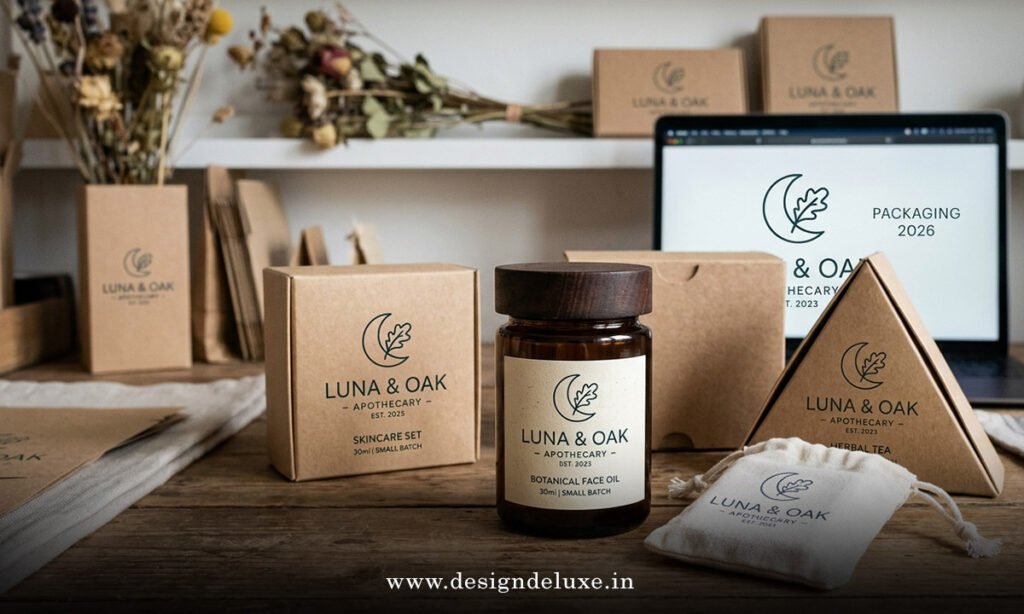
Then build the packaging system around it. Create a “design master” that adapts across structures. This means flexible layouts for pouches, boxes, tags, and wraps.
The kicker is versatility. Your logo looks intentional whether stamped small on a sticker or large on a shipping box.
Many small brands now use modular templates. Change product info without touching the core identity. Smart move in 2026’s fast-moving retail world.
Step-by-Step Action Plan for Beginners
Ready to build this yourself? Here’s what I’d do if I were starting fresh today.
- Define your essence. Boil your brand down to one word or feeling. Write it big on paper. Everything flows from there.
- Sketch simple. Grab pencil and paper first. Aim for shapes that work in black and white. Test at thumbnail size—does it still read?
- Choose tools wisely. Free options like Canva or Figma get you 80% there. For polish, hire a freelancer who understands scalable systems. Budget $300–800 for a solid logo package.
- Build adaptive rules. Create brand guidelines covering color variations, minimum sizes, and clear space. Include packaging dielines early.
- Prototype fast. Use online platforms like Packlane for mockups. Print samples. Ship a few test orders to yourself.
- Test across channels. Check how it looks on Instagram, your website, packaging, and in hand. Adjust the twist if needed.
- Launch and iterate. Roll out small batches. Gather feedback. Refine the system as you grow.
This process keeps things lean. Most owners overcomplicate step one. Keep it stupid simple.
| Aspect | Traditional Approach | Minimalist Adaptive System | Estimated Savings (Small Biz) |
|---|---|---|---|
| Design Time | 4-6 weeks per asset | 1-2 weeks master system | 60-70% faster |
| Printing Costs | Multiple SKUs | Modular templates | 25-40% lower |
| Scalability | Rigid files | Flexible across formats | High |
| Sustainability Score | Variable | High (less waste) | Better compliance |
| Brand Consistency | Often breaks | Locked in guidelines | Stronger recall |
Common Mistakes & How to Fix Them
Too many small businesses chase trends and end up with dated work.
Mistake 1: Over-minimalism. The logo becomes a vague blob. Fix: Add that one memorable detail. A slight curve or unique proportion makes it yours.
Mistake 2: Ignoring adaptability upfront. Beautiful logo, but it crumbles on curved labels. Fix: Design for worst-case scenarios first—small sizes, low-res prints, monochrome versions.
Mistake 3: Cheap packaging that looks cheap. Thin materials undermine premium positioning. Fix: Invest in sturdy recycled stocks that feel substantial. Texture adds perceived value without extra ink.
Mistake 4: No testing. Assumptions kill good designs. Fix: Get real customer eyes on prototypes before full production.
Watch for consistency slips across platforms too. One mismatched color throws everything off.
Real-World Implementation Tips
Think about your supply chain. Adaptive systems work best with print-on-demand partners who handle variable data.
Pair your design with smart elements like QR codes that link to stories or care instructions. They add function without cluttering the look.
For USA-based small businesses, check SBA resources on branding basics or explore sustainable material guides from EPA sites for compliance peace of mind.
Learn more about scalable logo systems from Shopify’s trend reports.
Explore custom packaging options that fit tight budgets.
Understand sustainable packaging standards through industry coalitions.
Key Takeaways
- Minimalist logo design with adaptive packaging for small business 2026 balances beauty and practicality like nothing else.
- Start simple, build flexible systems, and test relentlessly.
- Cost savings compound quickly across production runs.
- Neo-minimalism adds warmth without losing clarity.
- Consistency across every touchpoint builds serious trust.
- Sustainability becomes a natural selling point.
- One strong master design beats dozens of disconnected assets.
- Small tweaks early prevent expensive pivots later.
Nail this foundation and your brand stops fighting for attention. It earns it instead.
Take the first sketch today. Grab that notebook, distill your story to one core idea, and build outward. Your customers—and your bottom line—will thank you.
FAQs
What makes minimalist logo design with adaptive packaging for small business 2026 different from standard branding?
It creates one cohesive system that flexes across sizes, materials, and sales channels instead of separate designs for each use case. This saves time and money while keeping your look sharp everywhere.
How much should a small business budget for minimalist logo design with adaptive packaging in 2026?
Expect $500–2,000 total for logo plus basic packaging templates if working with freelancers. DIY tools drop it under $300 but require more of your time iterating.
Can minimalist logo design with adaptive packaging for small business 2026 work for handmade or artisanal products?
Absolutely. The clean approach highlights craftsmanship beautifully. Add subtle texture or one organic element to keep warmth while maintaining scalability.