Brand Packaging
Sneaker packaging design trends in 2026: what wins, what flops, and where AR fits
Sneaker packaging design trends are moving in one clear direction: cleaner visuals, smarter materials, and more experience-driven unboxing. If you want the box to do real work in 2026, it has to look premium, ship well, and give buyers a reason to keep it.
- Minimalist boxes are still strong, but they now need texture, structure, or a story to avoid looking cheap.
- Sustainable materials are no longer a nice-to-have; they’re part of the brand signal.
- Collectors want packaging that doubles as storage, display, or proof of authenticity.
- Digital layers are rising fast, especially AR-enabled interactive packaging for sneaker collectibles.
- The best packaging today feels less like a carton and more like a brand experience.
Why sneaker packaging matters now
Sneaker packaging used to be background noise. Now it’s part of the product conversation. The box shows up in unboxing videos, resale photos, shelf displays, and social posts, so a weak package can drag down a strong shoe.
The market has also shifted toward packaging that feels intentional rather than wasteful. Packly’s 2026 shoe packaging roundup leans into creative, brand-aware box ideas instead of generic shoeboxes, which is exactly where the category is headed. The best brands are treating packaging like a first impression, not an afterthought.
Here’s the thing: the box is often the first thing a buyer touches. Why let that moment be dull?
Sneaker packaging design trends
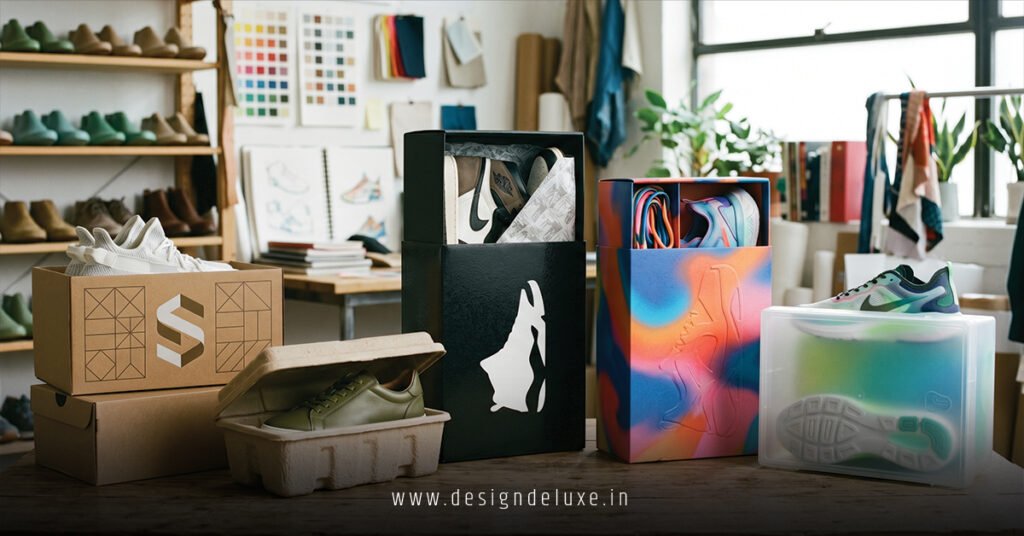
The strongest sneaker packaging design trends in 2026 fall into five buckets. Each one solves a different problem, but the brands that win usually combine two or three of them instead of betting everything on one gimmick.
1. Minimalism with texture
Plain white or kraft boxes are not enough anymore. Minimal packaging still works, but it needs tactile paper, embossed logos, hidden patterning, or a strong material contrast to feel premium. A stripped-back look can signal confidence, but only if the finish does the heavy lifting.
2. Sustainability that looks premium
Eco-friendly packaging has moved from talking point to expectation. Brands are using recycled board, reusable storage formats, and lower-waste structures that still feel collectible. Level Shoes’ AR-enhanced sustainable packaging paired recyclable materials with a storage-box function, which is exactly the kind of hybrid thinking that resonates.
3. Display-worthy box architecture
Collectors don’t want packaging they immediately toss. They want rigid boxes, magnetic closures, drawer pulls, or structures that can live on a shelf. The box is becoming a display piece, not just a transit container.
4. Story-led graphics
Graphics are getting smarter. Instead of shouting the brand name across every surface, more sneaker packaging now uses visual cues tied to the drop story, collaboration theme, or design inspiration. That makes the box feel more owned by the release rather than copied from a template.
5. Digital interaction
This is where things get interesting. AR, QR codes, NFC taps, and web-based experiences are turning the box into a trigger for content, authentication, and social sharing. Brands have already used AR to turn sneaker launches into interactive experiences, including scavenger-hunt style reveals and 3D product moments.
Where AR fits in
This is the big one. AR-enabled interactive packaging for sneaker collectibles is the trend that turns packaging into a post-purchase engine. It gives collectors something to scan, explore, share, and remember long after the shoes are unboxed.
That matters because the packaging trend is no longer just about visual style. It’s about utility plus emotion. A collector box that unlocks a 3D story, exclusive animation, or authenticity layer gives the owner a reason to keep the box instead of flattening it.
Sneaker brands already know AR can drive attention in launch campaigns. The next step is to bring that same energy into the packaging itself, where the product can feel more immersive and more collectible at the same time.
What brands should do
If you’re building sneaker packaging for 2026, start with the product, not the trend board. A retro runner, a luxury collaboration, and a skate-inspired release each need a different packaging tone. One size does not fit all.
What I’d do if I were launching a collector pair: keep the outer box clean, use premium structure, and reserve the surprise for the inside lid or scan trigger. That gives the buyer a clear physical experience first, then a digital payoff. The transition feels smooth instead of gimmicky.
If the release is meant to live on social, bake in a moment worth filming. If the release is meant to age well, prioritize materials and shelf presence. If the release is meant to prove legitimacy, make the digital layer useful, not decorative.
Step-by-step action plan
1. Pick one goal
Decide whether the packaging is meant to improve shelf appeal, strengthen sustainability, support authentication, or drive hype. A box that tries to do everything usually ends up doing none of it well.
2. Choose the format
Use the lightest structure that still feels premium. For general retail, a foldable printed box may be enough. For collectibles, rigid construction, drawer boxes, or magnetic closures usually make more sense.
3. Match the graphic system to the sneaker
Use colors, textures, and typography that reflect the silhouette and story. A clean performance runner should not wear the same packaging language as a loud collaboration pair.
4. Add one digital layer
This is where AR-enabled interactive packaging for sneaker collectibles comes in. Keep the interaction simple: scan, reveal, engage. A 3D animation, collector badge, designer story, or authentication detail is usually enough to justify the experience.
5. Test the unboxing
Open the box. Close it. Scan it. Re-scan it. Then do it on a mid-range phone. If the experience feels clunky in real life, it will disappoint at scale.
Common mistakes and how to fix them
The first mistake is overdesigning the box. Too many fonts, too many graphics, too many finishes. That kind of packaging looks busy and loses the premium feel fast. Fix it by choosing one clear visual idea and letting structure do the rest.
The second mistake is pretending eco-friendly means flimsy. Sustainability should not look like compromise. Use recycled or recyclable materials, but keep the build strong enough to protect the sneaker and survive storage.
The third mistake is using AR as a party trick. If the scan only unlocks a flashy animation, people may enjoy it once and forget it. Make the digital layer useful, collectible, or exclusive so it has staying power.
The fourth mistake is ignoring resale and collector behavior. Sneaker buyers often keep boxes, photograph them, and use them as part of the product identity. Build packaging that still looks good after a year on a shelf.
What to borrow from the best
The smartest packaging ideas in 2026 pull from luxury, sustainability, and digital interaction all at once. That blend is already visible in AR-enhanced packaging executions and interactive sneaker activations, where the package becomes both a brand signal and an experience trigger.
You can also learn from the sneaker world’s earlier AR experiments, which used treasure-hunt mechanics and 3D product reveals to create excitement around drops. Those same mechanics translate well into packaging when the box is treated as the entry point instead of the endpoint.
The best analogy? Think of the box like the opening riff of a great song. Short, sharp, recognizable, and strong enough to make people lean in.
Key takeaways
- Sneaker packaging design trends in 2026 favor cleaner, smarter, and more collectible packaging.
- Minimalism still works, but only with strong texture, structure, or finish.
- Sustainability matters, but it has to feel premium.
- Packaging that doubles as storage or display has real collector appeal.
- Story-led graphics are stronger than generic brand repetition.
- AR-enabled interactive packaging for sneaker collectibles is becoming a serious differentiator, not a novelty.
- The best packaging combines physical quality with a digital payoff.
- If the box feels worth keeping, the design has done its job.
Sneaker packaging is no longer just about protecting the pair. It’s about signaling value, building memory, and making the unboxing feel earned. The next move is simple: design the box as if it will be photographed, kept, and scanned.
FAQs
What are the biggest sneaker packaging design trends right now?
The biggest trends are minimalist premium boxes, sustainable materials, display-worthy collector packaging, story-driven graphics, and digital layers like AR. Brands are focusing on packaging that looks better, ships smarter, and feels more valuable after purchase.
How does AR-enabled interactive packaging for sneaker collectibles help brands?
It gives brands a way to add storytelling, authentication, and shareable digital experiences to the box. That can improve engagement, strengthen collector appeal, and make the packaging feel part of the product rather than an accessory.
Is sustainable sneaker packaging still important in 2026?
Yes, and it’s becoming the baseline. Buyers expect brands to reduce waste, but they still want a premium experience, so the challenge is making eco-friendly packaging feel durable and collectible at the same time.