DESIGN
Retro futurism graphic design inspiration has captured the hearts of designers everywhere, pulling us into a world where the past’s wild dreams of the future collide with modern visuals in the most captivating way. Imagine flipping through old sci-fi magazines from the 1950s or 1960s, where artists sketched flying cars zipping between chrome skyscrapers, robots serving cocktails in pastel living rooms, and space helmets that looked more like stylish hats than serious gear. That’s the essence of retro futurism graphic design inspiration—it’s nostalgic yet forward-thinking, optimistic yet playfully ironic.
Have you ever wondered why this style feels so addictive right now? In an era of sleek minimalism and AI-generated everything, retro futurism graphic design inspiration offers a burst of color, whimsy, and human imagination that reminds us technology was once something magical, not mundane. Let’s dive deep into what makes this aesthetic tick, how to harness retro futurism graphic design inspiration for your own projects, and why it’s more relevant than ever.
What Is Retro Futurism Graphic Design Inspiration All About?
At its core, retro futurism graphic design inspiration draws from how earlier generations envisioned the future. Think mid-20th-century visions: atomic-powered homes, jetpacks for daily commutes, and cities under domes on Mars. These weren’t predictions based on today’s tech; they were hopeful fantasies shaped by post-war optimism, the Space Race, and pulp fiction.
Retro futurism graphic design inspiration isn’t about copying history—it’s about remixing it. You take those vintage elements (streamlined shapes, bold contrasts) and infuse them with contemporary twists like glitch effects or neon glows. The result? Designs that feel both comforting and exciting, like stepping into a time machine that only goes forward by looking back.
Why does retro futurism graphic design inspiration resonate so strongly today? Nostalgia acts like a warm blanket in uncertain times. When the real future feels chaotic—with AI ethics debates and climate worries—retro futurism graphic design inspiration lets us escape into a sunnier “what if.” It’s optimistic escapism wrapped in visual candy.
The History Behind Retro Futurism Graphic Design Inspiration
Retro futurism graphic design inspiration didn’t pop up overnight. Its roots trace back to the early 20th century, but it exploded in the 1950s and 1960s during the Atomic Age and Space Age. World’s Fairs showcased “Tomorrowland” exhibits with monorails and push-button living. Pulp magazines and comic books painted vivid pictures of tomorrow.
By the 1980s, films like Blade Runner added a darker, cyberpunk edge, but retro futurism graphic design inspiration often leans toward the brighter, more utopian side—think The Jetsons or classic Star Trek sets. The term “retrofuturism” gained traction in the late 20th century as designers began consciously reviving these aesthetics.
Today, retro futurism graphic design inspiration thrives in digital spaces. Synthwave music videos, vaporwave art, and even branding for tech startups draw heavily from it. It’s evolved from niche to mainstream because it bridges generations: older folks feel the nostalgia, while younger creators remix it ironically or earnestly.
Key Elements of Retro Futurism Graphic Design Inspiration
To nail retro futurism graphic design inspiration, focus on these signature features. They create that unmistakable “past’s future” vibe.
Color Palettes That Pop in Retro Futurism Graphic Design Inspiration
Colors in retro futurism graphic design inspiration scream optimism. Think vibrant neons—electric blue, hot pink, turquoise—against deep blacks or purples for that cyber glow. Pastel versions evoke 1950s diners: mint green, soft peach, chrome silver.
Metallics are huge: shiny golds, silvers, and bronzes mimic polished rockets. High-contrast combos (neon on dark) create drama, while faded gradients add a vintage “aged film” feel. Avoid muted earth tones—retro futurism graphic design inspiration is bold and luminous.
Typography That Defines Retro Futurism Graphic Design Inspiration
Fonts carry so much weight here. Go for rounded geometrics or slab serifs inspired by mid-century ads—think Futura or similar bold sans-serifs with a futuristic twist. Angular, high-contrast letters evoke early computer displays or sci-fi movie titles.
Chrome effects, 3D extrusion, or neon outlines make type glow. Pixelated or glitchy fonts nod to 1980s tech. The key? Make it feel advanced yet dated—perfect for retro futurism graphic design inspiration.
Shapes, Icons, and Imagery in Retro Futurism Graphic Design Inspiration
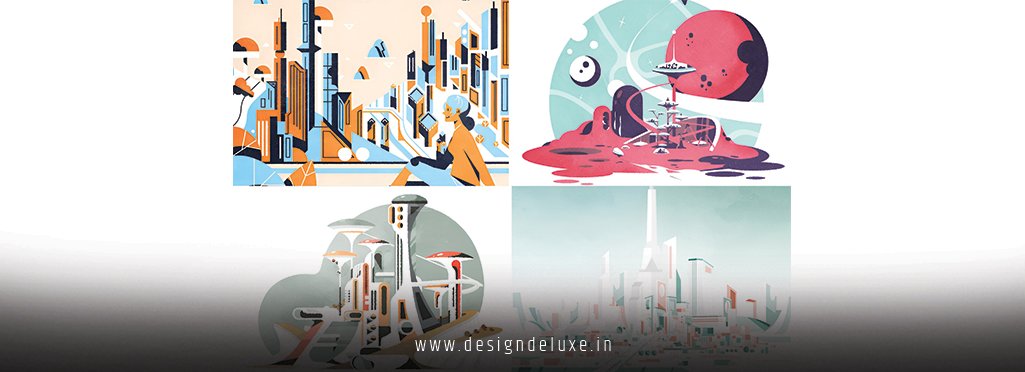
Rounded corners, atomic orbits, ray guns, flying saucers—these icons scream retro futurism graphic design inspiration. Geometric patterns like spirographs or grid horizons fading into sunsets add depth.
Illustrations often feature robots with bubble helmets, dome cities, or streamlined cars. Grainy textures, VHS glitches, or halftone dots give that analog-meets-digital charm.
How to Create Your Own Retro Futurism Graphic Design Inspiration
Ready to experiment? Start simple.
Gather mood boards: vintage sci-fi posters, 1960s ads, synthwave art. Pick a color palette (say, neon pink + teal + black). Choose a bold font and add glow effects.
Layer elements: Place a retro robot over a grid cityscape, add neon lines for speed. Use gradients for depth—fade from purple to pink skies.
Tools like Photoshop or Figma help with glows and textures. Add subtle noise for vintage film feel. Play with perspective: exaggerated vanishing points mimic old posters.
The magic happens in contrast—pair optimistic elements (smiling families in space) with ironic twists (glitchy dystopia). That’s pure retro futurism graphic design inspiration.
Influences and Famous Examples of Retro Futurism Graphic Design Inspiration
Many artists shape retro futurism graphic design inspiration. Syd Mead’s Blade Runner concepts blend sleek futurism with gritty reality. Shusei Nagaoka’s vibrant album covers burst with cosmic energy.
Beeple (Mike Winkelmann) mixes neon-drenched scenes with glitch. Love Hultén crafts retro-inspired gadgets. Iris van Herpen’s fashion fuses sculptural forms with sci-fi.
Platforms like Behance and Dribbble overflow with retro futurism graphic design inspiration—posters, logos, UI concepts. Look at synthwave artists or vaporwave creators for fresh takes.
Why Retro Futurism Graphic Design Inspiration Matters Today
In our hyper-digital world, retro futurism graphic design inspiration grounds us. It reminds us imagination once outpaced reality in beautiful ways. For branding, it stands out—tech companies use it to feel innovative yet approachable.
It sparks joy. Who doesn’t smile at a chrome robot sipping coffee? Retro futurism graphic design inspiration encourages playful experimentation, pushing boundaries while honoring roots.
Conclusion: Embrace Retro Futurism Graphic Design Inspiration in Your Work
Retro futurism graphic design inspiration isn’t just a trend—it’s a mindset. It blends nostalgia with bold imagination, creating visuals that feel timeless and fresh. From color palettes that glow to shapes that soar, this style invites you to dream big while winking at the past.
Whether you’re designing posters, branding, or social media graphics, let retro futurism graphic design inspiration guide you. Grab those neons, round those edges, and build your own “future that never was.” The results? Designs that captivate, inspire, and maybe even make someone smile at the wonder of it all. So, what are you waiting for? Dive in and create something out-of-this-world.
Here are three high-authority external links for more retro futurism graphic design inspiration:
- Wikipedia on Retrofuturism
- Shutterstock Blog on Retro Futurism
- Envato Elements Guide to Retro Futurism
FAQs About Retro Futurism Graphic Design Inspiration
What exactly makes retro futurism graphic design inspiration different from regular sci-fi design?
Retro futurism graphic design inspiration specifically looks back at how past eras (like the 1950s-1980s) imagined the future, often with optimistic, kitschy elements. Modern sci-fi tends to be darker or more realistic—retro versions feel playfully naive and colorful.
How can beginners start incorporating retro futurism graphic design inspiration?
Start with free tools like Canva or GIMP. Collect reference images from vintage posters, pick a neon palette, and layer simple shapes (circles for planets, triangles for rockets). Add glow effects and bold type—experiment until it feels nostalgic yet futuristic.
Is retro futurism graphic design inspiration suitable for professional branding?
Absolutely! Many tech and entertainment brands use retro futurism graphic design inspiration for memorable, standout looks. It conveys innovation with warmth, perfect for startups or creative agencies wanting personality.
What are common mistakes to avoid in retro futurism graphic design inspiration?
Overloading with elements—keep it balanced. Don’t make it too literal (avoid cartoonish clichés unless intentional). Ensure readability; futuristic fonts can sacrifice legibility if overdone.
Where can I find the best resources for retro futurism graphic design inspiration?
Check Behance, Dribbble, or Pinterest for mood boards. Sites like Shutterstock offer stock assets, and communities on Reddit (r/retrofuturism) share fresh takes.