
Brand PackagingDESIGN
Recyclable flexible packaging designs with branding integration are revolutionizing how brands connect with eco-conscious consumers while keeping sustainability at the forefront. Imagine unwrapping your favorite snack, and instead of tossing the wrapper in the trash with a guilty shrug, you pop it into the recycling bin, knowing your brand choice just helped the planet. That’s the magic we’re diving into today. As someone who’s watched packaging evolve from bulky plastics to sleek, green innovations, I can tell you this isn’t just a trend—it’s a game-changer for businesses aiming to stand out without sacrificing the Earth.
Why Recyclable Flexible Packaging Designs with Branding Integration Matter Now
Let’s face it: the world is waking up to plastic pollution. Oceans choked with waste, landfills bulging—it’s enough to make any marketer pause. But here’s the exciting part: recyclable flexible packaging designs with branding integration offer a smart way out. These aren’t your grandma’s stiff cardboard boxes; they’re lightweight, pouches, films, and stand-up bags made from materials like polyethylene (PE), polypropylene (PP), or even paper-based laminates that actually recycle.
Why the buzz? Consumer demand is skyrocketing. A 2023 Nielsen report shows 78% of shoppers prefer sustainable packaging. Brands ignoring this risk getting left behind. Think of it like this: your packaging is the first handshake with a customer. Make it memorable, recyclable, and branded? You’ve just won loyalty points.
The Sustainability Edge
Diving deeper, recyclable flexible packaging shines because it’s versatile. Traditional rigid packaging? Heavy, costly to ship. Flexible stuff? It hugs products snugly, cuts shipping emissions by up to 70%, per industry stats. And with branding integration, you weave your logo, colors, and messaging right into the material—using inks safe for recycling streams.
I’ve seen brands transform simple pouches into storytelling canvases. No more peeling labels; the design is fused in, durable through handling. It’s like giving your product a tattoo that survives the journey and recycles cleanly.
Market Growth and Stats
Picture this: the global flexible packaging market is projected to hit $450 billion by 2030, with recyclable options leading the charge. Europe’s pushing hard with mandates like the EU Packaging Directive, demanding 50% recyclability by 2030. In the US, states like California are following suit. If you’re in food, cosmetics, or pet products, recyclable flexible packaging designs with branding integration aren’t optional—they’re your competitive moat.
Key Materials in Recyclable Flexible Packaging Designs with Branding Integration
Choosing the right materials is like picking the foundation for your dream home—get it wrong, and everything crumbles. For recyclable flexible packaging designs with branding integration, focus on mono-materials. Why? Mixed layers (like foil laminates) confuse sorters at recycling plants.
Top Recyclable Material Picks
- Mono-PE or PP Films: These are the MVPs. Single-polymer films recycle easily into new bags or bins. Brands like Unilever use them for tea pouches, embedding vibrant branding via digital printing.
- Paper-Based Solutions: Think kraft paper with a thin PE liner. It’s compostable in some systems and recyclable in others. Perfect for dry goods—your logo pops with embossing.
- Bio-Based Polymers: Derived from plants, these mimic plastic but break down better. Pair with water-based inks for branding that doesn’t leach toxins.
Pro tip: Test with How2Recycle labeling, the gold standard for clear recycling instructions. It builds trust—consumers love knowing exactly what to do.
Branding Techniques That Stick (Literally)
Integration means more than slapping on a sticker. Use flexographic printing for high-volume runs—cost-effective and recyclable-friendly. Or go digital for short runs, allowing hyper-personalized designs. Metallized zones? Skip ’em; they snag machines. Instead, holographic effects via embossing keep it shiny and brandable without compromising recyclability.
Ever wonder how a pouch can feel premium yet green? Metallized paper alternatives do the trick, reflecting light like foil but sorting cleanly.
Design Principles for Recyclable Flexible Packaging Designs with Branding Integration
Design isn’t just pretty pictures; it’s strategy. For recyclable flexible packaging designs with branding integration, balance aesthetics, functionality, and eco-rules.
Shape and Structure Innovations
Who says recyclable can’t be fun? Spout pouches for liquids, zippers for resealability—these extend shelf life, reducing waste. D-shape bottoms stand tall on shelves, screaming “pick me!” Integrate your brand’s curve into the die-cut—subtle genius.
Color and Visual Hierarchy
Bright colors draw eyes, but use CMYK inks only—no funky metallics. Create hierarchy: bold logo top, key benefits mid, recycling icon bottom. It’s like a billboard on your shelf. Analogy time: think of your package as a book cover—intriguing enough to grab, informative to keep.
User Experience Focus
Ease matters. Tear notches, peel seals—make opening intuitive. Why? Happy customers recycle more. Surveys show 60% skip recycling if it’s a hassle. Brand it with “Recycle Me!” motifs tied to your story, turning users into advocates.
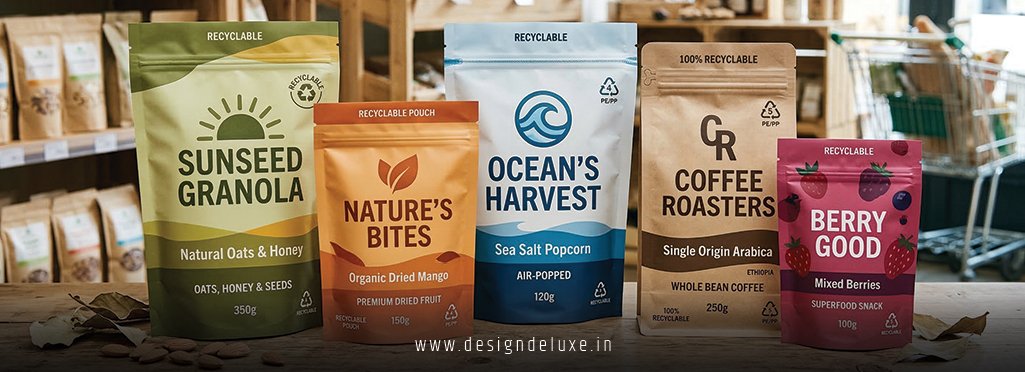
Real-World Examples of Recyclable Flexible Packaging Designs with Branding Integration
Nothing beats stories. Let’s spotlight winners.
Food Industry Stars
Mars Wrigley’s recyclable gum pouches? Bold red branding integrated via mono-PE, recyclable in most curbside programs. Sales up 15% post-launch—consumers noticed.
Beauty and Personal Care
L’Oréal’s recyclable shampoo pouches feature pearlescent effects (ink-based, not film) with their iconic swirl logo fused in. Lightweight, ship-flat—genius for e-commerce.
Pet Food Pioneers
Nestlé Purina’s stand-up pouches use paper-PE, branded with playful paw prints. Parents (pet ones) rave about the ease, boosting repeat buys.
These aren’t hypotheticals; they’re proven. Check Packaging Digest’s case studies for more inspiration.
Challenges and Solutions in Recyclable Flexible Packaging Designs with Branding Integration
No rose without thorns. Challenges exist, but solutions abound.
Common Hurdles
Recycling infrastructure lags—only 9% of flexible plastic recycles globally. Branding inks can contaminate if not food-grade.
Smart Fixes
Collaborate with recyclers early. Use APR testing protocols to validate designs. Switch to post-consumer recycled (PCR) content for that authentic green halo—up to 50% PCR in mono-films works seamlessly with branding.
Cost? Initial tooling hurts, but scale saves. I’ve chatted with converters; ROI hits in 18 months via premium pricing.
Overcoming Consumer Skepticism
Educate via on-pack QR codes linking to your sustainability page. Transparency builds trust—like showing behind-the-scenes recycling vids.
Future Trends in Recyclable Flexible Packaging Designs with Branding Integration
Peering ahead, AI-driven design tools will optimize for recyclability while auto-generating brand variants. Expect mycelium films (mushroom-based) and algae polymers—wild, right?
Digital watermarks for automated sorting? Game-over for contamination. Brands integrating AR—scan your pouch for virtual try-ons or origin stories. Recyclable flexible packaging designs with branding integration will lead, blending tech with green ethos.
By 2030, mandates will force it. Early adopters? They’ll own the narrative.
Benefits of Adopting Recyclable Flexible Packaging Designs with Branding Integration
Why bother? Let’s tally.
- Cost Savings: Lighter weight = lower freight (20-30% less).
- Brand Loyalty: 73% of millennials pay more for sustainable packaging.
- Regulatory Compliance: Dodge fines, gain certifications like FSC.
- Marketing Gold: User-generated content explodes—#RecycleWithUs trends.
- Waste Reduction: Extend product life, cut food waste by 50%.
It’s a win-win, like investing in solar before everyone else.
How to Get Started with Recyclable Flexible Packaging Designs with Branding Integration
Ready to jump in? Here’s your roadmap.
Step 1: Audit Current Packaging
Map materials, test recyclability. Tools like RecyClass help.
Step 2: Partner with Experts
Converters like Amcor or Berry Global specialize here. Demand mockups with your branding baked in.
Step 3: Prototype and Test
Run consumer panels, lifecycle assessments. Iterate fast.
Step 4: Scale and Promote
Launch with a bang—press releases, social blasts. Track metrics like recycle rates.
Budget? Start small: $10K for pilots yields big insights.
Conclusion
Recyclable flexible packaging designs with branding integration aren’t just about going green—they’re your ticket to captivating customers, slashing costs, and future-proofing your brand. We’ve explored materials, designs, examples, challenges, and steps to launch. The planet thanks you, your bottom line thanks you, and savvy shoppers? They’ll keep coming back. What’s stopping you? Dive in today and wrap your brand in sustainability that shines.
Frequently Asked Questions (FAQs)
What makes recyclable flexible packaging designs with branding integration different from traditional packaging?
Unlike multi-layer plastics that end up in landfills, these use mono-materials like PE films with integrated printing, ensuring easy recycling while keeping your logo vibrant and intact.
How can I ensure my branding looks premium in recyclable flexible packaging designs with branding integration?
Opt for flexo or digital printing with water-based inks and embossing—techniques that maintain high-gloss appeal without hindering recyclability.
Are recyclable flexible packaging designs with branding integration cost-effective for small businesses?
Yes! Initial setup is affordable for short runs via digital methods, and long-term savings on shipping and waste make it a smart investment.
What industries benefit most from recyclable flexible packaging designs with branding integration?
Food, cosmetics, and pet products thrive here, as these designs offer resealability, shelf appeal, and compliance with strict eco-regs.
How do I test if my recyclable flexible packaging designs with branding integration are truly recyclable?
Use protocols from organizations like APR or How2Recycle—send samples for lab validation to confirm sorting and reprocessing success.

