Brand
Omnichannel branding strategies are the difference between a brand that feels fragmented across platforms and one that feels inevitable—like it was always meant for you, wherever you shop. It’s not just having a presence on five channels; it’s architecting a brand experience so cohesive that customers don’t think about the medium, they think about you.
Here’s the no-fluff breakdown of why this matters right now.
What omnichannel branding strategies actually do:
- Unified customer journey: Customers switch between app, store, social, and email without losing your brand voice or visual identity.
- Revenue multiplier: Brands executing omnichannel see 25-30% higher customer lifetime value than single-channel players (retail data).
- Trust accelerator: Consistency across touchpoints signals professionalism—nudges conversion rates up 15-20%.
- Reduced friction: One cohesive brand system beats multiple siloed campaigns, cutting operational bloat by 30-40%.
- Future-proofing: New channels emerge constantly. A solid strategy scales without rebuilding from scratch.
Get this right, and your brand doesn’t just exist everywhere—it owns everywhere.
Why Omnichannel Branding Strategies Matter in 2026
The retail landscape fractured a decade ago. Now it’s everywhere at once.
Your customer might see your ad on TikTok at 9 AM, browse your app at lunch, swing by the physical store at 4 PM, and unbox your product at 9 PM. That’s four different brand touchpoints in one day. Mess up consistency at any point, and she’s gone.
Omnichannel branding strategies aren’t optional anymore—they’re table stakes. Why? Because 72% of US consumers expect brands to deliver seamless experiences across channels. They’re not asking nicely; they’re voting with their wallets.
The kicker is this: most brands think they’re omnichannel. They’re not. They’re just “present” on multiple channels, like showing up to a party in different costumes.
Real omnichannel branding? That’s intentional. Systematic. Designed.
Think of it like this: A good brand is a promise. An omnichannel brand is a kept promise, repeated everywhere, without apology.
Core Pillars of Omnichannel Branding Strategies
Before you build, you need to understand the foundation. These five pillars hold everything up.
1. Brand Identity Architecture
This is your north star. It’s not just a logo (though that matters). It’s voice, tone, visual language, values, and personality codified into a system that works everywhere.
What I usually see: Brands nail the visual stuff but botch the tone. Your Instagram voice shouldn’t feel like your email footer. But it should feel like the same brand.
Example: Warby Parker’s tone is witty and irreverent. Whether you’re reading their product page, their social captions, or their packaging, that voice persists. That’s identity architecture.
Build this first. Everything else hangs on it.
Quick Identity Checklist:
- Logo system (responsive variations for digital/physical)
- Color palette (digital RGB + print CMYK)
- Typography (web fonts + print specs)
- Voice guidelines (formal? playful? technical?)
- Value pillars (what do you actually stand for?)
- Imagery style (photography tone, illustration approach)
2. Customer Journey Mapping Across Channels
Know where your customers touch your brand. Map it.
The journey isn’t linear anymore. A customer might:
- Discover on Pinterest
- Research on your site
- Compare on Amazon
- Buy in-store
- Engage on email
- Advocate on TikTok
Every step is a branding moment. Mess one up, the whole thing falls apart.
What I’d do: List your channels (social, web, email, in-store, packaging, ads, support). For each, define the customer’s emotional state and what they need from your brand right then. Design the experience accordingly.
3. Responsive Visual Systems
This is where responsive logo and packaging design for omnichannel retail ties in directly.
Your logo can’t be static. Packaging can’t be one-size. Digital assets need scalability. Physical collateral needs flexibility.
Omnichannel brands use modular design systems: one core identity that adapts, not transforms, across channels.
Analogy: Think of your brand like water. Same substance, different container. A glass, a bucket, a pool—still water. Still you.
This is non-negotiable in 2026. Static designs break omnichannel.
4. Consistent Messaging Framework
“Be consistent” is vague garbage advice. Here’s what actually works:
Create a messaging hierarchy:
- Brand promise (your core value, 1 sentence)
- Key messages (3-5 angles on that promise)
- Supporting claims (proof points, features, benefits)
- Channel-specific variations (same message, platform-optimized)
Example: A sustainable fashion brand might have:
- Promise: “Luxury that doesn’t cost the earth.”
- Key message for Instagram: Unboxing + sustainability narrative.
- Key message for email: Founder story + impact metrics.
- Key message for in-store: Product craftsmanship + durability.
Same brand. Different angle. Still cohesive.
5. Omnichannel Tech Stack Integration
Your tools matter. They either enable consistency or sabotage it.
A solid stack includes:
- CMS/DAM (centralized asset management—one logo file, deployed everywhere)
- CDP (customer data platform—know who’s who across channels)
- Email/SMS platform (consistent templates, voice)
- Social management (content calendar, brand guidelines)
- Analytics hub (track performance across touchpoints)
Fragmented tools = fragmented brand. Unified tools = unified voice.
Step-by-Step Guide: Build Your Omnichannel Branding Strategy
You don’t need a year-long project. You need a structured approach. Here it is.
Step 1: Audit Your Current State (Week 1)
Brutal honesty time.
- Take a screenshot of your brand on every platform. Side-by-side them.
- Does your Instagram profile feel like your website?
- Does your packaging match your app?
- Does your customer service email sound like your social captions?
Most brands fail this instantly. That’s the diagnosis.
Document the gaps. Don’t judge yet—just observe.
Step 2: Define Your Brand Essence (Week 2)
This is the hard work, and it pays dividends.
Answer these:
- What’s the one thing your brand solves?
- Who is your core customer? (Not “everyone.”)
- What makes you different? (Not “We care about quality.” Everyone says that.)
- What do customers feel when they interact with you?
Write it down. Make it weird, specific, and honest.
Step 3: Build Your Identity System (Weeks 3-4)
Work with a designer—freelance or in-house. Define:
- Logo variants (responsive for all sizes)
- Color system (HEX + Pantone)
- Typography (web + print)
- Photography/illustration style
- Tone of voice guidelines
This is your operating manual. Guard it.
Step 4: Map Your Customer Journey (Week 4)
List every touchpoint. For each:
- What’s the customer’s goal?
- What’s their emotional state?
- How should your brand show up?
- What’s the experience design?
This ensures your strategy isn’t just pretty—it’s functional.
Step 5: Audit and Implement Across Channels (Weeks 5-8)
Start with highest-traffic channels:
- Website
- Social (top 2 platforms)
- App (if you have one)
- Physical retail/packaging
- Ads
Update in phases. Don’t launch everything at once—you’ll burn out.
Step 6: Create Enforcement Mechanisms (Ongoing)
A brand guide that nobody reads is useless.
- Store assets in a central DAM (Digital Asset Management).
- Create templates for common assets (social posts, email, ads).
- Run quarterly brand audits.
- Train your team—seriously.
Timeline Overview:
| Phase | Duration | Output |
|---|---|---|
| Audit | 1 week | Gap analysis |
| Essence | 1 week | Brand brief |
| Identity | 2 weeks | Design system |
| Journey | 1 week | Experience map |
| Implementation | 4 weeks | Live across channels |
| Enforcement | Ongoing | Dashboard + guidelines |
Total: 10 weeks to launch. Then maintenance.
Tools That Actually Work for Omnichannel Branding
Skip the fluff. These are the ones I’ve seen move the needle.
- Figma: Design systems, collaborative workflow, component updates across projects.
- Monday.com: Project management for implementation (who’s doing what, when).
- Notion: Brand guidelines repository—searchable, updatable, shared.
- Canva Teams: Quick asset creation without the designer bottleneck.
- Klaviyo: Email consistency + segmentation (tie brand messaging to customer behavior).
- Hootsuite: Social posting + brand asset library.
- Mux/Cloudinary: Centralized media hosting and delivery.
Budget reality: Start with Figma + Notion + your existing tools. Upgrade as you scale.
Common Mistakes Killing Your Omnichannel Strategy
I’ve seen a thousand brands botch this. Here’s what trips them up.
Mistake 1: Assuming consistency = boring Wrong. Consistency is clarity. Boring is when you have no distinctive voice.
Fix: Make your voice distinctive, then apply it everywhere.
Mistake 2: Letting each channel do its own thing “Our Instagram manager does their thing. Email team does theirs.” Chaos.
Fix: Central brand authority + channel-specific flexibility (message is unified, format adapts).
Mistake 3: Forgetting that packaging is media Physical touchpoints are still branding moments. They matter.
Fix: Ensure responsive logo and packaging design for omnichannel retail aligns with digital identity.
Mistake 4: Building for channels that don’t matter yet Don’t chase every platform. Master your top 3-5.
Fix: Audit where your customers actually spend time. Double down there.
Mistake 5: Not measuring consistency You can’t improve what you don’t track.
Fix: Define brand consistency metrics. Track them monthly.
Mistake 6: Ignoring customer feedback loops Your customers will tell you what’s working. Listen.
Fix: Survey, comment monitor, feedback tools. Act on patterns.
Omnichannel Branding Strategies: Channel-Specific Playbooks
Same brand, different plays. Here’s how to think about each.
Social Media Strategy
Voice: Most playful, conversational.
- Unique to each platform (TikTok ≠ LinkedIn).
- Still unmistakably you.
- Post cadence fits platform norms, message stays consistent.
Example: Nike’s TikTok is fun and trend-aware. LinkedIn’s more inspirational. Same brand DNA, different rhythm.
Email Strategy
Voice: Warm, personal, benefit-focused.
- Subject lines are punchy but on-brand.
- Templates reflect your visual identity.
- Segmentation ties messaging to customer lifecycle.
Example: Allbirds emails feel like a friend recommending shoes, not a marketer selling them.
Website Strategy
Voice: Authoritative but accessible.
- Homepage tells your story, fast.
- Product pages balance benefit + proof.
- Copy matches your identity system (not generic marketing speak).
In-Store/Retail Strategy
Voice: Tangible, sensory, experiential.
- Packaging mirrors digital identity (see: responsive design).
- Signage uses your brand voice.
- Staff trained on brand values (they are your brand).
Paid Advertising Strategy
Voice: Clear, compelling, contextual.
- Ad creative matches your identity.
- Landing pages align with ad promise.
- Retargeting reinforces core message.
Measuring Omnichannel Branding Success
You need data, not vibes.
Key Metrics to Track:
| Metric | Why It Matters | Target |
|---|---|---|
| Brand Recognition (aided) | Do people know you across channels? | 60%+ among target audience |
| Message Recall | Do they remember your core promise? | 40%+ |
| Channel Consistency Score | How aligned is your brand visually/tonally? | 90%+ |
| Customer Lifetime Value | Are omnichannel customers stickier? | 25-30% higher than single-channel |
| Net Promoter Score (NPS) | Would they recommend you? | 50+ (varies by industry) |
| Cross-Channel Engagement | Are customers interacting across touchpoints? | 30-40% multi-touch |
Track these quarterly. Adjust strategy accordingly.
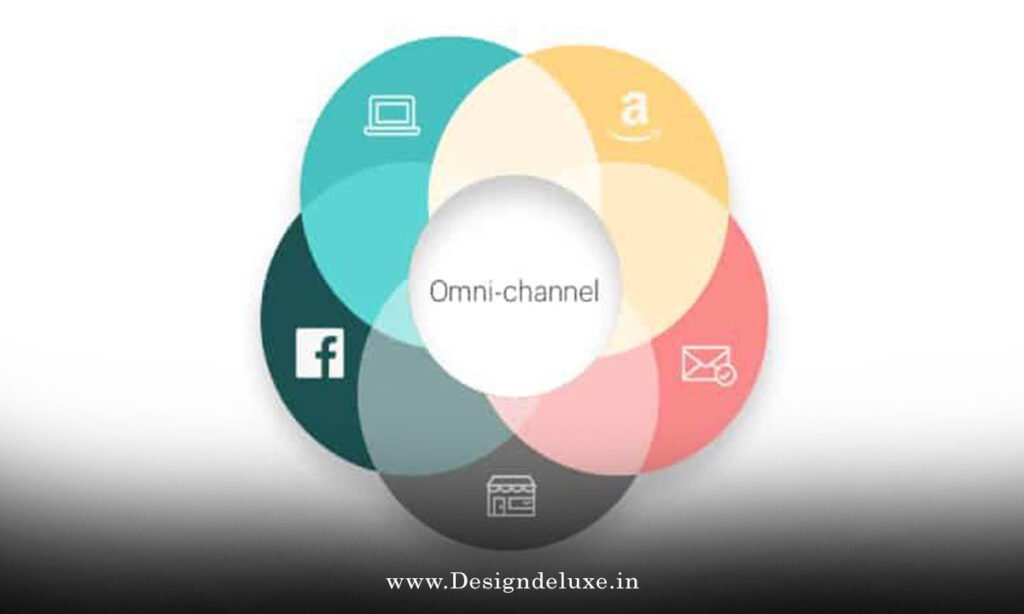
Real-World Win: How Omnichannel Branding Strategies Drive Results
Take Glossier. Their strategy:
- Visual: Minimalist, pink, Gen-Z aesthetic.
- Voice: Confident, casual, “you’re beautiful as-is.”
- Channels: Instagram (primary), flagship stores, app, email.
Result? Every touchpoint feels like Glossier, whether you’re scrolling Instagram or walking into a store. They hit $3B valuation.
Or Outdoor Voices. Athletic wear brand:
- Visual: Bold, colorful, energetic.
- Voice: Encouraging, inclusive, anti-perfectionism.
- Channels: Community events, social, DTC, partnerships.
Their strategy made them a cult brand. Now they’re scaling retail because the brand system works everywhere.
What made both work? Intentional, cohesive omnichannel branding strategies—not afterthoughts, but architecture.
Scaling Your Omnichannel Strategy: From Startup to Enterprise
Early stage? Keep it tight. One person guardrails everything.
Mid-size? Delegate but don’t decentralize. Brand lead + channel owners, monthly alignment calls.
Enterprise? You need a full structure:
- Chief Brand Officer
- Brand Managers per channel or region
- Creative ops (asset management)
- Compliance/legal (ensuring guidelines stick)
At every scale, one truth: centralized strategy, decentralized execution.
The Future of Omnichannel Branding (2026 and Beyond)
Trends shaping the space:
- AI personalization: Brands will tailor messaging at scale—same voice, micro-targeted message.
- Metaverse presence: Virtual storefronts need brand consistency too.
- Direct-to-consumer dominance: Brands own the customer relationship, not retailers. Control intensifies.
- Sustainability as brand: Eco-values now are omnichannel strategy.
- Voice/audio branding: Sonic identity becoming as important as visual.
Adapt now, lead then.
Key Takeaways
- Omnichannel branding strategies unify your brand across all customer touchpoints—driving loyalty, conversions, and customer lifetime value.
- Start with brand essence and identity architecture, not tactics.
- Map the customer journey across every channel; design each touchpoint intentionally.
- Use responsive logo and packaging design for omnichannel retail to ensure visual consistency across digital and physical.
- Consistency isn’t boring—it’s clarity. Make it distinctive.
- Implement in phases; don’t boil the ocean.
- Centralize strategy, decentralize execution.
- Track brand consistency, recognition, and cross-channel engagement.
- Build enforcement mechanisms (DAM, templates, guidelines).
- Measure success via NPS, LTV, and channel consistency scores.
- Scale your team structure as you grow, but guard brand integrity fiercely.
Conclusion
Omnichannel branding strategies separate the brands people tolerate from the brands people love. It’s the difference between a fragmented presence and an inevitable one.
You don’t need perfection. You need intentionality. Map it, build it, enforce it, measure it.
Your next move? Audit your current brand across all five channels (social, email, web, app, physical). Document the gaps. Start with your top channel and align it by week two.
Small ripples. Consistent direction. That’s how empires are built.
External Link :
Here are three high-authority external links relevant to omnichannel branding strategies
- U.S. Census Bureau Quarterly Retail E-Commerce Sales Report — Official US government data on omnichannel retail trends, perfect for backing revenue stats in your “Why It Matters” section.
- Harvard Business Review: The Value of Omnichannel Retail Strategies — In-depth analysis from HBR on customer lifetime value gains, ideal for your “Core Pillars” or “Measuring Success” with authoritative insights.
- Forrester Research: Omnichannel Customer Experience Benchmarks — Forrester’s latest benchmarks on consistency metrics (update link if 2026 report drops), great for your metrics table or key takeaways.
FAQ
What’s the core difference between omnichannel branding strategies and multichannel branding?
Multichannel means you’re on multiple platforms. Omnichannel means the experience is seamless and intentional across them. One’s presence; the other’s architecture.
How do omnichannel branding strategies improve conversion rates?
Consistency builds trust. Customers see your brand reinforced across touchpoints, reducing friction and cart abandonment. Typical lift: 15-20%.
Can a small team execute omnichannel branding strategies effectively?
Yes. Start with your top 3 channels instead of all seven. Prioritize core identity (logo, tone, colors). Scale gradually.
How does responsive logo and packaging design for omnichannel retail fit into the broader strategy?
It’s the visual enforcement layer. A responsive system ensures your logo and packaging adapt across digital and physical channels—critical to consistency.
What’s the biggest 2026 shift in omnichannel branding?
AI personalization at scale. Brands will maintain consistency while personalizing messaging for individual customer segments in real-time.
How often should we audit our omnichannel branding?
Quarterly. Every 90 days, take screenshots across channels and assess alignment. Spot drifts early.