Brand
How to create multisensory tactile branding 2026 is becoming one of the most exciting challenges—and opportunities—for brands right now. Imagine this: your customer doesn’t just see your logo; they feel it in their hands, it lingers in their memory like a favorite texture, and it pulls them back emotionally long after the interaction ends. In a world overloaded with screens and fleeting digital ads, tactile elements combined with other senses create that “stickiness” brands crave. As we head deeper into 2026, with consumers craving real, tangible connections amid digital fatigue, mastering how to create multisensory tactile branding 2026 isn’t optional—it’s essential for standing out.
Why does touch matter so much? Think about it. You’ve probably picked up a premium business card that’s thick, textured, and weighty—it instantly screams quality, right? That’s tactile branding in action. When layered with visuals, sounds, scents, or even implied tastes, it becomes multisensory magic. Studies show multisensory experiences can boost brand recall dramatically, sometimes by up to 70% compared to single-sense approaches. In 2026, brands that ignore this risk fading into the background noise.
What Exactly Is Multisensory Tactile Branding in 2026?
Multisensory branding engages multiple senses—sight, sound, smell, taste, and especially touch—to build deeper emotional bonds. Tactile branding zeros in on the sense of touch: textures, weights, surfaces, and physical interactions that make your brand feel real and memorable.
In 2026, how to create multisensory tactile branding 2026 evolves with tech like haptic feedback in apps, AR simulations of touch, and sustainable materials that feel luxurious yet eco-conscious. It’s not just about physical products anymore; even digital-first brands simulate tactility through descriptive language, interactive elements, and phygital experiences.
Picture a beauty brand whose packaging feels velvety soft, paired with subtle audio cues in ads that mimic the sound of cream spreading— that’s multisensory tactile branding firing on all cylinders.
Why How to Create Multisensory Tactile Branding 2026 Matters Now More Than Ever
Consumers are burned out on flat visuals. They want joy, glimmers of delight, and experiences that cut through stress. Trends point to a rise in “glimmers”—those small, happy sensory moments—and tactile packaging or interactive installations deliver them perfectly.
Brands ignoring touch lose out on emotional depth. Touch increases perceived ownership and value; people literally feel more connected to what they can handle. In 2026, with Gen Z’s massive spending power demanding authentic, immersive vibes, tactile multisensory strategies build loyalty that algorithms can’t replicate.
Step-by-Step Guide: How to Create Multisensory Tactile Branding 2026
Ready to dive in? Here’s a practical roadmap to get you started.
1. Define Your Brand’s Sensory Personality
Start with soul-searching. What feeling do you want people to associate with your brand? Luxurious calm? Playful energy? Eco-friendly ruggedness?
Map your core emotions, then assign sensory cues. For touch: smooth for elegance, rough for authenticity, soft for comfort. Align with visuals (colors that evoke texture), sounds (a satisfying “click”), and more.
Pro tip: Create a sensory mood board. Include fabric swatches, sound clips, even scent samples. This keeps everything consistent as you build.
2. Choose the Right Tactile Elements for Your Products and Packaging
Packaging is your frontline for tactile branding. In 2026, go beyond basic—opt for soft-touch coatings, embossed logos, or debossed patterns that beg to be touched.
Examples? Think heavy, matte-finish boxes for premium feel or recycled papers with natural grain for sustainability stories. Weight matters too—a hefty jar signals quality.
For products themselves: Textured grips on tools, plush fabrics in apparel, or ridged surfaces on tech gadgets. These create signature “feels” people recognize instantly.
3. Integrate Other Senses to Amplify Tactile Impact
Tactile alone is powerful, but multisensory is unstoppable. Pair touch with:
- Sight: High-contrast textures or gradients that imply depth.
- Sound: Crunchy packaging sounds or haptic vibrations in digital interfaces.
- Smell: Scent-infused inks or materials.
- Taste: For food brands, textures that enhance flavor perception.
Consistency across senses reinforces your identity—like how a luxury watch brand uses plush interiors in boxes alongside a precise “tick” sound.
4. Leverage Technology for Digital Tactile Experiences
How to create multisensory tactile branding 2026 isn’t limited to offline. Use haptics in apps for vibrations that mimic textures. AR try-ons simulate fabric feel. Descriptive copy like “buttery-smooth” or “velvet-like” evokes touch in text.
Voice interfaces? Add brand-specific tones. Immersive ads with spatial audio and implied touch language bridge digital gaps.
5. Map Touchpoints and Ensure Consistency
List every customer interaction: website, packaging, stores, events, ads. Infuse tactility where possible—embossed cards, textured mailers, interactive pop-ups.
Test adaptations: What feels luxurious in packaging might overwhelm digitally. Iterate based on feedback to maintain harmony.
6. Test, Measure, and Refine Your Approach
Run A/B tests: Compare standard vs. textured packaging sales. Track engagement in haptic-enhanced apps. Use surveys for emotional responses.
Metrics? Recall rates, perceived quality, loyalty scores. In 2026, tools like AI analytics help quantify sensory impact.
Real-World Inspiration for How to Create Multisensory Tactile Branding 2026
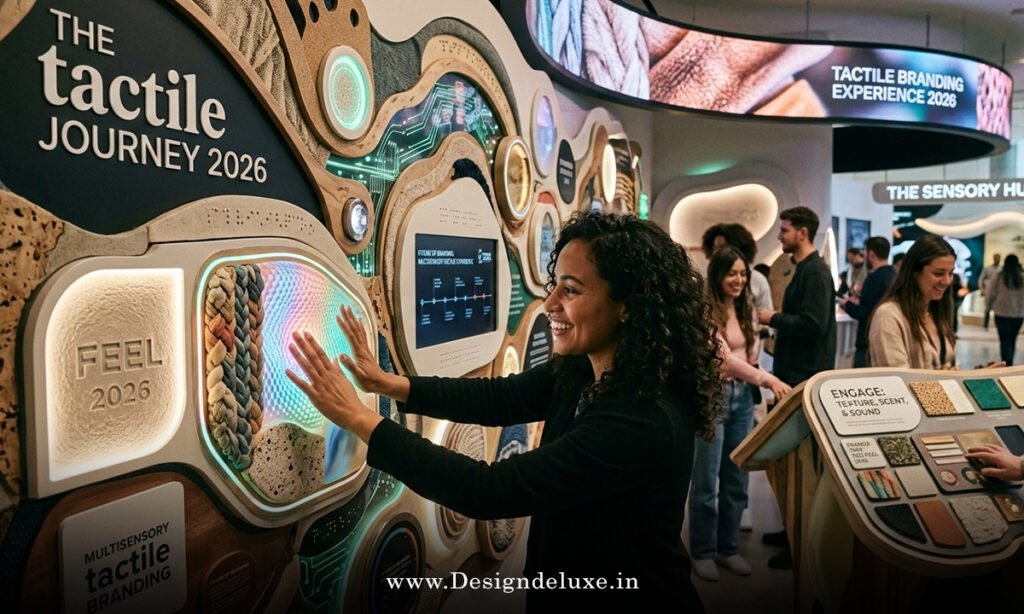
Look at beauty brands simulating textures in AR or using food-inspired names evoking creamy feels. Luxury packaging with soft-touch and embossed details screams premium. Even retail activations use textured walls or haptic demos.
These show tactile isn’t gimmicky—it’s strategic.
For deeper dives, check out insights from Forbes on sensory marketing, WGSN’s future of multisensory strategies, and Harvard Business Review on sensory science.
Common Pitfalls to Avoid When Learning How to Create Multisensory Tactile Branding 2026
Don’t overdo it—too many textures confuse. Skip inconsistency; mismatched senses dilute impact. Ignore sustainability at your peril—2026 consumers demand eco-friendly tactiles.
Budget wisely; start small, like upgrading packaging, then scale.
The Future Outlook for How to Create Multisensory Tactile Branding 2026
Expect more haptics, AI-personalized textures, and hybrid phygital worlds. Brands blending human creativity with tech will lead.
How to create multisensory tactile branding 2026 boils down to making your brand felt, not just seen. Start small, stay consistent, and watch connections deepen.
In conclusion, how to create multisensory tactile branding 2026 empowers you to forge unbreakable bonds in a noisy world. By thoughtfully weaving touch with other senses, you create experiences that resonate emotionally and drive loyalty. Don’t wait—grab some textured samples, brainstorm your sensory story, and bring your brand to life. Your customers will thank you with their hands (and hearts).
FAQs
What is the first step in how to create multisensory tactile branding 2026?
Define your brand’s core emotions and assign sensory cues, starting with touch textures that align with your personality for a strong foundation.
How can small brands afford how to create multisensory tactile branding 2026?
Start affordably with upgraded packaging like soft-touch coatings or embossed elements, then layer in free digital tactics like haptic app features and evocative copy.
Does how to create multisensory tactile branding 2026 work only for physical products?
No—digital brands succeed by simulating touch through haptics, AR, descriptive language, and consistent multisensory cues across platforms.
What trends shape how to create multisensory tactile branding 2026?
Haptic tech, sustainable textures, implied touch in digital copy, and “glimmers” of delight via tactile surprises in packaging and activations.
How do I measure success in how to create multisensory tactile branding 2026?
Track brand recall, perceived quality via surveys, sales lifts from textured vs. standard versions, and engagement in haptic-enhanced experiences.