Artificial Intelligence
AI-driven brand archetype identification for targeted ad strategies is transforming how companies match their messaging to audience psychology. Instead of guessing which emotional tone resonates, marketers now leverage machine learning to analyze brand personality patterns, competitor positioning, and audience sentiment at scale. The result? Ads that feel less like interruptions and more like conversations with people who actually get it.
Quick Overview: Why This Matters Right Now
- Precision messaging: AI identifies which archetypal persona (Hero, Lover, Sage, etc.) aligns with your brand and audience psychology
- Ad performance boost: Archetypal alignment typically improves engagement metrics and conversion intent
- Competitive edge: Uncover positioning gaps where competitors are weak and your brand can dominate
- Audience resonance: Speak the emotional language your customers actually care about
- Faster iteration: Machine learning accelerates A/B testing cycles and scales personalization
What’s Actually Happening Here?
Let’s back up. Brand archetypes aren’t new—Carl Jung defined them decades ago, and marketing has borrowed them ever since. The new part is speed and scale.
Traditionally, identifying a brand archetype meant hiring a consultant, running focus groups, and waiting weeks for insights. You’d end up with a neat PowerPoint slide that told you whether your brand was “The Hero” or “The Caregiver,” and then you’d… kind of guess how to use that.
AI changes the game entirely.
Modern AI systems analyze thousands of data points—your website copy, customer reviews, competitor messaging, social media sentiment, ad performance history—and identify patterns that humans would miss. They spot which archetypal elements actually drive engagement for your specific audience, not some generic definition.
The kicker is this: AI doesn’t just label your brand. It connects archetype to ad strategy. It tells you why the Hero archetype works for your product, how to translate that into ad copy, and where to test that message for maximum ROI.
The Core Archetypes (and What AI Actually Detects)
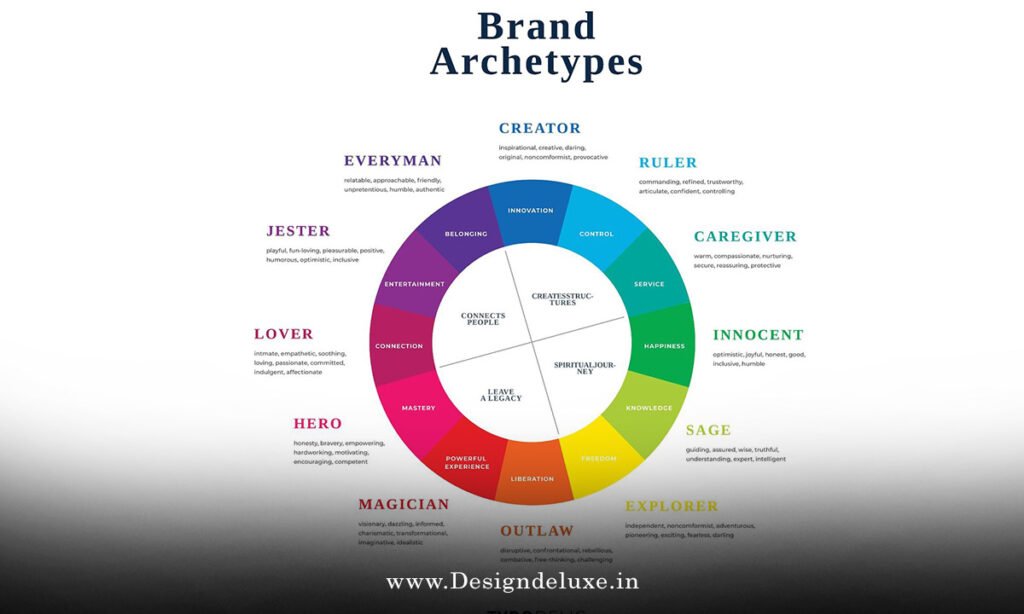
AI frameworks typically work with 12 primary archetypes. Here’s the real-world translation:
| Archetype | Core Driver | What It Looks Like in Ads | Best For |
|---|---|---|---|
| The Hero | Courage, victory, challenge | “Conquer your goals,” action-focused CTAs | Fitness, productivity, competitive products |
| The Caregiver | Compassion, support, service | Empathy-first messaging, problem-solving tone | Healthcare, nonprofits, customer support platforms |
| The Sage | Truth, knowledge, analysis | Educational content, research-backed claims | B2B software, consultancy, educational tools |
| The Innocent | Safety, happiness, simplicity | Clean design, reassurance, ease-of-use | Consumer apps, entry-level products, family brands |
| The Explorer | Freedom, discovery, adventure | Curiosity-driven narratives, “what if” framing | Travel, new product launches, lifestyle brands |
| The Outlaw | Revolution, disruption, rebellion | Anti-establishment tone, rule-breaking positioning | Startups, controversial niches, challenger brands |
| The Magician | Transformation, possibility, wonder | “Before/after” stories, possibility language | SaaS, fitness transformations, personal development |
| The Lover | Connection, intimacy, relationship | Emotional resonance, belonging, sensuality | Luxury, beauty, dating, premium lifestyle |
| The Jester | Fun, humor, irreverence | Wit, memes, playfulness, entertainment value | Entertainment, casual consumer goods, youth brands |
| The Everyman | Belonging, relatability, authenticity | Down-to-earth tone, “people like us” messaging | Mass-market products, community-focused brands |
| The Ruler | Order, control, leadership | Authority, prestige, “the best,” premium positioning | Luxury goods, enterprise software, leadership coaching |
| The Creator | Innovation, self-expression, originality | “Make something,” DIY spirit, uniqueness | Design tools, craft supplies, creative platforms |
Here’s what matters: Most brands blend 2–3 archetypes. AI’s job is figuring out which combination works, and which one should dominate your ad strategy.
How AI Actually Identifies Your Brand’s Archetype
This isn’t magic. It’s pattern recognition on steroids.
Step 1: Data Ingestion AI pulls signals from everywhere: your website, email marketing, social content, customer reviews, competitor analysis, and historical ad performance. It’s looking for linguistic patterns, emotional triggers, and behavioral themes.
Step 2: Sentiment & Linguistic Analysis Machine learning models scan for language patterns tied to each archetype. The Hero archetype uses power words (“dominate,” “conquer,” “breakthrough”). The Caregiver leans into support language (“help,” “guide,” “care for”). The Sage favors analytical tone (“research shows,” “evidence,” “proven”).
Step 3: Audience Resonance Scoring Here’s where it gets practical. AI tests which archetypal messaging actually converts your audience. It analyzes engagement metrics, conversion rates, and sentiment responses to identify which archetype your target customers respond to most strongly.
Step 4: Competitive Positioning Mapping The system maps your brand’s archetype against competitors. Where are they clustered? Where’s the gap? If every competitor in your space is “The Hero,” positioning as “The Sage” or “The Caregiver” might be smarter.
Step 5: Ad Strategy Recommendations Finally, AI translates archetypes into actionable ad strategies: recommended tone, key messaging pillars, visual direction, audience segments, and channel recommendations.
Real-World Application: From Archetype to Ad Strategy
Let’s say you’re a fintech company and AI identifies your brand as “The Sage + The Everyman.” Here’s how that shapes your ads:
Tone: Educational but accessible. No gatekeeping jargon. You explain why your product works, not just that it does.
Messaging Pillars:
- “Financial clarity for real people”
- “Research-backed recommendations”
- “Smart, not complicated”
Visual Direction: Clean, professional, approachable. Charts and real data. Diverse customer testimonials. Avoid pretentiousness.
Audience Segments: Target knowledge-seekers and pragmatists. People who want to understand their finances but don’t have time for complexity.
Ad Copy Example: “We analyzed 50,000+ investment portfolios. Here’s what actually works for people like you.”
Notice the elements? The Sage (research, analysis) meets the Everyman (you, people like you, relatability). That’s archetypal alignment in action.
Why This Actually Moves the Need
Reduces decision paralysis: Instead of debating tone and messaging in meetings, AI gives you data-backed direction.
Improves message-audience fit: Audiences respond strongly to brands that match their values and emotional needs. Archetypal alignment does exactly that.
Accelerates testing: Rather than guessing which messaging angles to test, you start with AI-identified winning patterns and refine from there.
Scales personalization: AI can apply archetypal frameworks across multiple audience segments, channels, and campaigns simultaneously.
Lowers creative risk: When you understand your archetype deeply, your creative team works within a strategic framework rather than throwing ideas at the wall.
Common Mistakes (and How to Fix Them)
Mistake 1: Forcing the Wrong Archetype You decide “we’re The Hero” because it sounds cool, but your audience actually responds to Caregiver energy. AI prevents this by testing, not assuming.
Fix: Let data guide archetype selection. Run sentiment analysis on your actual customer reviews and feedback.
Mistake 2: Archetypal Inconsistency Your website is “The Sage,” your ads are “The Jester,” and your email is “The Lover.” Audiences get whiplash.
Fix: Identify your 1–2 dominant archetypes and maintain consistency across channels. Secondary archetypes can flex by audience segment.
Mistake 3: Confusing Archetype with Visual Branding The Ruler doesn’t automatically mean gold and marble. The Hero doesn’t require sports cars. Archetypes are about emotional messaging, not aesthetic templates.
Fix: Focus on tone, language, and values first. Visuals should support those, not define them.
Mistake 4: Over-Reliance on Generic Frameworks You apply “The 12 Archetypes” without considering industry norms, competitive landscape, or your specific audience psychographics.
Fix: Use archetypes as a starting point, then customize based on your data. What works for luxury brands might flop for B2B SaaS.
Mistake 5: Ignoring Audience Segment Variation One-size-fits-all archetypal messaging. But your Gen Z audience might respond to “The Outlaw,” while your older demographic prefers “The Ruler.”
Fix: Segment by psychographics and apply different archetypal strategies to each. AI handles this at scale.
Step-by-Step Action Plan (For Beginners)
Phase 1: Audit Your Current Messaging (Week 1)
- Document your website copy, top 5 ad campaigns, and email subject lines
- Note the language patterns, emotional appeals, and values you’re currently expressing
- Read through 50+ customer reviews and highlight recurring words/themes
Phase 2: Identify Archetypal Signals (Week 2)
- Map your audit findings against the 12 archetypes
- Ask: Which 2–3 archetypes does our current messaging align with?
- Which archetype do competitors dominate?
Phase 3: Test AI-Driven Identification (Week 2–3)
- Use AI tools to analyze your brand data (tools like HubSpot’s content assistant, ChatGPT for analysis, or specialized platforms like Phrasee or Copy.ai with custom prompts)
- Run sentiment analysis on customer feedback to validate which archetypal messaging resonates
- A/B test ad copy with different archetypal angles and measure engagement
Phase 4: Create Archetypal Messaging Guides (Week 4)
- Document your primary and secondary archetypes
- Define 3–4 messaging pillars for each
- Write tone guidelines, example phrases, and visual direction
- Share with creative and marketing teams
Phase 5: Apply to Ad Strategy (Ongoing)
- Use archetypal frameworks to brief creative teams
- Test archetypal angles in paid ads, landing pages, and email
- Measure performance against your historical baseline
- Refine based on actual audience response
Tools & Platforms Worth Your Time
You don’t need fancy software to start. Honest assessment:
- Content analysis tools (ChatGPT, Claude): Paste your messaging, ask it to identify archetypal patterns
- Sentiment analysis platforms (Brandwatch, Sprout Social): Track how customers describe your brand
- Copywriting tools with AI (Phrasee, Copy.ai): Generate archetypal variations and test performance
- Traditional marketing research (SurveyMonkey, Qualtrics): Ask customers directly which archetypal traits resonate
- Google Analytics + conversion tracking: Measure which messaging angles actually convert
Pro tip: Start with what you already have. Your existing ad data, customer reviews, and website analytics contain archetypal signals. AI just helps you spot them faster.
The Real Advantage: Speed and Iterative Refinement
Here’s what separates AI-driven archetype identification from traditional approaches:
A consultant analyzes your brand, writes a report, and you implement it over months. AI runs that same analysis continuously. As market conditions shift, audience preferences evolve, and competitors move—AI recalibrates your archetype recommendations in real time.
That’s not just better. It’s fundamentally different.
Key Takeaways
- Brand archetypes aren’t abstract: They’re emotional frameworks that directly influence how audiences perceive and respond to your messaging
- AI automates pattern recognition: It identifies which archetype (or archetype blend) actually resonates with your audience, not generic templates
- Consistency matters: Once you know your archetype, maintain it across channels. Audience confusion kills conversions
- Test before full commitment: Run small A/B tests with archetypal messaging variations before scaling
- Competitive mapping is strategic: If competitors own “The Hero,” positioning as “The Sage” creates differentiation
- Audience segmentation is key: Different demographic/psychographic groups may respond to different archetypes
- Combine archetype with traditional testing: AI recommendations should inform hypotheses, but A/B testing validates performance
- Iterate based on real data: Review performance quarterly and refine your archetypal strategy as audience behavior evolves
Conclusion
AI-driven brand archetype identification for targeted ad strategies is no longer a nice-to-have. It’s a practical, data-backed method for aligning your messaging with how your audience actually thinks and feels. Rather than debating tone in conference rooms, you’re starting with evidence.
The brands winning right now are the ones that combine archetypal clarity with relentless testing. They know who they are (archetype), why their audience cares (emotional resonance), and they measure what works (data).
Start small: audit your current messaging, identify 2–3 archetypal signals, and test one variation in your next campaign. Measure. Iterate. Scale what works.
External References
- Jung’s Archetypes and Brand Psychology — American Psychological Association
- AI and Marketing Personalization — Marketing Science Institute Research
- Brand Positioning and Competitive Analysis — Harvard Business School
Common Questions
Q: Can a brand have more than one archetype?
Absolutely. Most successful brands blend 2–3 archetypes. You might be primarily “The Hero” with secondary “The Sage” energy. AI identifies the blend that works best for your audience.
Q: Does archetypal strategy work across all industries?
Yes, but expression varies. A B2B SaaS company’s “Hero” messaging looks different from a fitness brand’s “Hero” messaging. Context matters. AI adapts the framework to your industry norms.
Q: How long before we see results from AI-driven brand archetype identification for targeted ad strategies?
You should see performance shifts within 2–4 weeks if you’re running paid ads regularly. Organic content (SEO, social) takes longer—usually 6–8 weeks for meaningful traction.
Q: What if our audience doesn’t fit the archetype we want?
Then you adapt. Your audience’s preferences are more important than brand ego. Use AI data to inform a strategic decision: Do you shift your archetype to match audience preference, or do you reposition to find an audience that aligns with your desired archetype?
Q: Can AI replace a human strategist for this work?
No. AI identifies patterns and recommends directions. Humans interpret context, make strategic bets, and execute with creativity. The best results come from AI + human judgment working together.